THE FEMALE INFLUENCER OF SNOWDONIA

As part of my ongoing love-affair with Snowdonia, I used some of the Christmas break to read a couple of books that were set there. The first was Thomas Firbank’s “I Bought A Mountain”, which is a true story about the author’s experience giving up the corporate world in the 1930’s, moving to North Wales, and turning to a life of farming. Although it sounds idyllic (and actually, not too far removed from some of my own daydreams minus the 1930’s part) the success of the book lies in the rawness of the narrative, an honest account of a complex patchwork including both loss and prosperity, love and tragedy, ignorance and learning and most of all, hard work. As well as all that, there’s a lot of salivating descriptions of gorgeous scenery that effortlessly transports the reader to the subject area.


It was an enjoyable read, but I was much more engaged by the second book, a biography of Esme Kirby, Firbank’s first wife who played a key role in supporting her husband to manage Dyffryn Farm. Among her achievements during this time was setting a new women’s record for conquering the Welsh 3000s, an extremely tough physical challenge which involves reaching all fifteen peaks of over 3000 feet in Wales within 24 hours. Kirby completed it in nine and a half, in 1938, long before the days of protein bars and fancy hiking boots that can assist us with such challenge today.

Incredible as this is, the most inspiring part of her story starts when Firbank sets off to fight in the second world war and decides not to return to Dyffryn, or to Esme, leaving her to choose between a potentially easier, economically stable life away from the likes of sheep shearing and pig selling, or continuing to manage all 3000 acres alone. She chose the latter, and she made it work. To keep financially afloat she rented out the farm and instead lived in a caravan within the grounds. She brushed her teeth and washed her hair in the river, but every now and then would dress herself up for cosy evenings with friends in local hostelries. Her life satisfied her, even if it could be tough to make ends meet.

Kirby was also an ardent conservationist who was extremely passionate about protecting the local landscape from development, and decades of effort in doing so eventually earned her the touching moniker of “Guardian of Snowdonia”. She founded the Snowdonia National Park Society in 1967 after successfully campaigning against the construction of a youth hostel on the Glyder mountains by Dyffryn. The Snowdonia Society, as it is now known, has remained active ever since, and has had a crucial influence on the pleasing visuals we see today, keeping the rivers free of litter and enabling responsible tourism through improved footpath access to mountain ranges, among lots of other things.


Kirby was a very well respected pillar of the local community, but she wasn’t liked by everybody, and some of her decisions were not as popular as others. During her time as Chairperson for the Society she was known to occasionally neglect any notion of consultation when sated by her own staunch beliefs and opinions. She took a hard line against a few development proposals that had the potential to bring greater economic prosperity and job opportunities to the area. In her view, the mountains needed to be left well alone and unspoilt by unnecessary constructions and eyesores. 

Kirby passed away in 1999, some fourteen years before the first Zip World attraction opened creating a new use for the Penrhyn slate quarry, and that’s probably for the best. I don’t think she would have liked it very much, despite the eye-watering £121 million it has pumped into the local economy from people gliding along ziplines in boilersuits, bouncing around on underground trampolines, and meandering through the forest on toboggans.

She may not have got everything quite right – because nobody does – and her leadership skills may have sometimes been lacking, but I am full of admiration for her sense of conviction and devotion to protecting the natural magic of the area she so loved. On top of this, she succeeded in a difficult industry dominated by men (even more so back then). There is something quite ironic about the fact I only came to know of her by reading her first husband’s book, despite being aware of the Snowdonia Society from having pored through one of their fabulous bi-annual magazines one morning last August whilst eating the most syruppy (not a bad thing) French Toast in the legendary Cafe Siabod.

The international, best-selling success of “I Moved A Mountain” should not be apportioned wholly to the author Firbank. For me, it’s Esme who’s the real star of this story, and in an era where the term ‘female influencer’ might be more often attributed to the likes of Kim Kardashian or a random on TikTok who regularly explains the best way to apply lipliner, more people need to know about this one.

Song of the Day: JACK – Try to Arrive Alive

Another gem recommended to me by Spotify! I don’t know too much about this artist but the lyrics are incredibly motivating and at a time where there is so much challenge in the world everyone should listen to it. Cool video too.

A CLAMBER UP THE QUARRY

What would you do if you came across an injured goat on the side of a mountain? Who should you call? What if you don’t have signal, would you just have to leave it?

These were the questions I was pondering to myself one warm August morning earlier in the year whilst ascending the steep, slate inclines of the Dinorwic Slate Quarry in Llanberis, Snowdonia. The air was so still, so silent, that it greatly amplified the sound of a goat bleating coarsely from beyond.

So intrusive to the tranquility was the noise that my immediate thought was that the creature must be in distress, and maybe I could find it and provide some aid. I subsequently pondered over the questions above, and was concerned that I didn’t really know any of the answers.

It was whilst doing this I saw something that would put my mind at rest. On a not too distant peak, I was just about able to make out two fuzzy balls of copper bounding towards one another, bleating recognisable bleats. They had been using their vocals – which were now softening – to find each other, and it had worked. Mystery solved, and thank goodness, because I’m not sure I’d have known what to do if my initial concerns had been realised. I carried on with my walk to the summit.

The day had started off in a strange tone. Until this point, I had spent my Snowdonia trip in the company of loved ones and we had all had a lovely time, but first thing that morning they had returned home and I was suddenly alone. Alone time is never usually a problem for me. As an introverted-extrovert, my energy sources oscillate fairly evenly between company and lack thereof. I need them both at different times. Many of my favourite outdoor adventures have been the ones I’ve had by myself, exploring and getting lost in nature and my favourite music, but this morning, there was that subdued feeling similar to the one you might feel as you chuck bits of popped balloons and food waste into binbags following an enjoyable party, that missing people feeling.

I knew that the best way to respond to this would be to give myself a bit of a mission for the day ahead and I immediately knew what that mission would be – to find the Anglesey Barracks (which, confusingly, are not on Anglesey).

The Anglesey Barracks are a group of granite cottages that were built high in the Dinorwic slate quarry during the 1870’s to serve as homes for those working there, to save the daily commute. One need only look at what remains of them today to know that they didn’t boast the greatest of living standards, even in those more basic of days. Each cottage housed four workers across two small rooms: a communal kitchen space and a shared bedroom. At no point during their occupancy did they have access to electricity so the only source of heat was a fireplace fuelled by coal that they had had to lug up those testing terrains in all weathers. Water needed to be collected from streams, and lack of hygiene and sanitation was a big problem. 

Use of the barracks for housing ceased in the late 1930’s for this reason, and since this time the buildings have been left and reclaimed by nature. It is this, combined with the history, that provides the mystical and intriguing aesthetic that makes them so popular with explorers, historians and photographers. Indeed, I had only come across their existence from an Instagram post, and then a framed photo on the wall in the cottage which we had just been staying in. Although the barracks themselves weren’t widely signposted I could tell from a bit of brief internet research of whereabouts they were, within walking distance from Llanberis, a place I knew fairly well.

I headed towards the Power Station and looked to my left for a footpath that would take me up towards the top of the quarry. It was pretty much where I expected it to be, and so began the steep incline to the top. The first fifteen minutes or so was all about big steps. The ones that make you feel like you’re doing a high-knees HIIT session on repeat. Although towards the end they were getting quite tiring, I also knew that big steps meant big heights, and big heights meant better views. I was excited to clear ‘tree level’ and to reach the steep dark-grey slate paths that wound round the side of the quarry peaks. I knew the barracks couldn’t be too far away, and persevered against the inclines, which were altogether more challenging in the August heat.

The barracks would have been easy to miss. The main footpath takes you only parallel to them for a few brief moments, and they are concealed by both a copse of trees and being lower down than the path itself, accessible by steps. I had reached a bend in the footpath and it was only from this that I noticed the neon jacket of a fellow explorer 140 degrees to my right, stood in the centre of the historic residential street. 

The sights did not disappoint, feeling every bit as intriguing as they had seemed on screen, but looking most definitely smaller than what I had been expecting (and I certainly hadn’t expected them to be spacious). I carried on walking through ‘streets’ that would have once seen heavy footfall every day but today only had a couple of prints, those of neon jacket guy, and mine. It was humbling to observe.


There were more cottages around the corner. These ones seemed to have experienced an even greater reclamation from nature. Mossy green branches protruded out of what were once bedroom windows, roots had broken into the foundations leading to piles of collapsed slate everywhere, and there were certainly no roofs on any of them. The exposed remains of a lone cottage sat slightly closer to the edge of the ridge and afforded a great panoramic, the perfect place to eat my ham sandwich. I sat for a while looking out towards Yr Wyddfa and though from here I couldn’t see a single soul on the mountain I knew that up close it would be teeming with hundreds of hikers striving for the summit, like ants crawling an anthill. I gave myself time to absorb the moment. Yes, I was still feeling some dregs of loneliness, but what a stunning place to be (and what a fit sandwich to be eating too, I seem to recall that one was particularly good).

Fuelled up on protein, fibre and a rush of adrenaline from the views I continued my ascent up the winding slate path to the top of the quarry. It was during this stint that I heard the not-so-distressed goats, and also saw a few others, such as this pair, which studied me intensely as I approached:


I couldn’t get over the fact they had actual horns, just like the ones found in storybooks. Fittingly, they seemed to disappear the closer you got, leaving you wondering if they’d even be real or just an illusion catalysed by the drop in air pressure from the rising altitudes.

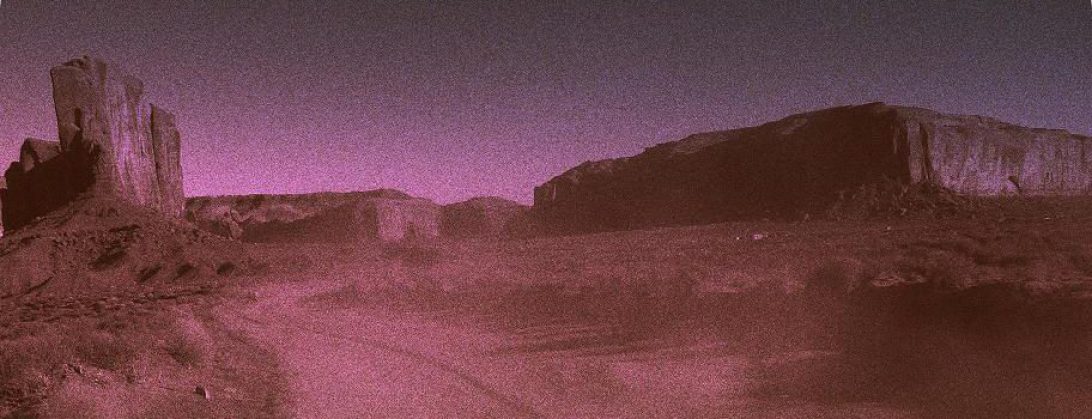
I eventually reached the quarry peak, which somehow reminded me of a cross between the surface of the moon and the American West, not that I know either of those well. There were clear signs of human activity, not least from signage warning of electrical currents, yet very few actual humans about. Everything about it felt other worldly, and I enjoyed wandering aimlessly for a while, in awe of the sheer size of the expanse. 

A man-made pier-like structure led out to a viewpoint, at the end of which somebody had recently attached a bouquet of flowers in poignant memory of a loved one. This must have been a special place to the departed and as I once again took in the panoramic I could completely understand why. I admired the dedication of their loved one for keeping the bouquet so intact during what it is a steep and testing climb, and imagine it brought them some solace to place it there.

It’s hard not to fall massively in love with this part of the world. It’s not the best kept secret, but neither is it a full front-page spread. The perfect balance, maybe.

I looked down over the village of Llanberis, where I had checked into my bunkhouse a few hours previously, and was surprised to see it now looking like a small blur, a good time to start my descent perhaps.

The goats were fine, my mission had been achieved, and it was time for a curry and a pint of Snowdonian IPA.

KAYAKS & KINDNESS: breakfast in wales

A celestial-sounding melody echoed around the dark hostel room as rain pattered relentlessly against the window. As the phone from which the sound was coming vibrated against a vinyl floor, sleepy eyes widened to see a square of black glass, peppered with raindrops and the silhouette of the mountains of Snowdonia.

We are in Llanberis, North Wales, at 5.30am one Tuesday in August, 2021.

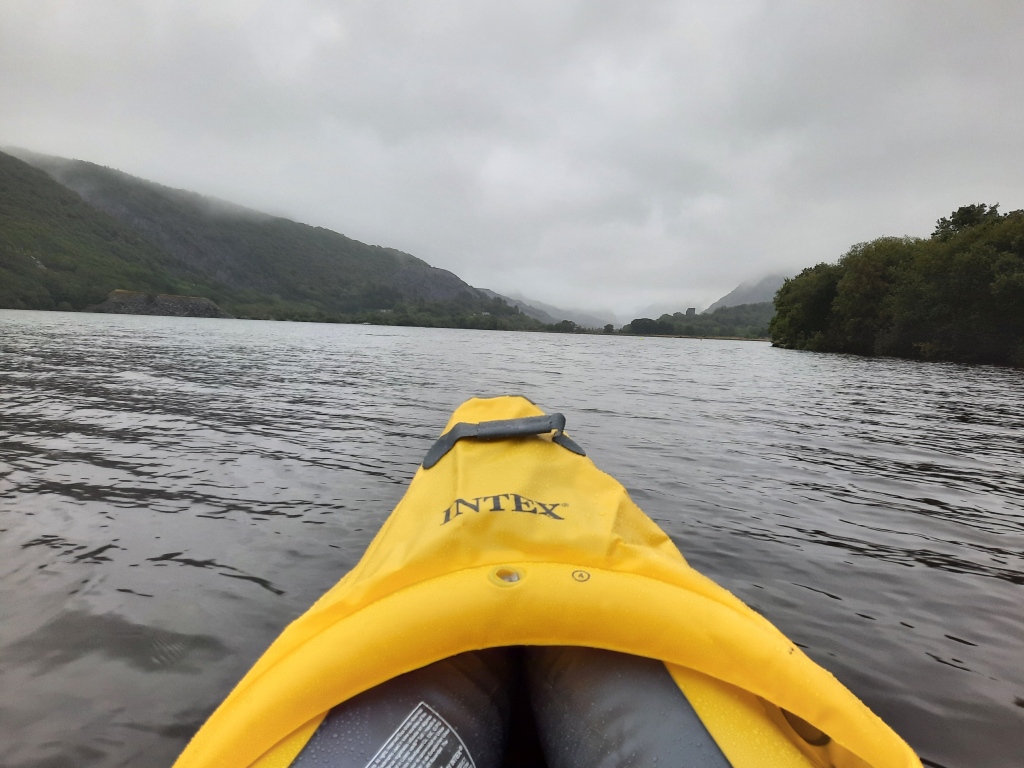
My friend and I had set our alarms with the intention to take a sunrise kayak trip across Llyn Padarn, a breathtaking, glacially formed lake which stretches two miles in length and twenty nine metres in depth at the foot of a host of rocky peaks, Mount Snowdon being the most famous.

However, a combination of Samsung’s contemporary cock-a-doodle-doo and the prospect of getting completely drenched was enough to make us reconsider the idea we had conjured whilst basking in the heat of the previous afternoon. But, if the last couple of years have taught anyone anything, it’s that you have to do these things when you get the chance. There haven’t been many opportunities to wake up away from home in the past year, and if you postponed all of your plans until the arrival of better weather you’d barely do a thing.

So there we stood, a few minutes later, shivering hands stoically inflating our kayak by the side of the lake. The skies were fading from black to a watery, charcoal grey and there was absolutely nobody else about, beyond a lone swimmer who offered us a chirpy greeting about having the lake to ourselves as she stepped out into the water and started gliding about contentedly.

By the time we were out on the water the sky had turned into a sheet of off-white wool and there was just enough daylight to make out the mountains behind the clouds. We paddled in a southeasterly direction, taking in stunning views of Snowdon behind the thirteenth century ruins of Dolbadarn Castle. To our left were a cluster of features symbolic of Welsh heritage and history: the National Slate Museum, the Llanberis Lake Railway, and the former Miners’ hospital building. With virtually the whole of this impressive body of water to ourselves, and so much around us to see, the early start had gifted us the kind of mentally energising experience which can completely shift internal paradigms and conjure new dreams. I want to do this every morning, and just who exactly says that I can’t?

This image has an empty alt attribute; its file name is 20210817_064853.jpg


We savoured this moment for as long as we could though it was only a matter of time before the weather caught up with us. It was a beautiful morning but it was also extremely cold, and the water – whilst calm in its demeanour – had managed to find its way into our shoes and soak our clothes. Teeth were beginning to chatter. Fingers were starting to freeze. Minds were being seduced by the thoughts of warm hot chocolates and cooked breakfasts. It was time to get out, and shiver on the banks for thirty minutes whilst waiting for the kayak to be deflated enough to fold into the boot. Maybe I shouldn’t do this every morning. Or maybe I wear ten fleeces, boxing gloves, and a spacesuit next time!

After what was the quickest turnaround ever back at the hostel to get changed (nothing challenges the concept of time like the prospect of a massive hot chocolate with cream and marshmallows) we were stood on the pavement in the rain forming the queue for the cafe, Pete’s Eats. Each of the tables inside were occupied and we were still in a pandemic, so “budging up” could not be a thing in this instance. I watched through the window and willed the diners to eat up quickly, though my friend had assured me that it would be worth the wait, and she was right.

Behind us in the queue stood a man with his young son, discussing what they were going to eat. The rain was falling faster at this point, and whilst it seemed a sauna in comparison to shivering on the banks a short while earlier, it was still bitterly cold. I kept thinking about swirling my spoon round a receptacle of molten chocolate, and how the marshmallows would melt into a fluffy goo that would ooze down my throat and radiate heat round my icy insides. As transfixed as a dog by a bone I watched a pair of diners finally stand and take their jackets from the back of their seats, and when the waitress simultaneously approached the door we knew our turn had finally come. The newly vacant – and only available – table sat six, and it made no sense for just the two of us to occupy it, so we invited the man and his young son to get out of the rain and join us.

The breakfast exceeded expectation, and neither of us held back. After the early start, the freezing temperatures and all that paddling, we deserved our massive hot chocolates and our morning feasts. Whilst eating we started engaging in a fascinating conversation with the man. He explained how they were traveling around North Wales in a camper van with uncomfortable seating, reliving his childhood holidays and giving his son an experience to remember. He also shared with us his voluntary work rescuing chickens and the values behind it, an incredibly eye opening conversation about an issue I had known very little about before we met. As we chatted and chatted, his son contentedly dined quietly on his toast. The pair of them consumed very little compared to us, and were gone within about thirty minutes, bidding us goodbye and wishing us a nice day as they put on their jackets and walked back out into the rain, back to their van and back to South Wales. My friend and I remarked about what a nice pair of people they were. The inspiring, kind-hearted man. His well behaved young son, who just let us chat, no screaming, no fuss.

We stayed in the cafe nursing our warm mugs for a little longer to bring our fingers back from the dead, then motioned the waitress over to pay for our banquet breakfast. She seemed a little stuck for words:

“Erm, well actually, there’s no need. That man who was at your table. He paid for you.”
“What? All of it?”
“Yes. All of it…he said he enjoyed the -“ (unfortunately we’ll never know exactly what, as her vocals were doing battle against the clattering of cutlery in the background at this point, but it’s fair to guess that dining with us had obviously not been the worst experience in the world).

Now it was our turn to be stuck for a words! But why? We had ordered so much more than them. We didn’t even know their names. We thought back to the moment the man had gone to pay for his bill. He had gone up to the counter, outside of our earshot, obviously not wanting us to know what he was doing. He clearly wasn’t after praise or anything in return; he knew he’d be long gone by the time we found out about his gracious act. He knew that we would never be able to contact him to say thank you, or identify him as a hero.

He was just genuinely, purely and beautifully kind. And after eighteen hard months of this pandemic, during which as a society we have seen some of the worst examples of human behaviour ever and been challenged in ways beyond comprehension, these acts of genuine kindness mean so much more than they ever would before. This was about way more than saving fifteen quid each, it was about just knowing that people like that exist, people who infuse the mantra to “be kind” into the world around them not just by posting those couple of words online to look good but actually by being kind. If I ever happened to meet this man again, I would thank him for that first and foremost, and then I would thank him for the breakfast.

We were still speechless as we returned to the car and looked out over Llyn Padarn again, taking in the same stunning views as the morning but this time appreciating the warmth of the heater and human kindness. Not every stranger we share a table with in life will pay for our meals, in fact the vast majority won’t. The vast majority might even snap at us to move, scrape their cutlery loudly against their plates, constantly curse, or use the last of the ketchup before it’s our turn.

But it’s not always about the vast majority, and a majority is still not everybody. The most inspiring and memorable people you will come across in life won’t always be those you have the most exposure to. They’ll often be the ones you encounter by chance, in tiny cafes in tiny towns on rainy days, strangers who aren’t after reciprocation, strangers who are just peaceful and kind, strangers who will always be strangers but who raised a smile and left an impression that you’re still thinking about several months later as you reflect back upon a year. Strangers who inspire a blog post.

Llanberis, North Wales, at 5.30am one Tuesday in August: the morning nature and kindness breathed optimism into the midst of a pandemic where it had so often seemed scant.