YOGYAKARTA, PART II – THE END OF THE 15 YEAR WAIT FOR BOROBODUR

My guide for the day, a friendly man called Bima, comes to collect me from my hotel first thing in the morning and is very concerned about whether I have packed enough water, sun-block, and a rain jacket. Indonesia is one of the hottest countries in the world, but it also experiences a rainy season every year, and I was travelling towards the end of it, meaning I’d spend my time being either very hot or very wet, or both.

It takes us around an hour to drive to the ancient Buddhist temple of Borobodur, so we’re able to chat and get to know each other. Bima explains that he’s originally from here in Java, but his wife is from West Sumatra. They are among a minority (10%) of Christians in a predominantly Muslim (87%) country and they live in a bustling suburb of Yogyakarta with their children. We spend some time discussing the cultural and linguistic differences that can be found among the many different islands and regions that all call Indonesia home, and he teaches me some basic Javanese, like “matur nuwun”, or “thank you”, which is very different to the “terima kasih” of the official national language, Bahasa Indonesia, that I’m more accustomed to. I try my best, but have to ask him to remind me of it every time I need to give thanks throughout the day, which is quite often when you’re being driven around everywhere.

We arrive at the grounds of Borobodur and the temple itself is hidden from view as we drive up, which makes it all the more exciting. Bima sorts our entry, gives me my wristband, and we take a shuttle cart closer to the temple along with a dozen other tourists.

Before the official tour begins, I replace my shoes with the special upanat sandals – with soft soles – issued at reception. Introduced only in 2023, they serve as an effort to reduce the wear and tear on the ancient stone. 1200 pairs of feet stomping all over it every day could cause considerable damage otherwise, and one of the best bits about the upanats is that you get to keep them afterwards! They’re pretty jazzy too.

Before the official tour starts, Bima takes me on a little tour of the grounds. I still can’t see the temple, even though it’s one of the largest in the world! I begin to question my eyesight until Bima leads me round a corner into an avenue lined with ashoka trees and points ahead.

And there it is.

And wow.

It’s fair to say it’s a little bit bigger and more impressive than the wooden replica I’d observed at the museum in West Sumatra all those years ago. I’m brimming with excitement and even detect a bit of a tear in my eye, but must wait before I get any closer so that I can be shown around by an official temple guide, another rule that was introduced in 2023 to help protect the temple longer term by managing the numbers on the stone at any given time.

The sensation of suddenly witnessing the temple felt not too dissimilar to the story Bima had been telling me on how Borobodur was re-discovered. Originally built somewhere around the 8th Century during the era of the Shailendra Dynasty, the temple was in popular use for a few years before being abandoned and deserted after the dynasty was overthrown. It remained this way for a number of centuries, during which it was gradually covered in jungle growth as well as ash from the nearby volcano Mount Merapi, eventually obscuring it completely from view. It wasn’t until 1812, when the British colonial official Sir Thomas Stamford Bingley Raffles re-discovered it, that the existence of Borobodur was known once more. Throughout the remainder of the 18th and 19th centuries, the temple underwent a series of restoration works that were eventually completed as recently as 1983. When you consider the year it was first built, that recency is pretty staggering.

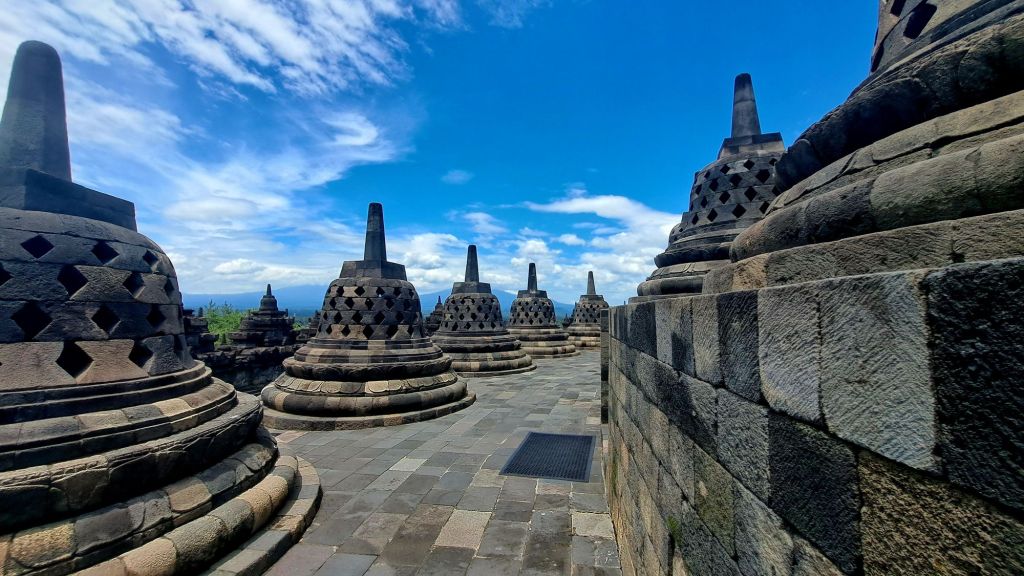
The official tour lasts around 45 minutes and consists of a guide taking a group of us up to the top of the temple platform by platform, of which there are 9 in total. As we ascend we take in some of the 2600 or so relief panels that decorate each layer, and witness how the effects of centuries of extreme weather have meant that some are in better condition than others. It’s the very top of the temple though, the central dome, that impresses the most. That’s the bit that we’ve all been waiting to see. Instantly recognisable from the 72 bell-shaped structures known as ‘stupas’ that each contain a statue of Buddha inside, it’s something which truly does take one’s breath away. And not just because of the number of steps it took to get this high.

The guide gives us 15 minutes to explore the central dome, which to me just doesn’t feel long enough. One minute for every year spent anticipating ever being here. It still feels completely surreal: the history, the tropical panoramics, and the ominous sight of Mount Merapi in the distance. Mount Merapi, which did its very best to keep the rest of the world from ever seeing Borobodur, and which would have succeeded had it not been for the curiosity of Sir Raffles.
This quiet moment of wonder and reflection is suddenly penetrated by loud conversations taking place around me spoken in native English. It’s the first time I’ve been around any of my compatriots for a week or so, and I quickly gather that this merry lot are visiting the temple as part of a cruise around South East Asia.

One of them slumps herself on a piece of sacred stone and starts fanning herself with a leaflet, her face very red:

“Err am joost too ‘ot, me, wanna get back on bert!”

Meanwhile, a few metres away, Grandma is being called into action by a young girl in her 20’s:

“Nan! NAN! NAAAN!”
“Yes love?”
“Get lots of pictures of me!!!” she orders, before performing a series of pouts in front of a stupa whilst Nan clicks away, almost dismantling the ancient structure with her big handbag as she rapidly switches between poses.

I will fully admit to judging people who are lucky enough to travel to the other side of the world only to then moan about the heat, or who seem to spend so much time taking curated photos for social media that they don’t actually look at what they’re there to see. So I walk away disapprovingly before asking a fellow tourist to take a photo of me from behind, which I later upload to my Instagram story. What can I say, Nan’s granddaughter influenced me.

As we start to make our way back down the temple I spot the smiling face of Bima waiting for me at the bottom with a bottle of water, and he suggests that we go for some lunch before driving on to the Hindu temple of Prambanan, 53km away. The place he suggests, ‘Borobodur Silver Resto’, is the perfect choice, serving traditional Indonesian food on a suspended outdoor decking area which overlooks rice paddies. We don’t have long, but it’s a good opportunity to reflect on Borobodur, catch breath and refresh.

After our meals Bima fetches the car and asks me to sort the bill whilst he does so, so I inevitably end up paying for his lunch, which he doesn’t acknowledge as I get back into the car. Although I recognise this to be a bit sneaky of him, I don’t actually mind. He’s a good guy, and his Bakso soup and Diet Coke were not exactly expensive. In a strange way, the cheekiness endears me to him even more.

Bima drives us around the countryside to a place where we can buy a bag of local fruit – Salak – which he describes as “Snake fruit” due to its coarse leathery skin. I have a couple of snake fruits and they’re pleasant enough, but also quite nutty, dry and filling. We have bought an entire kilogram and the majority of them spend the rest of the journey in my lap.

We then stop so that I can take a picture of Mount Merapi, an active volcano and one of the reasons why Borobodur was a secret to the world for so long.

“It’s very much active”, Bima responds to my question. “Erupts quite frequently. When it does, you can see the bright red lava flashing against the night sky.”

Over 300 people were killed during the last major eruption of Merapi in 2010, but even a ‘small’ eruption in December 2023 tragically ended the lives of 22. I think about what it must be like to live near an active volcano, and the persistent, uncontrollable threat that poses. You could ask yourself why people don’t just move away, but this is their home, and they just don’t have that sort of freedom of mobility. The entirety of Indonesia sits on the Pacific “Ring of Fire”, and even if you were to live a somewhat safe distance from the 130 or so active volcanoes, you’re always at a significantly high risk of other natural disasters, like tsunamis, or earthquakes. A terrible one of those would hit one of Indonesia’s South East Asian neighbours, Myanmar, just a few days later, killing over 5000 people with the wider devastation felt as far away as Bangkok. It’s a sobering reminder of how dangerous these places can be because of simple geography, and how much we should appreciate what it means if we are simply lucky enough to live on less scary tectonic plates.

We continue on to Jogja’s other famous temple, the Hindu Prambanan, and whilst it’s another spectacular sight to behold its fair to say that I’m not as awestruck by it as I was Borobodur. It’s probably because I’m feeling a bit tired by this point, and my brain is running out of storage space for any more of the temple-related facts being churned out by Bima. We whizz around it quite quickly before calling it a day.

As we drive back to my hotel in downtown Jogja, Bima makes a series of comparisons between the where we are and Jakarta.

“So you know that in Jakarta, where you stay before, it‘s very loud, right? Lots of traffic, lots of beeping. In Jogja you don’t get that at all. It’s a lot quieter.”

It’s unfortunate for Bima that after stating what I’m sure is usually true, our conversation is perforated by the sound of the longest car honk in the world just ahead of us. A female student on a moped has made a badly-timed right turn into oncoming traffic to get into her college, and the wailing car whose discontent we have overheard has pulled to an emergency stop. Fortunately nobody is hurt, and the student even seems to find the whole thing quite funny, but there’s an awkward silence in our car following the contradiction just observed.

“It seems it is quieter.” I move to assure Bima, who has gone as quiet as the streets of Jogja usually are apparently, later realising that my comment probably sounded sarcastic without intending to be.

We arrive back at the hotel and Bima tries to offload the rest of the Snake Fruit we had purchased earlier, but I don’t want it. Tasty though it was to try, I hate wasting food, and there’d be no way I’d get through the whole kilogram of it myself without making a great, fine-incurring mess in the hotel bathroom, so I insist he keep it and share it with his family and friends.

“Matur nuwun Miss Sophie!! Thank you so much ya!”
“Terima kasih juga, Bima! Wait I mean, ma-…mat….”
“Matur nuwun…”

Bima smiles and drives away and I know I’ll never see him again. It’s another example of people you meet on the road with whom all you’ve ever know is that special little chapter that you shared on just one of the 30,000 days we typically have on Earth. Tomorrow, Bima will be picking up a fresh group of tourists and reminding them to bring their rain jackets and sun-block. He’ll teach them phrases like ‘matur nuwun’ and eat Snake Fruit with them, and I’ll be about to leave a city which I dearly enjoyed experiencing, but probably won’t ever return to, given that it took me 15 years to come here in the first place.

But Borobodur? That’ll outlive us both. At least for another thousand years, and especially if people keep wearing those upanat sandals…

THE INDO WINDOW – JAKARTA

“Jakarta, the city you’ll never love.”

The two friends I was travelling with and I were on a flight to…well – Jakarta – as we read this sentence. And having known nothing of it besides the fact that it was Indonesia’s capital and so the best place to sort the necessary logistics of our next travel plans – like obtaining visas and being able to take onward international flights – we had enthusiastically jumped to its section of the Lonely Planet guide to read about what else we could experience there.

We giggled at the underwhelming opener. A capital city which even the travel guide – a book designed to encourage tourism – had given up on, with what was basically a politely worded version of “CBA” before it even started. When does that ever even happen? Poor old Jakarta.

That was 2010. I spent several weeks there waiting for a visa to be processed at the embassy and have been back three times since, most recently in March of this year. Jakarta is a place that has – in spite of its ‘unloveable’ ways – become very dear to me. It was back then, and it remains so now.

A pretty place it most definitely is not. It consistently ranks among the highest of the world’s most polluted cities, both in the air and in the water, and when you combine the scents of that with those of the durian fruit – famed for its pungent smell and sold in massive batches down every street – you get an aroma unlike anywhere else. It’s a unique blend of exhaust fumes, heat, sweat and – owing to the durian – stale cheese and nappies. With a bit of South East Asian lemongrass thrown in for good measure.

As soon as I exited the city’s Soekarno Hatta airport in March this year, that very same smell enveloped me like an old friend offering a warm embrace (literally warm, we’re only a little below the Equator). And it made me smile and feel like I had walked back into an old home, because I had in a way.

Jakarta, and Indonesia generally, has been home to an annexed piece of my heart for fifteen years. I don’t often get to tap into it these days, but when I do, it’s still there, and – unlike an old watch in a drawer – it’s still beating like it’s never stopped, and that’s never going to change. A lot of people who I care about a great deal live there, and meeting up with them again for the first time in many years was incredibly special. What the city might lack in terms of organised infrastructure and beautiful aesthetics, it makes up for in the warmth and wonderfulness of its humans, and I much prefer things that way round.

Monas, a powerful symbol of Indonesian resilience and independence

I had chosen to stay at the Sparks Hotel, which was situated in a bustling neighbourhood known as ‘Mangga Besar’ (‘big mango’). Now I do enjoy mangoes, and so I’d be especially delighted to come across a big one, but that wasn’t the reason I chose to stay here (which is for the best since I didn’t even see any of the famed trees that apparently used to rule this ‘hood and gave it its name).

I’d chosen Sparks because it was the same hotel I stayed in for three weeks 15 years ago, and I was intrigued to see how much or how little it had changed. I also recalled it had an epic swimming pool on a mezzanine near the roof, so that you could cool yourself down whilst being even closer to the grey, traffic-choked clouds than you would be if it were on the ground.

Walking in jet-lagged, and stale from the sweltering, evening heat to a brightly lit lobby with its overwhelming smell of lemongrass felt like deja vu. It was 2025, but it could have very easily been 2010. The hotel had recently undergone a general refurbishment, and the new restaurant area behind the reception desk looked very inviting. Yet when I stepped into the elevator to get to my room, I recognised the same interior design, the same buttons, and the same sign prohibiting the presence of durian fruit that I had seen fifteen years ago, only a lot more worn and faded now.

The rooms themselves were also just the same. The same suitcase rack – more dimpled from all the heavy luggage dumped on it over time – the same yellowing plastic kettle, the same night stand, the same clunky safe in the wardrobe, the same feeble hairdryer. And the same view from the windows…

I’d spent many an evening in August 2010 gazing out of these windows. I had been on a shoestring budget and so had to spend a lot of time confined to the hotel, where I didn’t need to spend any more money. I remember explicitly at the time noticing the neon yellow lights of the Grand Paragon Hotel in the distance. It was one of the main (only) focal points of the view, and I remember staring at it once whilst making a very expensive phone call to the Student Loans Company in Scotland. They had sent a letter to my parents’ whilst I was away asking me why I wasn’t making any payments, and demanded I get in touch to explain. I remember this call for two reasons, the first being that it was very lengthy and I was squirming the entire time about how much it was costing me, and the second because the adviser made a snippy comment about the fact I was travelling and not working. I was so annoyed by her judgemental tone, that it made me want to stay travelling and not work. Ever.

The view from the window

In March 2025, I looked out again at the Grand Paragon – same neon yellow sign – and internally responded to my 24 year old self, the one who’d just ended the call with the SLC and had vowed to bum about travelling forever just to make a point to the moodywomaninScotland:

“Bold plans there, Sophie, but in two months’ time you’ll be catching a bus at 7am every morning to deal with customer complaints for 9 hours a day. In Hemel Hempstead.” 

Moody SLC woman would win in the end, it would turn out. Damn her, although I also partly cringed at the brashness and naivety of my younger self for thinking I could spend my whole life avoiding reality and not paying back my student loan. Selling coconuts on Sumatran beaches to get by, that had been my grand plan. Instead, I’d soon be desperately trying to appease customers who were angry that the brown boots they’d ordered were missing from their delivery.

The longer I looked out of the window, the more the vivid memories came sweeping back. Things I hadn’t thought about since that time – the clothes in my suitcase – which I wouldn’t wear now. My old Nokia ringtone. The content of Skype conversations that took place at the table next to me each evening. How I spent a lot of that time missing the experience and people I’d just met in West Sumatra, and the crispy prawns I’d enjoyed once from room service. Visual memory recall does some incredible things. I almost felt like I was still my 24 year old self, only more grey, creased and knackered by life – but still with a fondness for Indonesian satay and Bintang beer – and maybe that’s the closest to time travel we can get.

The longer I stayed in Jakarta this year, at 39, the more I wondered how the younger me had ever managed to navigate its crazy and chaotic infrastructure. The traffic and sprawling neighbourhoods that blend one into the other, and the other, and the next. No Google maps, no smartphones, no mobile WiFi, and certainly no GoJek (Indonesian Uber, but with motorcycles instead of cars).

Even with all of these digital additions now to assist, Jakarta still feels like an intense and sometimes intimidating place. One which never sleeps and which keeps you on your toes – literally – since the pavements are speckled with gaps that could take you plunging right down for a bath in the sewers if you mis-step.

Yet somehow, it all just works. There’s always a way. You always get to where you need to on time, even when the odds feel stacked against you, even when the traffic is stagnant and the clock ticks down. The train will depart from Gambir Station in 45 minutes, and that’s 60 minutes away, but you can feel assured that you’ll be on that train. Somehow.

I needed a new set of headphones to enjoy music on the 6 hour train journey to Yogyakarta that followed, and somehow they were the first thing I spotted on sale at the station. I needed to obtain a refund for another ticket and expected a battle at the ticketing office, and somehow I was met with a welcome “Here you go” as the Rupiah notes were handed over. A friend wanted to meet me to say goodbye and he was miles away with minutes to spare, yet somehow I was boarding the train with the bag of travel snacks he’d just bought for me in what felt like just thirty seconds later.

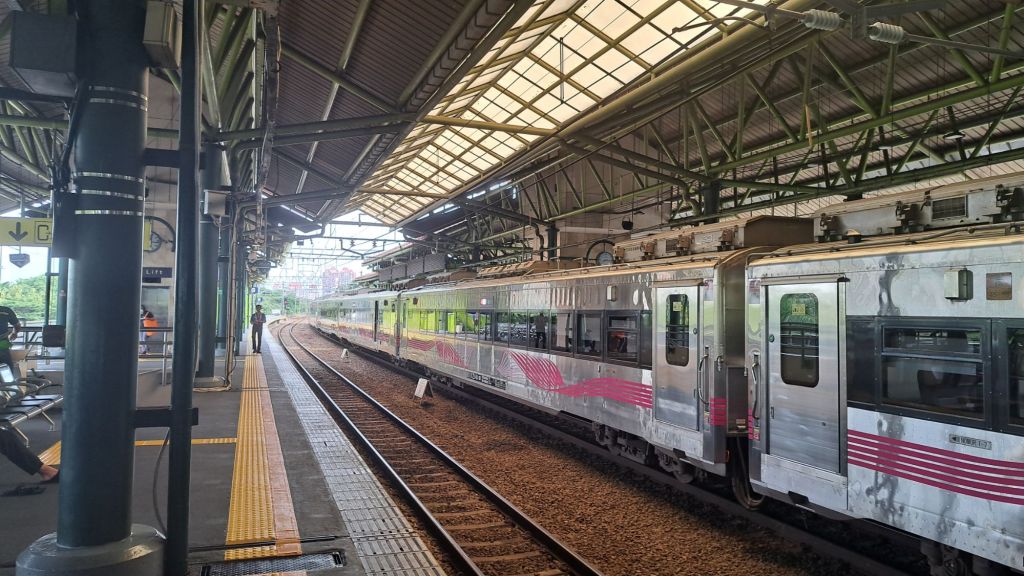
A train arriving at Gambir Station (their trains are infinitely better and cheaper than ours, by the way)

And if you need help, they’ll bend over backwards to help you, even if the conversation is a mixture of the most basic English and Bahasa. And it somehow feels easier and more straightforward than it does at home, suggesting that sometimes it’s better to just roll with the chaos rather than to stress and try and deconstruct the problem to find a logical solution that may or may not even work.

One evening this year, I booked a motorcycle taxi to take me back from my friend’s house to the Sparks Hotel, a 30 minute journey which cost the equivalent of one pound. As the motorcycle – driven by a guy wearing flip-flops and no helmet – perilously weaved between the cars on the freeway underneath the night sky, I realised I was doing something I don’t think I’d have the courage to do at home. It would feel too scary to sit on a motorcycle there, even though the roads are safer and driving standards more uniform. I wondered why that was, and then that same thought hit me again: sometimes it really does take more mental energy to try and coordinate the chaos than to just sit back and surrender to it.

Indonesian windows offer many alternative views.

I thought back to those now infamous words:

“The city you’ll never love”

But, I do. And I always will.

And not just for the people.

A SOLO STAY IN THE WOODS

“You’re never really alone in the woods…”

These words were said during a recent talk I attended by a wonderful local author, Simon Pollard. The sentence does sound a bit like the premise to a low budget slash-horror movie. Blair Witch springs to mind.

“…how can you be, when you’re surrounded by so many different living species, including the trees.”

I went on to learn from him that trees have heartbeats, albeit very slow ones. I was amazed by that (though probably wouldn’t want to admit to my tree surgeon brother that I hadn’t been aware of it before).

I’ve always adored and appreciated nature, even though I often feel that I know so little about it. Sometimes I feel that that makes me a bit of a fraudulent fan, but you don’t need to be able to identify every tree or be literate in compostable irrigation to truly enjoy it.

All you really need to do, is observe it, in every sense. To look at it. Hear it. Feel it. Inhale it. And yeah, you can taste it too… but you kinda need to know what you’re doing if you want to go down that route. I certainly don’t, but a foraging course with somebody who does is definitely on the bucket list.

You also need to treat it with the same respect you’d give any other living being. Don’t do any harm to it, and let it simply be itself.

I had a week off work and knew I needed a change of scene rather than be in the same flat I work from every day, but I didn’t really fancy going too far away. I found a gorgeous bell tent on Air BnB in a village 20 minutes from home and decided to head there for a few days to focus on my writing and do some new blog posts, like this one.

The description of the site included a lot of words like “remote” and “secluded”. To some people these are scary words, and in normal life, they are to me as well, but for this purpose, they were perfect.

To get there I needed to drive along a number of tiny country lanes that I’d never been down before despite having lived so close to them for years. It was late afternoon on the hottest day in June, and the sun was beating down a golden glow over the Syndale Valley. I could only catch quick glimpses as I was too paranoid about having a head-on collision with a tractor, but whenever I did, I felt a similar glow within.

I was greeted by a very sunny, cheerful lady – the BnB owner – and was then left to my own devices in what was definitely a remote, secluded location in the woods. But it didn’t feel like it. Anything but, actually.

There were birds. Lots and lots of them. I can’t tell you what they were because I’m no ornithologist, but maybe somebody who is can identify them for me from the below phonetics:

“Twiddlywoowootwit” (or maybe they were just insulting me, I guess I am a bit of a twit at times).

“Twt. Twt. Twt. Twt. Twt” (okay. There’s no need to labour the point!)

“mmmHMMHMM,hmmhmm” (fairly sure that one’s a wood pigeon. Think I know that one. Either that or it’s just a bird agreeing with all the other ones that spoke before it. B***h).

Having been sufficiently besmirched by my bird friends I wandered down to the meadow like the cheerful lady had recommended, and came across a gate which opens up to a beautiful looking valley. I wasn’t driving and there were no tractors to worry about at this point, so I could really afford to take it all in.

What a peaceful, glorious, hidden gem in the heart of Kent. A giant golden ingot in the middle of nowhere.

A few miles away from here, people are currently jammed on the ring road in Maidstone. A few miles in the other direction, they’re at the Costa drive-through in Sittingbourne, taking in breathtaking views of the Eurolink industrial estate . In Ashford, they’re steadfastly opening the windows on the High Speed trains in desperation for air.

And I guess I can’t leave out my hometown, Faversham, as the fourth corner in the urban rectangle that surrounds this field. In Faversham, they’re shoo’ing off the seagulls from swooping down to steal rashers of bacon off any more plates (as I’d witnessed earlier that day. And yes I laughed, because it didn’t happen to me, and I’m mean).

Back to the valley, and I just can’t fathom how a patch of land as magical as this exists and can feel so far away from the above, despite being so close.

I think about my love for Kent, and how it grows every day… or at least when I’m out discovering new parts of it. Watford was a great place to grow up, but its presence on my birth certificate is a bit like a dodgy tattoo that you try and cover with your fingers when anyone asks to see it. Kent feels more like home to me.

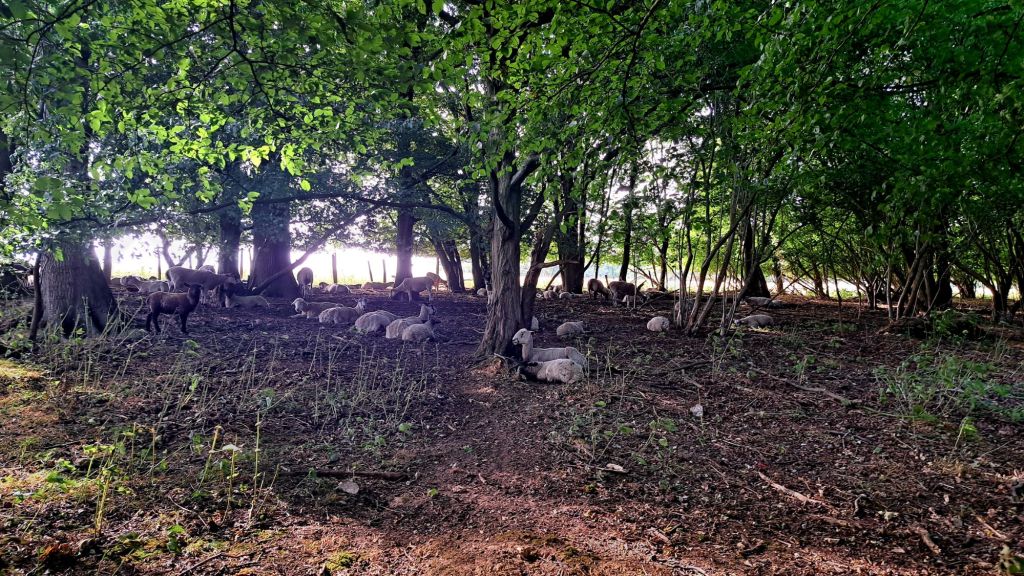
I walk into some dense woodland where I see a group of silhouettes in the distance. Sheep and goats, all gathered underneath the trees to escape the heat. They look at me suspiciously as I approach, and then start noisily BAA-ing to one another.

They’re probably insulting me too.

I walk in the other direction and see one standing completely alone.

“Were they rude to you, as well?” I’m tempted to ask, until he starts baa-ing at me too. I point in the direction of his friends in case he’s a bit lost but he’s reluctant to move.

Probably wants some space from them all.

I enjoy my explore, even if I have now been insulted by two different species and shredded my legs on a number of stinging nettles. It’s peaceful, and the surroundings are authentic. Authenticity is one of my favourite qualities, in anything – people, music, food – and it’s especially present in nature.

Magic happens when you just let something be its true self. To grow in the way it’s meant to. Stifle that for any reason, and you’re just left with something very underwhelming.

These trees have grown in the way they’re meant to, knobbly trunks and all. Those thistles didn’t grow with the help of a watering can, but with rain and sunlight. They haven’t been trimmed back. In nature, everything is as it intended to be.

I spend the rest of the evening writing away apart from having a small break to take an outdoor bath, an experience I recommend everyone do. I see a few planes overhead. One of them is flying from London to Tokyo, and I imagine all the passengers up there, 300 snippets of chitter chatter, and all the cutlery clitter-clatter.

But it doesn’t drown out the volume of the birds, as they flap against the bell tent and continue to insult me, a temporary guest in their home. I see a mouse run out from underneath the washroom, take one look at me, and scuttle away. Bit like some of those Tinder dates.

My heart smiles.

No, you’re never really alone in the woods. Try it.

LES PETITES CHOSES QUI J’AIME* (‘THE LITTLE THINGS I LOVE’ – PARIS EDITION)

(*I used Google Translate. My recollection of French barely extends beyond a poem we learnt in year 8 about a frog who fell from a ladder, so I really can’t claim to be a polyglot.)

Ask any woman aged between 35-45 from where her first impressions of Paris arose, and she may very well respond with, ‘Amelie’, the 2001 film starring Audrey Tautou in which a young French woman with a pronounced-bob hairdo breaks away from an isolated, sadness filled childhood in the countryside to the capital, where she works in a cafe and finds a calling bringing joy to others’ through the simple pleasures in life. 

Her favourite simple pleasures include: plunging her hands into sacks of grain, tapping her spoon on a creme brulee, and skimming stones along the Canal St Martin. She considers the small things to be the big things, and takes masses of delight from them. And she’s quite right about that. And we could probably all do with being a bit more Amelie Poulain.

The film was an unparalleled success which provided many with a beautiful, romanticised insight into Parisian life that could not be learned from GCSE French classes and clichés about garlic and baguettes. As with any piece of art, it wasn’t to everyone’s tastes (a Lancastrian roommate at University was particularly unimpressed, handing the DVD back to me whilst muttering simply, “woman in it is serrrrrr fookinannoyin‘” – poor ol’ critically acclaimed Audrey Tautou!), but in the quarter of a decade since it premiered, it has become one of the most renowned bits of cinema, and even led to an uptick in the number of baby girls being named after the leading character in the early ’00s.

It’s a film that once seen, stays with you. To the point where it’s hard to take a trip to Paris without seeing it through the eyes of Amelie, looking out for the tiny treasures, and yearning to float around the streets and parks of Montmartre as she did, in her uniquely whimsical way. Not here to tick off the famous landmarks, just here to simply feel all the simple feels. And eat all the delicious eats.

So, in the spirit of Amelie, I’ll write not an entire piece on everything that happened during a recent weekend away in Paris, but some of the small things that played a few notes within a beautiful piece:

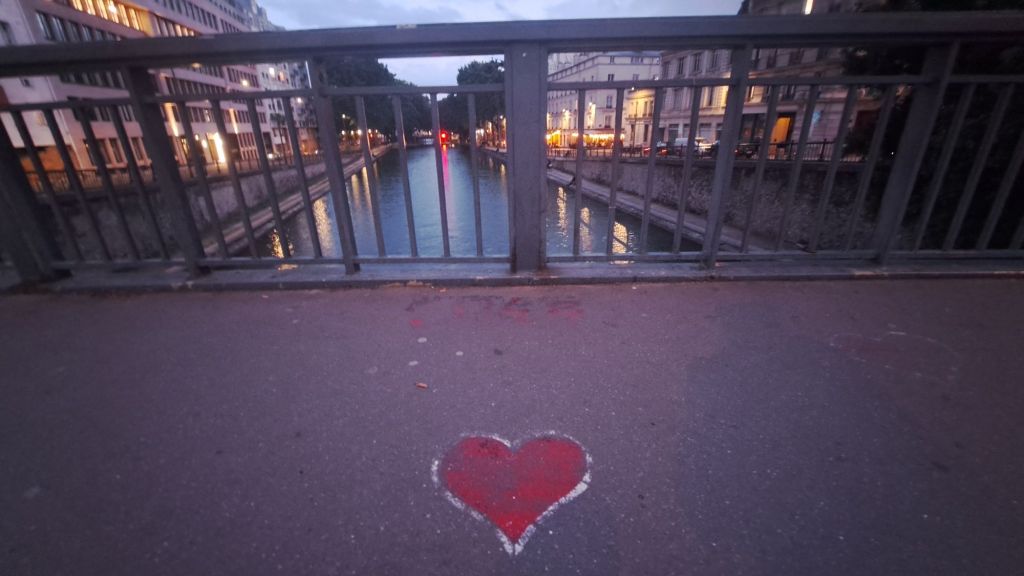
  • A simple heart painted onto the street, on a bridge over Canal St Martin. Maybe the same one Amelie enjoyed skimming stones off of.

  • The perfectly imperfect choir rehearsals taking place in the church at Abbesses. The wrong notes. The stopping and starting over, again and again, until it works.
  • The way Paris makes you question if everything you see is an intentional piece of art. Along the Rue de Dunkerque, a lettuce had been dropped on the pavement outside the greengrocers, and I wondered for a good few minutes about what the meaning of that was. Lettuce be more grounded? Lettuce leaves in a hurry and stumbles? Or maybe it just fell during transit, and means absolutely sod all. Nah, that can’t be the case! This is Paris!
  • The repeated sound of the ‘Correct!’ notification on DuoLingo as a lady in the hostel dorm completes a French language challenge at midnight. This weird fusion of actuallythatsquiteannoyingbutIalsoquiteadmireit. Pa-baaa!
  • The sight of a man on a bicycle wearing headphones, holding the handlebar with one hand and swinging the other to the beat of whatever he’s listening to.
  • A big, grey cat sleeping in a living room window that overlooks the Rue de 3 Freres, to the delight of pedestrians walking by.
  • Amusingly titled food products in foreign supermarkets:
  • An American woman sat next to me in a cafe apologising to the waiter for how she’s “about to pronounce the words here‘”, which I think is very nice of her albeit unnecessary, until she goes on to absolutely butcher ‘Croque Monsieur’ to pieces, and a polite laughter among us – a group of strangers who’ll never see each other again – ensues. Croak Monjaw.
  • Walking alongside the River Seine in the sunshine. Watching a guy do backflips on a wall. And another listening to French hip hop, whilst a third is drawing a landscape in fine ink. So many individual stories unravelling alongside this impressive waterway.
  • Waiting staff who politely make you feel like an A* French student just because you said that the dish was, “delicieux”, aka one of the few bits of vocab you can remember: “Ohhhh your French, tres bonne!”, I mean it’s not really is it? I said one measly word. But thank you anyway, I’ll take it!

In fact I’ll take you any day, France.

WANDERING. WONDERING. WHEREVER.

I could try, but I’m not sure I’d ever be able to put it more clearly and succinctly than Jessica Vincent in the opener to ‘The Best British Travel Writing of the 21st Century’:

“The essence of travel isn’t to move, it‘s to feel”

In my younger years, I had a very – in hindsight – generic and somewhat quite privileged view of travel. Get away from Watford! Go as far as you can go! See as much as you can see! Base the bucket list on a collection of landmarks so often read about – Niagara Falls, Angkor Wat et al – all out there to tick off like some kind of checklist from the Dorling Kindersley atlas that had fascinated me as a young child.

Yet, looking back, it was never the famous landmarks or the ‘ticking things off’ that made the biggest impressions during the more intrepid trips of my younger years. More often than not, they were impersonal experiences featuring crowds, tacky souvenirs, and overpriced ice-creams. It took me a long time to understand why these outings – though lovely and memorable in their own way – had seemed a bit underwhelming. I realised that the curated nature of these experiences – all designed to draw in and satisfy baying tourists – had led to an absence of feeling. I saw, but I didn’t really feel, to be honest, as it seemed like all the true facets of the culture I was visiting had been cloaked by consumerism. And for something to make a lasting impression, whatever it is, you need it to be authentic. That’s why nature never fails:

Over time, I’ve realised that distance – and even place – won’t necessarily determine how much of an impact a trip will have.  The only reason we think they do is because invariably when we head further away than what we’re used to, we are more likely to see many landscapes and cultures for the first time, and this evokes the same level of intrigue as when we ever experienced anything else for the first time, home or away. Consider how excitable infants get over the smallest and most mundane things when they first see them – a curtain to hide behind, the way toilet paper unwinds if you roll it along a floor, a lifelike image moving on a flat screen. We get older and these things become less exciting, and it becomes harder to find anything new in the day to day, so instead we might turn to maps and identify all the places we haven’t seen yet.

And to some degree that works, but when it comes to it, it’s never really the places that matter but the special moments they’ve conjured, as those are when you really feel things. Away from home, these moments may look like inspiring conversations with people you’ll probably never see again, the scents of local spices, getting lost at night and managing to navigate your way back to an air bnb with an awkward lock, or the heartbreaking sight of a young mother placing her wailing toddler into the doorway of a bus that sits stationery in the traffic which chokes an Asian capital. She rhythmically shakes a plastic bottle filled with uncooked rice to make her little girl ‘dance’ – although it’s really a tearful stomp – in exchange for cash from commuters who pretend not to notice that either of them are crying.

These moments affect us because they stretch our senses to places they’ve never been, and see things in a way we’ve never seen. These moments are – as Vincent describes – ‘the essence of travel’, when it’s not just our feet that our moving but most crucially our minds, too.

And when you put it this way, it’s not wrong to think that ‘traveling’ should be about going somewhere far away, but it’s also not wrong to think that you can experience it much closer to home, too. Even from your lounge. An open mind and a few dashes of curiosity is all it takes. A willingness to let those same senses be stretched, even if it’s uncomfortable at times.

To open the eyes to their fullest. To welcome in sights and sounds that may forever change the way you think. To never say never, and to keep wanting to see more in order to open up these opportunities.

Because, like Vincent says, if travel isn’t about movement but about feeling, then let’s go and feel it all, now, wherever we are.

Song of the Day: Hey Marseilles – Rio

I think this is a really beautiful song and probably one of my all time favourites. I first came across it many years ago and loved what I interpreted it to mean. Older now, I interpret the meaning in a different way – which closely aligns with the content of this month’s post – and love it even more.

“EUROPE’S MOST BORING DESTINATION”? THE SURPRISE OF PODGORICA

It’s not that I suddenly shot up in bed one night with a burning urge to visit Podgorica. In fact, prior to this year, I’d never even heard of it, and probably would have assumed it was some kind of jolly eastern European wafer snack as opposed to the Montenegrin capital.

Our chance encounter occurred because I’d booked onto a group trip to explore the Durmitor National Park to the north of the country, and was advised that I should fly into Podgorica airport to join the starting point. Not knowing much about Montenegro at all, I thought it’d make sense to spend a couple of days in the capital before beginning the trip. The first impressions were good, as I booked a lovely looking hotel in the heart of the city for a mere £38 a night. With the accommodation arranged, I started to do a bit more research.

To say the results yielded from internet searches were disparaging about the place would be a complete understatement. Apparently, I’d just booked a couple of nights in ‘Europe’s most boring destination’, a ‘not particularly interesting’ place to visit, and – better yet – ‘Podgorica is a hole!’.
Well. Happy holidays to me! But none of these articles succeeded in convincing me to change my itinerary. Opinions are just opinions, I wanted to see it for myself.

The plane descended from above red-roofed houses that looked like Monopoly hotels scattered over a green mattress and touched down into the airport on one hot Monday in July. The first thing that struck me upon landing was the smell of cigarettes. With the terminal building seeming to be only the size of a saucer, I wondered if I’d landed in an ashtray as opposed to an airport. After the shortest passport control line ever, I stepped outside into stifling heat – a welcome break from the exceptionally wet British Summer – and spotted a guy who looked like a Montenegrin version of Harold Bishop from Neighbours holding my name on a piece of paper. The hotel had arranged a taxi for me, and here was my driver. He walked me over to the taxi and offered me a cigarette on the way, to which I shook my head. At least, I think that’s what he was doing. If he was checking that I was okay with the smoke in the car, he certainly wasn’t paying any attention to my headshake, but – terrible though smoking is – there was something somewhat endearing about the casual nature of it all. I held my breath and gazed out the window at signs adorned in unfamiliar Cyrillic script, and thought to myself, “I have officially arrived in a place some consider to be the most boring in Europe. Hello, Podgorica!” It will take me a few days to learn that the correct pronounciation rhymes with ‘pizza’.

As we reach the city centre, I begin to hear a growing chorus of car horns, and Harold does not hold back either. Beep beep beeeeeeep. We stop in a random street, where another vehicle is blocking the layby Harold wants to pull into, and I realise we have arrived at my hotel. Harold presses his horn firmly, but the driver in the vehicle ahead is playing on a tablet, and has no intention to move. This goes on for a while until Harold is within a fingernail of the rear bumper, which is the same point I notice large dents in virtually all the vehicles around us, including one with its entire front grille peeled off. It doesn’t take long to identify that this is not a city in which I would wish to drive.

Parking melee eventually overcome, Harold kindly carries my suitcase to the hotel reception where I am surprised to see a doppelganger of somebody I work with at the front desk.
“Oh, hi! Sorry I haven’t replied to your e-mail yet” I start to say. Well – not really – but it wouldn’t have felt too amiss if I had. Nonetheless, there’s something comforting about this small fraction of familiarity. Entering a new country for the first time can sometimes feel incredibly strange at first, and this was no different, but it would very soon fade.

The receptionist’s name is Teodora, and she is very helpful. Treating her a bit like a genie arising from a magic lamp, I am keen to restrict my number of questions / wishes to three. Not being able to speak a word of Montenegrin, I am reliant upon her years of studying English for our communication to be a success, and don’t want to take advantage of that. I die a little inside every time I see a British person abroad start reeling off demands with no attempt to check that the recipient understands English, and I don’t want to be ‘that person’. I select my questions carefully. Teodora says that yes, I can leave my luggage at the front desk whilst I go and explore, as it’s too early to check into my room, and yes there’s WiFi, but no, they don’t have any print-out maps. I have many more questions, like where’s the best place for a wander, but feel I’ve put Teodora through enough, and head out to work the rest of it out for myself.

I step outside and having no map – either physical or on my phone – make a mental note of whereabouts I am: downtown Podgorica, right opposite Independence Square. I head down a busy road which from memory of Google Maps would take me towards the old town, something I’ve read up on as a place to see. After some welcome moments under the shade of trees in Kings Park – built to commemorate the coronation of Nicholas I in Montenegro – I follow a stony staircase down towards the Moraca River and cross a bridge from which I see bathers dipping into the water. I make a mental note to return here after my trip to the old town, which is now only a few hundred metres away, up another stony staircase.

The old town really is an old town, but not quite the sequence of cobbled squares and Lipton parasols in which I’d been expecting to enjoy some sort of luminous, carbonated citrus beverage. Instead, it’s a scattered arrangement of small houses – some of which are completely dilapidated – and a couple of mosques. I later find out that this is an Ottoman-era neighbourhood which served as the hub of the city between the 15th and 19th centuries before being heavily bombed during World War II. I am struck by the amount of Argentinian-themed murals on display, including a homage to Diego Maradona captioned, ‘Adios El Pibe De Oro’. It transpires that the two countries have long-standing good relations, and that the South American country has the largest communities of Montenegrins outside of Europe. This isn’t something I’d ever have imagined to be the case, but feel so grateful to learn.


The heat is immense and I can start to feel sweat beads roll like rivers down my back, so take temporary solace in a nearby supermarket to stand near a fridge. I use this as an opportunity to officially the declare the start of ‘Crisps Around the World’, which is basically a fancy name I give to the act of ogling savoury snacks in foreign supermarkets and trying to select the most bizarre and unusual to try. Within a few moments of reviewing the offerings I feel I’d have more choice if I were playing a tobacco-themed version of the game… and there are plenty of crisps on display, just none that seem particularly novel. I wander out of the supermarket and begin to worry that I may have lost my bearings, until I see The Hilton hotel up ahead, which I recall passing on my way here. ‘Good old Paris and family‘, I think to myself in a moment of relief. I’m reassured by the fact that if I were to get completely lost and need to ask someone for directions, there’s at least one building here that I know how to pronounce.

I stop in the city centre for a tasty lunch of beef cream soup, bread and Montenegrin Niksicko beer that come served with a bonus waft of Lovcen cigarettes from the people next to me. Again, though part of me thinks it disgusting, another welcomes the sensory reminder of a bygone era, when all holidays smelt like sunshine, chips, and tobacco. I look back over Independence Square and wonder what the name means. Montenegro is a tiny country which could fit into the UK 18 times. Its population is only a little bit over that of Leeds, at 617 thousand. Surely a country of this size has a history small enough to quickly digest? Well – yes and no – but in its briefest form, it was part of the Kingdom of Yugoslavia for most of the 20th century. When the Socialist Federal Republic of Yugoslavia was dissolved in 1992, Montenegro joined hands with Serbia to become the Federal Republic of Yugoslavia, later known cunningly as ‘Serbia and Montenegro’ from 2003. In 2006, a referendum of Montenegrin independence took place with the results in favour of the country breaking off from Serbia, and in the Summer of that year it joined the UN as its 192nd member state.

After going back to my hotel to officially check-in and change attire, I head for another walk around the city. Njegoseva Street is where it all appears to be happening, and I stop off to refresh and do some journaling in a random bar with a waitress who looks less than thrilled to see me but is polite enough. I find myself thinking back to the spot by the Moraca River where people had set up a makeshift beach and feel it’s time to go back and check it out properly. I’m so glad that I do. By the time I return, the numbers have grown, the music is in full flow, and a bar framed in fairy lights has started selling drinks and t-shirts. A number of people – including some German tourists – swim in the river towards the Blazo Jovanovic bridge whilst their friends sit on the shingle smoking cigarettes, sunbathing, and enjoying loud conversations. A guy with dark, deep set eyes – like that of an albatross – serves me a Niksicko before returning to the riverbank to fish for trout – a favourite on Montenegrin dinner tables – and I sit on a stone wall, taking it all in. It’s strange to think I was waking up in an airport near Horley this morning. Right now, I couldn’t feel further away. The soft air, the excitable tingle from strange surroundings, the setting sun shimmering on the water – this is peace.

I think about what those Google searches said about Podgorica, and already I’m coming to the conclusion that they were a load of rubbish. I fully admit that what I’m experiencing is no Paris, no London, no New York, but there is still something quite sublime here – a city making the best of itself, in an understated yet enjoyable way. I walk back to my hotel via the 17th century clock tower that was framed as one of the key sights to see in Podgorica, a symbol of historic Turkish rule. As with many famous landmarks, it’s somewhat underwhelming, looking exactly the same in real life as it does on Google. You’ll visit Podgorica for reasons beyond this, I swear.

It’s the end of day 1 in Podgorica. Am I bored? No. Do I think it’s “a hole”? Absolutely not.

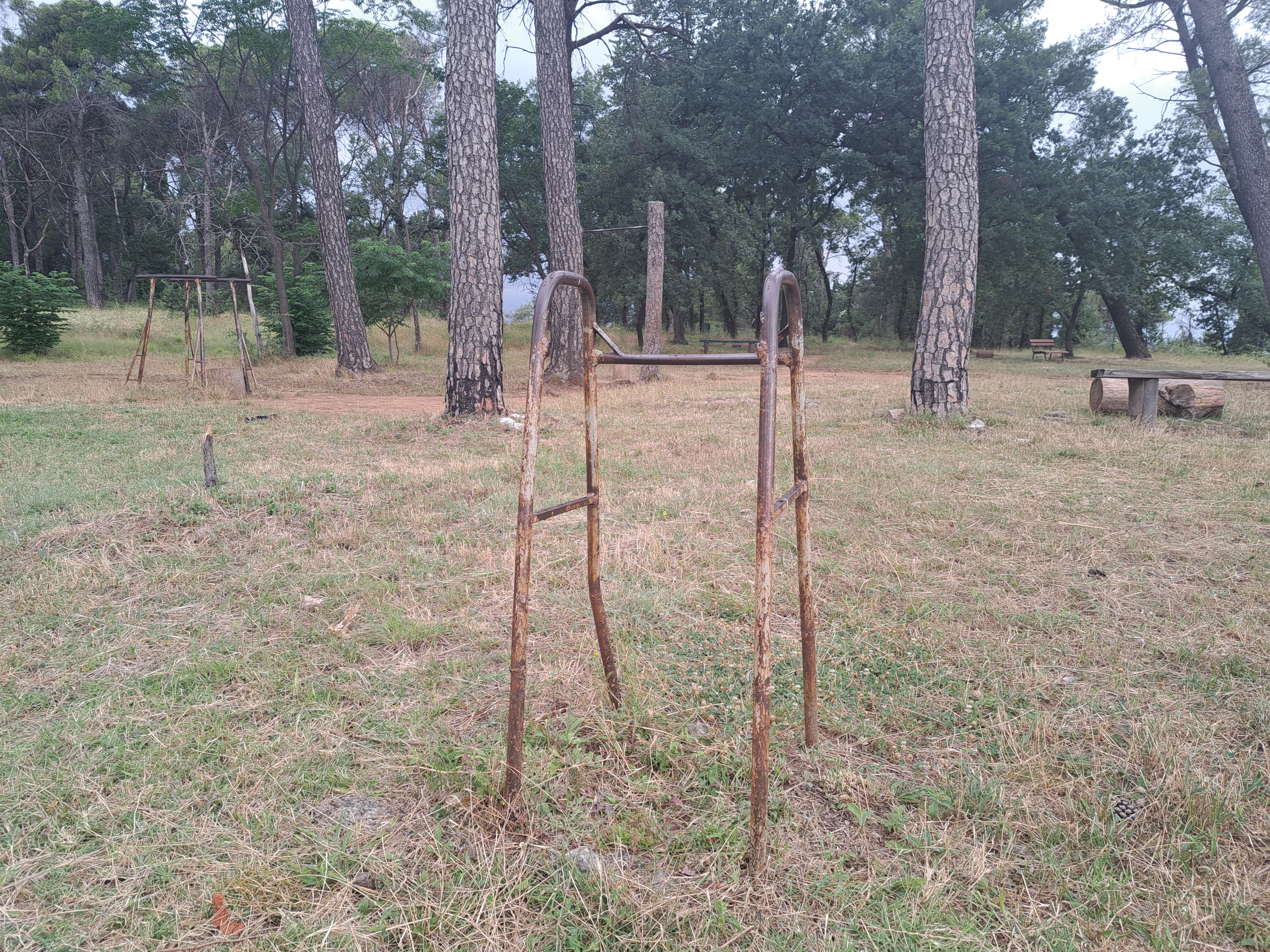
Day 2 starts with a hotel breakfast of random cold meats, cheeses, olives and pickles. The weather is slightly cooler than yesterday, and I choose to head to Gorica Park, a massive forested hill in the north of the city from which Podgorica gets its name (‘under the hill’). I am quite taken by Gorica Park. There is something quite alluring about its range of green shades and panoramic views of the city, reached by its seemingly endless trail paths. A wire-fenced, brutalist looking football pitch sits at the brow of the hill and opposite is an outdoor gym formed from corroded iron bars affixed to trees, looking a little like something straight out of Pripyat. I give a couple of the pieces of equipment a go before concluding that I should desist; I’ve a physically demanding week ahead, and shouldn’t go breaking my ankles on the second day.

Before long, there are flashes of lightning, and heavy rain sets in. Becoming a bit scared, I retrace my footsteps for about thirty minutes, back to the log-cabin style cafe in the centre of the park where I can take shelter with an apple and peach juice recommended by the English-speaking waiter. Heavy flumes of rain cascade from the awning and a ferocious wind blows menus across the outdoor seating area. It’s quite a contrast to yesterday’s heat, and an ever so slightly welcome one. Likewise, when the heat returns, it will be welcome back, and maybe there’s room in life for both. I sit tending my juice for an hour or so, literally waiting for a storm to pass, and think about how a swooshy font somewhere on Instagram is telling me I should be dancing in the rain. Although that’s a lovely sentiment, in these conditions it’s a pretty dangerous one. It later transpires that two men – one a Turkish construction worker in Canj, and another a Montenegrin enjoying a game of golf on the coastal Lustica bay – are killed by the lightning I watch from the safety of the cafe.

In the afternoon, once the rain has subsided and sunshine returned, I head back to the ‘beach’ at the Moraca River. My new happy place. I sit in a small cove, welcoming its shade, and write whilst looking out over the water. I am very tempted to swim, but on this occasion the voice of caution within prevails. The water moves rapidly, and though it looks nice and clean, I don’t know enough about what’s in it or how fast the current moves. Instead, I watch as a small turtle crawls over the pebbles, basking in the heat. A lady in floral dress then passes by, looking very wistful.

“She’s having a nice moment”, I think to myself, before seeing her partner following a few metres behind her, recording her with his phone.

Instagram influencer.

As for me, I’m just a novice writer whose most regular reader is my mum. I can’t influence you in the same way these perfectly curated Instagrammers can, but hey, at least I can give you a .JPG of Podgorica’s most famous attraction that you can print and pin on your fridge if you feel so particularly inclined.

At this reflective moment, a massive filling dislodges and I have to take a temporary return to reality in order to arrange a dentist’s appointment for soon after I return home. It wouldn’t be a holiday of mine without a dental-related drama! I purchase Panadol and mouthwash and hope for the best for now.

That evening, I head for a dinner of chicken in hazelnut sauce in Njegoseva Street before returning to Gorica Park. It’s still light and the settings are ripe for a beautiful sunset walk, especially with the storm having finished. I am surprised to see another turtle, a Hermann’s tortoise, crossing a path near to the ironwork gym I’d sampled earlier. Gorica Park is full of surprises, and I find myself liking the place more and more. It’s mysterious, it’s understated, and it’s beautiful. As I later make my way out of the park, I notice a small cafe bar – Klub Bocara – decked out in fairy lights and showing the Netherlands vs Romania game, and identify it as a perfect pit-stop. I sit on a table next to two girls who are smoking and playing a game of poker dice, and sip on another fresh, cold Niksicko lager. This place has a real vibe, one that just clicks. The evening warmth, the international football, the multiple languages being spoken, the fairy lights, the swing jazz on the radio, and A CAT! I stay there for a lot longer than planned just taking it all in and absorbing the moment (and taking every opportunity I can to stroke the cat). There’s tonnes I need to do to prepare for the next few days, but it can all wait.

Prior to moving on in the morning I reflect upon the last two days in Podgorica, and think back to those Google reviews. Is Podgorica the most vibrant, exciting place in the world? No. It’s not even the most vibrant and exciting place in Montenegro, as later trips to Durmitor and Budva alone would attest. But, does that mean it’s boring? Certainly not. And it’s certainly no ‘hole’. I’d go as far to wager that if you think that strongly about a place, it’s probably not the place that’s boring, but you. A lot of tourists need to understand that places don’t necessarily have to peacock to please those that visit. If they did, they’d all start looking the same, losing their unique identities to whatever algorithms constitute ‘amazing cities‘. Instead, it’s far better to take the time to really explore somewhere, and see and appreciate it for what it really is. What I particularly liked about Podgorica was that it didn’t pretend to be something it wasn’t. If it did, it probably would have felt like a lot of other places in the world.

Instead, it felt like Podgorica, Montenegro. And I absolutely loved it for that.

LESSONS IN WOMANHOOD FROM SOME LADIES ON A BUS

This month I’ve struggled to unfasten myself from Cheryl Strayed’s gripping memoir, ‘Wild’. It tells the tale of her 1,100 mile hike across America’s Pacific Crest Trail in the 1990’s, as a woman in her late ’20’s.

Cheryl undertook this mammoth feat at a time in her personal life in which she was struggling, having recently lost her mother and divorced from a man she still cared about a huge amount but just couldn’t see a future with. For her, the Trail was an opportunity for self-discovery, and a way to prove to herself that she not only can, but does. I’m only halfway through the book but already understand why it was a #1 Best Seller in the New York Times, and material for a blockbuster movie starring Reese Witherspoon.

It seems quite fitting to be reading this book in the same week as International Women’s Day, a time to revere in all things womanhood, and celebrate those wonderful females both past and present who have ever taken a risk that paved the way for the rest of us to do the same. Women who have ever diverged from the beaten track of societal norms. Women who didn’t – or don’t – allow their gender to determine what they can or can’t do. Strong, loving and caring women who hold their own and have a positive impact on those around them, in whatever way that may be.

I have met many inspiring women over the years, for a multitude of different reasons, and I appreciate their influence every day, but recently – and no doubt inspired by my choice of literature at the moment – I have particularly been thinking about female explorers, a bit like Cheryl Strayed (who I obviously haven’t met, but would love to one day). Women who set out on their own to explore the world around them, even if their bags were painfully heavy (like Cheryl’s), even if their shoes were worn, and even if – by the very nature of being a lone woman in a foreign place – they were at a heightened risk of nasty things happening to them along the way.

There have been a number of inspiring female explorers throughout history. Amelia Earhart or the aptly named Isabella Bird may be among the first that spring to mind, and whilst their influence cannot be downplayed, I often think that among the most inspiring are those who we come across in our day to day. The hidden heroines who come in and out of our lives leaving longer term lessons behind.


I thought back to a trip to Canada I had made in the Summer of 2006, a few months before my 21st birthday. It was my first time traveling without anyone I knew and as such, I had approached it with a bit of trepidation and unease. Overall, I managed fine, but do remember being a little upset one day whilst we were staying in a beautiful riverside hostel at Fort Coulonge – some nonsense to do with a phone and worrying about some administrative issues back home regarding University accommodation for the following term. I remember sitting on the thin, lumpy mattress of a bunk-bed that looked like it could snap should somebody set down their rucksack onto it too swiftly, and crying. An Australian nurse in her late ’30s named Jo – who was on the same trip – saw I was upset, sat down next to me and took my hand whilst listening to me talk through what was – in hindsight – a bit of a non-problem in the grand scheme of things, involving lots of mundane detail. She listened patiently, offering support and assurance throughout, before suddenly adopting a more stern demeanour and heading out the door to join the rest of the group:

“Now, get ya shit together!! You won’t get this moment again.

And maybe, initially, I was quite taken aback by this sudden change of tone and (also a little embarrassed for having blubbered away at somebody I’d only known for two days). But, within minutes I found myself away from the bunk and plunging into the Ottawa River with my fellow travellers, trying to get back into the moment as we all played a game. I remember feeling rejuvenated by Jo’s laid-back attitude, and perspective on what really mattered and what didn’t. What she had said had worked, and transformed the course of my afternoon, shifting my focus back to where it needed to be. It’s worth noting here that those administrative concerns I’d been so worried about were resolved within a few frantic but otherwise non-descript days of phone-calls when back home a few weeks later, to the point where I can’t even remember what the exact problem was, and certainly don’t hold it to the same historic merit that I do the Canada trip. Yet at the time, it had felt massive. Jo’s perspective had been correct.

On the same trip was Dorothea, a lady from the Black Forest – who was again in her late ’30’s – and would sit on the minibus with her earphones in and just do her own thing, laughing at her own jokes – most of which the rest of us didn’t understand – splitting away from the group during most stops, but engaging with us when it mattered, and fundamentally always smiling and being kind. A really calming presence. Hana was a flame-haired lady in her 60’s – also from Germany – who was on the trip having recently become widowed, and wanting to do something a bit special to try and make the best out of a chapter that could easily have been overwhelmed by grief. She was the oldest person on the trip by at least twenty five years but you wouldn’t have been able to tell from the way in which she joined in with everything, especially the wild water rafting! I remember her welcoming smile and state of chill, and also her maternal instincts, which included paying attention to my nutritional needs:

“EatzummorepotatoZophie!” she had once interrupted a story she was telling to snap at me when she noticed I’d finished my lunch, thrusting a foil container of cheesy diced potatoes into my immediate sphere and simultaneously ensuring I fulfilled my potassium quota for the day. It’s funny how some sentences stay etched in your mind for years to come; that one certainly did in mine. I hear it every time I eat potato, and since it’s now been almost eighteen years, I guess I probably always will.

BusDriverJen, a Canadian native from Ontario, had driven us around for much of the trip as our tour-guide, and she too was an energising character. She was so passionate about her work and for us to feel the same levels of enthusiasm for Canada and for its native music – such as Stompin’ Tom Connors‘Hockey Song’ – that she did. In reality, the most any of us wanted to do with Stompin’ Tom Connors’ after hearing the song for the ten-thousandth time within a day was to throw the CD right out of the window and firmly into the trunk of any single one of the pines we passed on our route so that it would smash into smithereens. Despite this, the enthusiasm had been infectious and inspiring. The Hockey Song is saved onto one of my Spotify playlists and appears every now and then whilst on shuffle mode. I no longer want to fervently chuck it at a tree, even if such a thing were possible. Instead I think about that trip, the long bus journeys, BusDriverJen warbling out, ‘the good ol’ hockey gaaaaaame’ at the wheel in a valiant effort to encourage the rest of us to join in; some apprehensively attempting, and the likes of Dorothea adjusting their headphones and pretending to be fixated by something out of the window so as to avoid having to do so.

Meeting all of these interesting women within the space of a couple of weeks had been an incredibly powerful and marked experience. The volume of independent, explorative women I met on the trip had outnumbered that of men, and that’s not meant as a slight on males, each of the ones I met on the trip had been lovely too. It’s more an acknowledgement of having come across the unexpected, and taking inspiration from it at an impressionable age. Until that point I had only ever heard or read about solo female travellers – never met one myself – yet here they were, dancing to their own headphones in the minibus, calmly responding to intrusive questions about where their husbands were, and defying well-intended yet slightly patronising suggestions on where they should and shouldn’t be going if traveling alone. I remember considering these women in a similar way that you may consider a particularly inspiring teacher in school, when you quietly hope that you might turn out to be a bit like them by the time you reach their age.

At the end of the trip we all went our separate ways. Social media was still to become a real thing back then so instead we’d all exchanged e-mail addresses and vowed to keep in touch that way. Within a few months the e-mails had tapered off and these people I’d come to know so well within those two weeks had faded back into being strangers again, the same ones who’d first stepped onto the minibus and introduced themselves all those months before. In the years that have passed I can’t claim to have thought about them overly often. Life is ever moving and it’s been a very long time. Yet, almost twenty years later, as I sit and really think about it, I see the impact that meeting them had had on me, a planted seed, how in their own ways they had altered what I had thought womanhood was all about back then, that it wasn’t just about x, y and z but about all the other letters of the alphabet too, including solo explorations in a world that had convinced us that as women, we shouldn’t.

That womanhood could be – and is – about absolutely anything you want it to be.

Happy International Women’s Day (for two days ago) to all the inspiring women out there. Keep doing what you do and being true to what you believe in.

Song of the Day: Chantal KreviazukBefore You

This seems a pretty appropriate one for the post. This had been another song on BusDriverJen’s CD of Canadian music, but this tune I didn’t mind hearing umpteen times a day. Beautiful song.