A SOLO STAY IN THE WOODS

“You’re never really alone in the woods…”

These words were said during a recent talk I attended by a wonderful local author, Simon Pollard. The sentence does sound a bit like the premise to a low budget slash-horror movie. Blair Witch springs to mind.

“…how can you be, when you’re surrounded by so many different living species, including the trees.”

I went on to learn from him that trees have heartbeats, albeit very slow ones. I was amazed by that (though probably wouldn’t want to admit to my tree surgeon brother that I hadn’t been aware of it before).

I’ve always adored and appreciated nature, even though I often feel that I know so little about it. Sometimes I feel that that makes me a bit of a fraudulent fan, but you don’t need to be able to identify every tree or be literate in compostable irrigation to truly enjoy it.

All you really need to do, is observe it, in every sense. To look at it. Hear it. Feel it. Inhale it. And yeah, you can taste it too… but you kinda need to know what you’re doing if you want to go down that route. I certainly don’t, but a foraging course with somebody who does is definitely on the bucket list.

You also need to treat it with the same respect you’d give any other living being. Don’t do any harm to it, and let it simply be itself.

I had a week off work and knew I needed a change of scene rather than be in the same flat I work from every day, but I didn’t really fancy going too far away. I found a gorgeous bell tent on Air BnB in a village 20 minutes from home and decided to head there for a few days to focus on my writing and do some new blog posts, like this one.

The description of the site included a lot of words like “remote” and “secluded”. To some people these are scary words, and in normal life, they are to me as well, but for this purpose, they were perfect.

To get there I needed to drive along a number of tiny country lanes that I’d never been down before despite having lived so close to them for years. It was late afternoon on the hottest day in June, and the sun was beating down a golden glow over the Syndale Valley. I could only catch quick glimpses as I was too paranoid about having a head-on collision with a tractor, but whenever I did, I felt a similar glow within.

I was greeted by a very sunny, cheerful lady – the BnB owner – and was then left to my own devices in what was definitely a remote, secluded location in the woods. But it didn’t feel like it. Anything but, actually.

There were birds. Lots and lots of them. I can’t tell you what they were because I’m no ornithologist, but maybe somebody who is can identify them for me from the below phonetics:

“Twiddlywoowootwit” (or maybe they were just insulting me, I guess I am a bit of a twit at times).

“Twt. Twt. Twt. Twt. Twt” (okay. There’s no need to labour the point!)

“mmmHMMHMM,hmmhmm” (fairly sure that one’s a wood pigeon. Think I know that one. Either that or it’s just a bird agreeing with all the other ones that spoke before it. B***h).

Having been sufficiently besmirched by my bird friends I wandered down to the meadow like the cheerful lady had recommended, and came across a gate which opens up to a beautiful looking valley. I wasn’t driving and there were no tractors to worry about at this point, so I could really afford to take it all in.

What a peaceful, glorious, hidden gem in the heart of Kent. A giant golden ingot in the middle of nowhere.

A few miles away from here, people are currently jammed on the ring road in Maidstone. A few miles in the other direction, they’re at the Costa drive-through in Sittingbourne, taking in breathtaking views of the Eurolink industrial estate . In Ashford, they’re steadfastly opening the windows on the High Speed trains in desperation for air.

And I guess I can’t leave out my hometown, Faversham, as the fourth corner in the urban rectangle that surrounds this field. In Faversham, they’re shoo’ing off the seagulls from swooping down to steal rashers of bacon off any more plates (as I’d witnessed earlier that day. And yes I laughed, because it didn’t happen to me, and I’m mean).

Back to the valley, and I just can’t fathom how a patch of land as magical as this exists and can feel so far away from the above, despite being so close.

I think about my love for Kent, and how it grows every day… or at least when I’m out discovering new parts of it. Watford was a great place to grow up, but its presence on my birth certificate is a bit like a dodgy tattoo that you try and cover with your fingers when anyone asks to see it. Kent feels more like home to me.

I walk into some dense woodland where I see a group of silhouettes in the distance. Sheep and goats, all gathered underneath the trees to escape the heat. They look at me suspiciously as I approach, and then start noisily BAA-ing to one another.

They’re probably insulting me too.
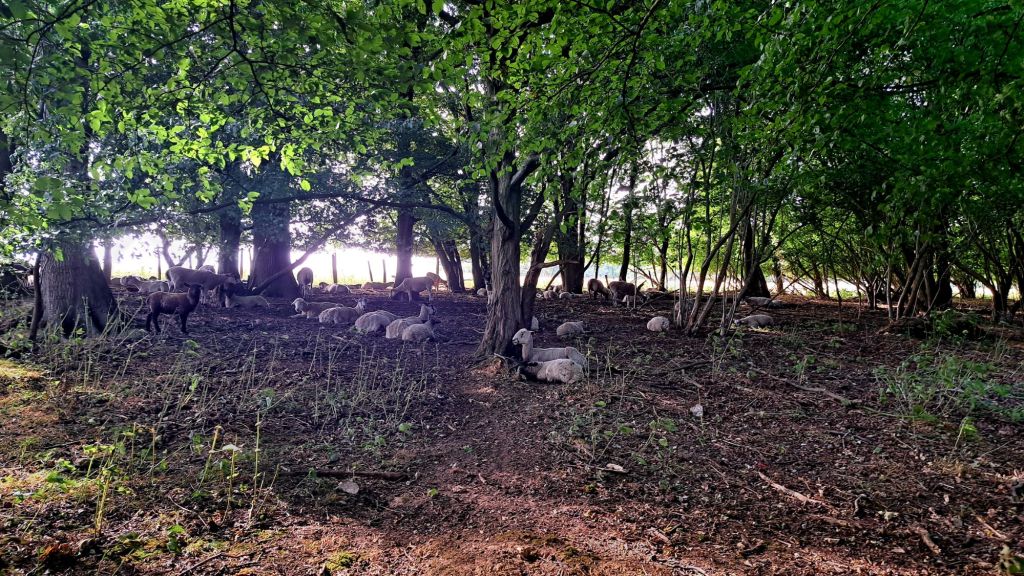
I walk in the other direction and see one standing completely alone.

“Were they rude to you, as well?” I’m tempted to ask, until he starts baa-ing at me too. I point in the direction of his friends in case he’s a bit lost but he’s reluctant to move.

Probably wants some space from them all.

I enjoy my explore, even if I have now been insulted by two different species and shredded my legs on a number of stinging nettles. It’s peaceful, and the surroundings are authentic. Authenticity is one of my favourite qualities, in anything – people, music, food – and it’s especially present in nature.

Magic happens when you just let something be its true self. To grow in the way it’s meant to. Stifle that for any reason, and you’re just left with something very underwhelming.

These trees have grown in the way they’re meant to, knobbly trunks and all. Those thistles didn’t grow with the help of a watering can, but with rain and sunlight. They haven’t been trimmed back. In nature, everything is as it intended to be.

I spend the rest of the evening writing away apart from having a small break to take an outdoor bath, an experience I recommend everyone do. I see a few planes overhead. One of them is flying from London to Tokyo, and I imagine all the passengers up there, 300 snippets of chitter chatter, and all the cutlery clitter-clatter.

But it doesn’t drown out the volume of the birds, as they flap against the bell tent and continue to insult me, a temporary guest in their home. I see a mouse run out from underneath the washroom, take one look at me, and scuttle away. Bit like some of those Tinder dates.

My heart smiles.

No, you’re never really alone in the woods. Try it.
WHO’S A FAN-UARY?

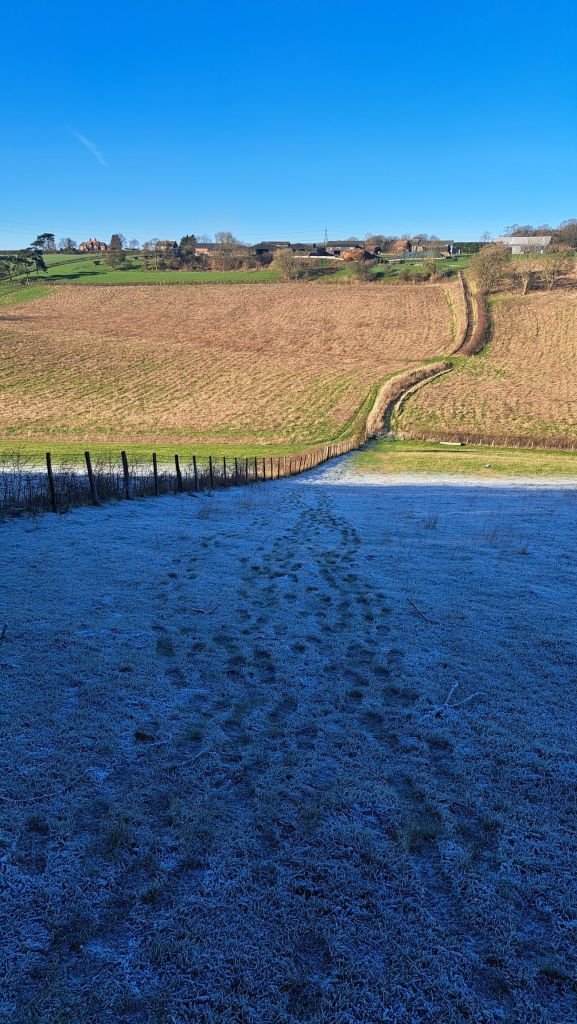
This is such a January image. And not just because it was taken in… January.

People seem to hate on this month a lot – a bit like how they hate on Wetherspoons and pigeons (see previous posts) – prematurely and unreasonably sometimes.

And yes, there’s a few things we can rightfully accuse January of doing wrong. Making us feel poor – yes. Being freezing – yes. Having to listen to people who chose to do Dry January moan about it for a month – yeees!

But put these things to one side and I think there’s a lot of nice things about January too.

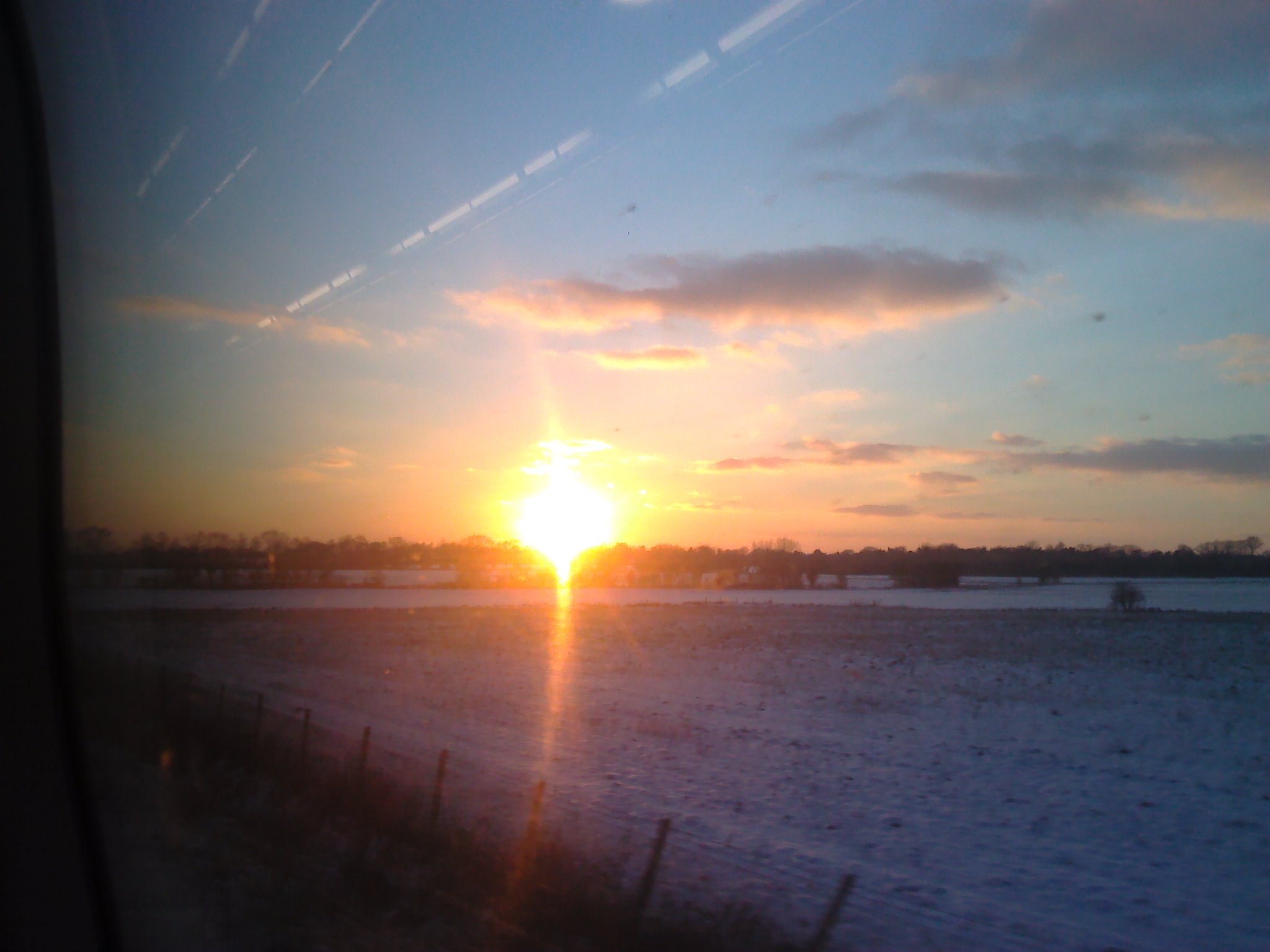
Winter sun – like what appears at the top of the photo above – might just be my favourite of those things, because I think – like a lot of things – it shines brighter when it’s unexpected. During Summer we’ll moan if it’s too hot – or not warm enough – whereas in January we’re just grateful to see it at all. A welcome break from the grey, and a sign of longer days to come.

And then there’s the frost. Sure, it might be cold to the touch – a bit slippery even – but I love how it makes the fields sparkle in the mornings as they reflect the light from the sky. Maybe we didn’t get the white Christmas we wanted, but maybe we’ll get the white January we need instead. It might not be snow, but they look pretty similar. This iced hill in Kent was the nearest I’d get to mountains this winter, but it helped!

It also feels like a month where you can feel permitted to nest more. To focus on trying to keep warm and save money. To read inspiring books and make soup. Lots of soup. (How do you know you’re pushing 40? Well, you and your friends get massively excited about making different soup combinations, and a growing proportion of your phone gallery looks like bowls of steaming goodness served with bread.)

January is a month of two sides, and one of those is so wonderful it makes the other one worth enduring.

I’m a fan-uary. Are you?

A SMIDGEN OF APPRECIATION

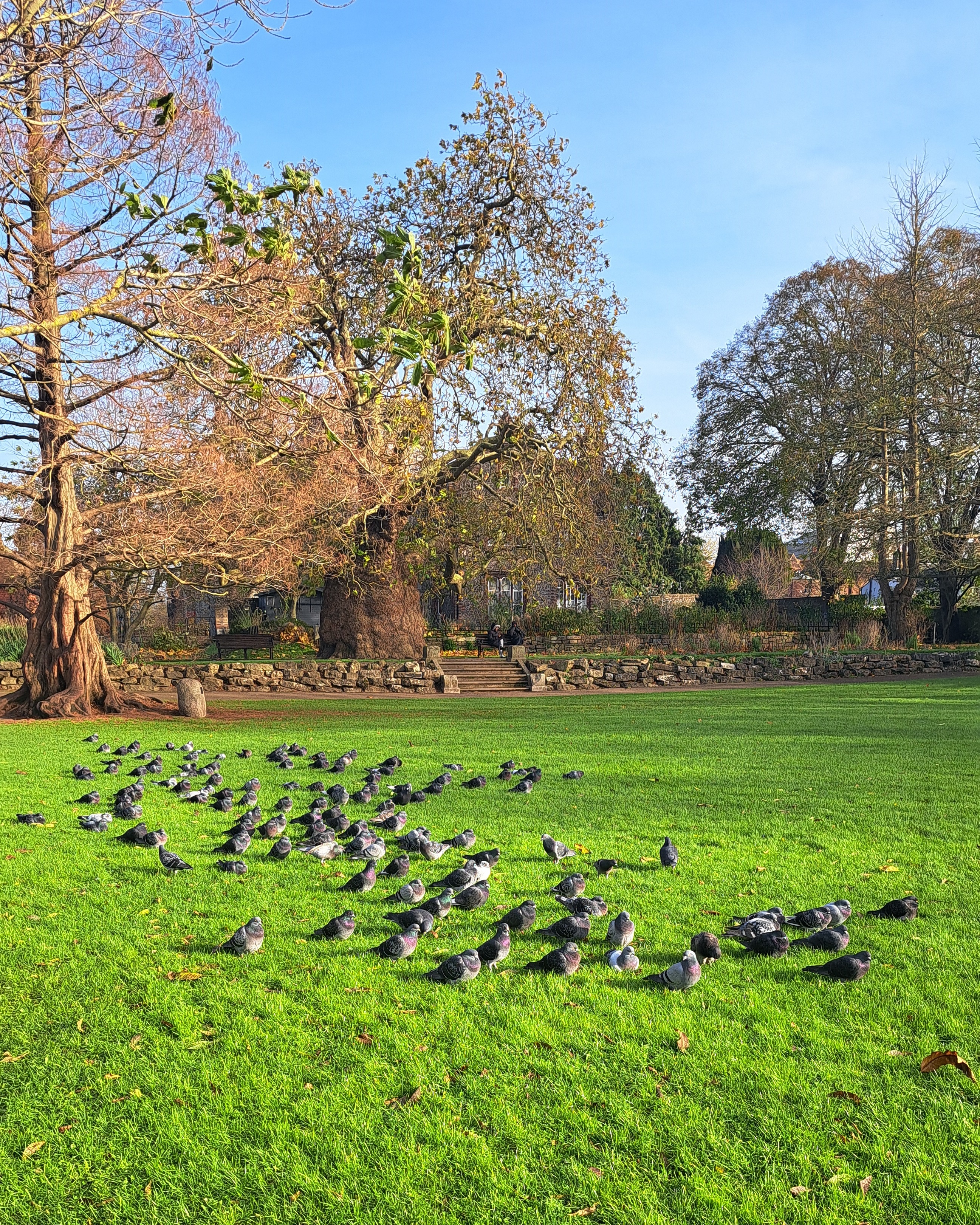
Last week, as 40 mph winds swept up the country and kept swathes of people indoors, I passed a massive flock of pigeons just sat chilling in the park, chattering away to one another whilst some of them waddled around. They seemed to be appreciating the lower numbers of humans hanging about, and had pretty much commandeered the whole place to themselves. In the context of wider chaos caused by the weather, it made me smile.

I often feel a bit sorry for pigeons. I think they get quite a hard time, through no fault of their own. That’s not to say I’m about to go picking one up for a cuddle anytime soon, but I’m more than happy to co-exist on this land with them, and don’t find them as irritating as a lot of other people do. They’re just living beings at the end of the day, and aren’t we all capable of being a bit of a nuisance at times?

Last Summer I came across a pigeon that had been badly injured and was limping around in circles on a footpath, looking really pained. It was impossible to just walk by, and I spent thirty minutes phoning around local organisations for advice, trying to reassure old pidge that help would be coming and he’d be flapping those wings again soon. Nobody was really interested, and though I can absolutely understand the concerns around the potential to carry disease, it did break my heart a little that I ended up having to walk away from something experiencing clear distress. I’ll never know what happened to my little pigeon pal, but I can pretty much guess.

So call me silly, call me soppy, call me a 39 year old woman who likes cats (which I appreciate is slightly ironic), but now, every time I see pigeons who are bumbling about aimlessly – but healthily – my heart smiles a bit. Just let them be.

Plus, with all those jazzy greens and pinks on their necks, I think they have a pretty funky fashion sense too.

SAY-SUN-ARA, SUMMER?

This Summer seemed to go as quickly as it came, but there are still hints of it here and there (if you search hard enough!).

The other week I particularly admired the resolute energy of this ageing sunflower in a nearby field. It was clearly a bit beyond its best, a bedraggled, hump-backed figure swaying in a lilting September evening breeze, ochre petals that were once lemon yellow wilting and reluctantly falling to join all the decaying neighbours on the ground.

Gastropod inflicted holes. General bit of a mess. I think we’ve all pretty much felt like how this sunflower looks at some point, I felt myself developing a hangover just by looking at it.

But what I liked about it is that it stood tall anyway, desperately seeking out what final remnants of sunshine it could to prolong the time it had left to dance. And dance it would, even though everybody else had already headed home. Even if once steady sways were now somewhat more wobbly.

And maybe – at this time of year especially, as clouds increasingly come to nudge blue skies away – we could all do with being a bit more sunflower. This particular one, ideally.

Looking up, dancing on.

S-PEAKING WITH A MOUNTAIN

There is a particularly famous Chinese proverb which we are probably all familiar with:

“A journey of a thousand miles begins with a single step.”

We can probably all see it right now, written in a swooshy font, pasted over a picture of a mountain range or the sole of a battered old hiking boot stepping off into a sunset, and posted somewhere within our social media newsfeeds. It’s arguably so over saturated a quote, that the impact has probably been diluted over the years. Yet, as I stood at the foot of Moel Siabod – the tenth highest mountain in Snowdonia – looking up in slight dismay at the height of the summit I was aiming for, that very same proverb was one of the first things to spring to mind, and it set me on my way. Albeit quite gingerly at first.

I was walking the mountain alone, a context which I knew wasn’t ideal but which was also a driver behind the determination to do it. I had been debating with myself for a while and the internal dialogue had gone something like this:

“Could I do it?”
“…Maybe it’s safer not to. Go for a coffee and do some writing, instead!”
“Okay then, I’ll do the mountain.”

(Writing and coffee almost always win, usually)

I wasn’t completely naive to the challenge and risk of doing a mountain hike alone, and carried out a fair amount of research beforehand, equipping myself with all the right safety gear for if I were to get stuck: first aid kit, plenty of extra food, an emergency whistle, bright attire to be visible to rescue services, a power pack to charge my phone, and a headtorch for if I were to get stranded into nightfall. All the gear, and definitely some idea, although it’s also fair to admit that despite this I’d still underestimated quite how challenging the walk would be. Having done Snowdon several times I thought I’d have no trouble with a smaller mountain, and that was rookie mistake number one. The height is one thing, the accessibility is something completely different. In selecting to ascend Moel Siabod via the eastern Daear Du ridge I’d chosen a route which would involve a lot more physical challenge than I was expecting. This walk required hands as well as feet, but I wouldn’t realise that until way too late. Nor did I realise that I would be the only person climbing this particular mountain that morning. The security of there being other people around had been something I’d naively banked upon, but it was an off-season weekday and I may as well have had the whole thing to myself.

I left my car in Pont Cyfyng and crossed the river, past Rhos Farm, to begin my ascent to a peak I’d been told gave way to some of the finest views of Snowdonia. I’d naturally gravitated towards choosing Moel Siabod for my solo hike. It was close to where I’d been staying in Betws-y-Coed and the route back afterwards would take me past Ty Hyll – the famous ‘Ugly House’ – which a friend had told me was great for cake. Not only that, but it was also close to Dyffryn Farm, the subject of ‘I Bought a Mountain’ and home of the incredibly inspiring Esme Kirby who I had been writing about only a couple of months earlier. Moel Siabod. Alone. It just had to be.

The first couple of hours went by without too much drama, following a steep, boggy and almost waterfall-like in parts path that ran along the left hand side of the mountain. It was strenuous at times and incredibly wet, but I could see where I needed to go at least and that was half the battle won. I kept thinking about the peanut butter and marmite bagel I had in my bag and how despite my lingering hunger I’d save it for the summit, when it would taste even better than it would on terra firma. Food – fuel in more ways than one – the prospect of it keeping me going.


I reached the Daear Du ridge in tired but high spirits. Between lashings of heavy rain and snow there had been gorgeous outbreaks of sunshine that had illuminated the landscape and were able to transform the neighbouring Llyn y Foel lake from a pit of ominous bubbling treacle to a shimmering cobalt masterpiece. Now that I was at the ridge the summit was surely within sight, and that bagel would shortly be out of its foil and exposing itself to the elements… and my mouth.

Except it wasn’t that straightforward, as I had absolutely no idea how to progress along the ridge. A clear pathway was no longer visible; replaced instead with a bunch of rocks and boulders of numerous different shapes of sizes that made it harder to see the way beyond. All I could do to navigate my way was to try and move myself ever-further in the direction of the summit, and hopefully that would work. I pulled myself up the first boulder and just knew it was going to be a long couple of hours to the summit. I knew I was in roughly the right place, but had no idea if the particular boulders I chose to climb were right. It’s fair to say I went down a few proverbial rabbit holes: routes that turned out not to be routes, dead ends, insurmountable rocks, and numerous U-turns. And these seemed to go on for ages. In blizzards of snow which only obscured my vision and froze my fingers further. I was getting tired, frustrated and hungrier.

There were several points at which I sat down and sighed, and deliberated eating my bagel early. It was during these moments that I started to think that maybe I had made a massive mistake in trying to do this alone. At times I felt completely stuck and was convinced that this wasn’t going to end well; either a sheepish (no pun intended) call to Mountain Rescue or worse, my carrion-pecked corpse being discovered weeks or months later, a half eaten bagel disintegrated into the dirt beside me. I considered recording a note on my phone for my family, to explain what had happened and how I was sorry for being so stupid to have come on this walk alone. It sounds far-fetched now; yet at the time it felt so very real. My story had a (spoiler alert) happy ending but a lot of others don’t, and for all the wonders of climbing mountains, it’s important to consider at all times just how dangerous they can be too. Rescues are carried out across Snowdonia virtually every day, and tragically, not all of them are successful.

I had three options. Either I try and go back on myself and head home, call Mountain Rescue for assistance off the ridge, or I just carry on. I knew what I wanted to do, but had to consider whether it was the safest or most responsible thing. Almost immediately, I judged that it was the best option. To go back on myself would involve a risky and steep descent back to the main path and at least two hours walking back, not to mention a feeling of disappointment and failure. To call Mountain Rescue felt a bit unnecessary just yet, and could divert them from greater emergencies elsewhere. I had to just do this. I just had to do this.

At the same time I heard the voice of society within:
“You shouldn’t have done this on your own” it said, “especially not as a woman. What were you thinking?!”
It was hard not to see the point of the imaginary voice in my head. What had I been thinking? If I’d had somebody with me, we would have been able to problem-solve together. Maybe they’d have been able to see the path I’d clearly failed to see. Maybe a big, strong man would have been able to plough on ahead to work out the route and come back to give me a lift-up and encouragement when I needed it.

Or maybe those internal voices are just a manifestation of messages that have been pushed upon soloists – especially female ones – by society for decades. And maybe I needed to shove a dummy in its mouth. In my own head, at least.

I promptly sought out the biggest rock around me and dragged myself up onto it. Then the next one. And the next. I was tired, a bit delirious, and still not sure I was going the right way, but knew that to keep on going was my only choice. Bagel or no bagel, I had to keep moving. The summit may have felt like a thousand miles away, but with every single step west, I was getting closer to it. There would – nor could – be any turning back.

Heavy winds and further snow blizzards set in. They weren’t ideal but the feet and hands I’d previously doubted weren’t failing me, mainly thanks to decent boots and gloves. I was finally progressing along the ridge that I’d thought was going to be my nemesis. Step by step. Rock by rock. One step at a time – that’s all it needed to be. In weather I couldn’t control but just needed to endure.

And then there it was. The trig point marking the summit of Moel Siabod. The finest trig point I’ve ever seen, even if I was too frozen to appreciate it fully. I had made it – I think. My head was completely spun and didn’t feel too sure of anything anymore. Until I turned round and saw the most beautiful rainbow above a snow-capped mountain range:

This may sound a self-congratulatory post, it’s not meant to be. Thousands of people climb mountains every day. Instead, it’s about some of the concepts that arose from the trek and how they can apply to many things in life, something a friend recently described beautifully as ‘symmetries of nature’.

A mountain can seem huge and daunting but when broken down into single steps, not so much.
Equally, we can’t control the weather; but we can control whether we choose to carry on throughout. A glove here; a waterproof jacket there – there are things we can do to adapt – and the heaviest of rain and greyest of skies will often lead only to the most beautiful rainbows. One of the most aesthetically pleasing presentations of the weather is only able to occur because of another that is so often maligned – how wonderful is that? A tough climb makes for an even sweeter summit.

To descend from the mountain I followed a much simpler path on the western side that led down to the village of Capel Curig, affording wonderful views of Llynau Mymbyr and Dyffryn Farm looking down on it. By this point, the cake was almost in sight, and I was feeling that I had really earned it. I was proud to have reached the summit and arguably even more so for having done it alone. Had it really been unwise to do so? I’m not so sure it was. They say there’s safety in numbers but sometimes I think that’s a bit of an illusion; maybe company would have been a distraction, maybe we’d have been so ensconced in gossip that we misplaced a foot and took a nasty tumble, maybe we would have relied on each other too much and underestimated the scale of the challenge, leaving behind the safety gear. Maybe one of us would have slipped whilst trying to give the other a leg-up. Maybe that’s a lot of maybes.

Maybe it’s not always black and white.

I’ll think about Moel Siabod forever.

KAYAKS & KINDNESS: breakfast in wales

A celestial-sounding melody echoed around the dark hostel room as rain pattered relentlessly against the window. As the phone from which the sound was coming vibrated against a vinyl floor, sleepy eyes widened to see a square of black glass, peppered with raindrops and the silhouette of the mountains of Snowdonia.

We are in Llanberis, North Wales, at 5.30am one Tuesday in August, 2021.

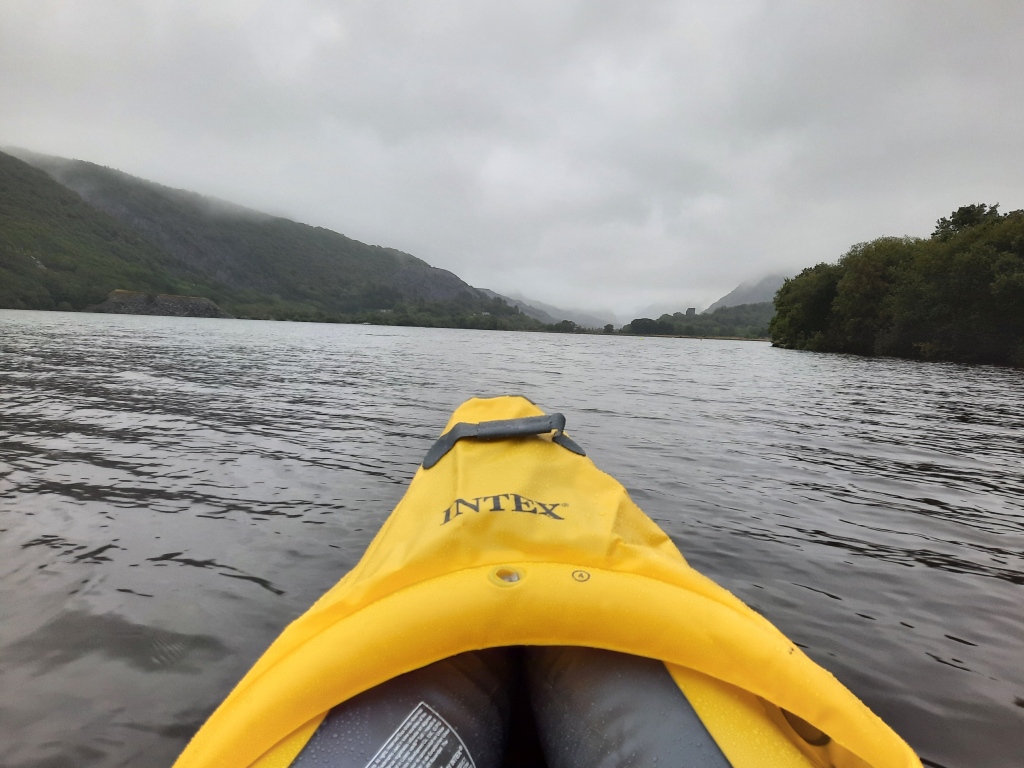
My friend and I had set our alarms with the intention to take a sunrise kayak trip across Llyn Padarn, a breathtaking, glacially formed lake which stretches two miles in length and twenty nine metres in depth at the foot of a host of rocky peaks, Mount Snowdon being the most famous.

However, a combination of Samsung’s contemporary cock-a-doodle-doo and the prospect of getting completely drenched was enough to make us reconsider the idea we had conjured whilst basking in the heat of the previous afternoon. But, if the last couple of years have taught anyone anything, it’s that you have to do these things when you get the chance. There haven’t been many opportunities to wake up away from home in the past year, and if you postponed all of your plans until the arrival of better weather you’d barely do a thing.

So there we stood, a few minutes later, shivering hands stoically inflating our kayak by the side of the lake. The skies were fading from black to a watery, charcoal grey and there was absolutely nobody else about, beyond a lone swimmer who offered us a chirpy greeting about having the lake to ourselves as she stepped out into the water and started gliding about contentedly.

By the time we were out on the water the sky had turned into a sheet of off-white wool and there was just enough daylight to make out the mountains behind the clouds. We paddled in a southeasterly direction, taking in stunning views of Snowdon behind the thirteenth century ruins of Dolbadarn Castle. To our left were a cluster of features symbolic of Welsh heritage and history: the National Slate Museum, the Llanberis Lake Railway, and the former Miners’ hospital building. With virtually the whole of this impressive body of water to ourselves, and so much around us to see, the early start had gifted us the kind of mentally energising experience which can completely shift internal paradigms and conjure new dreams. I want to do this every morning, and just who exactly says that I can’t?

This image has an empty alt attribute; its file name is 20210817_064853.jpg


We savoured this moment for as long as we could though it was only a matter of time before the weather caught up with us. It was a beautiful morning but it was also extremely cold, and the water – whilst calm in its demeanour – had managed to find its way into our shoes and soak our clothes. Teeth were beginning to chatter. Fingers were starting to freeze. Minds were being seduced by the thoughts of warm hot chocolates and cooked breakfasts. It was time to get out, and shiver on the banks for thirty minutes whilst waiting for the kayak to be deflated enough to fold into the boot. Maybe I shouldn’t do this every morning. Or maybe I wear ten fleeces, boxing gloves, and a spacesuit next time!

After what was the quickest turnaround ever back at the hostel to get changed (nothing challenges the concept of time like the prospect of a massive hot chocolate with cream and marshmallows) we were stood on the pavement in the rain forming the queue for the cafe, Pete’s Eats. Each of the tables inside were occupied and we were still in a pandemic, so “budging up” could not be a thing in this instance. I watched through the window and willed the diners to eat up quickly, though my friend had assured me that it would be worth the wait, and she was right.

Behind us in the queue stood a man with his young son, discussing what they were going to eat. The rain was falling faster at this point, and whilst it seemed a sauna in comparison to shivering on the banks a short while earlier, it was still bitterly cold. I kept thinking about swirling my spoon round a receptacle of molten chocolate, and how the marshmallows would melt into a fluffy goo that would ooze down my throat and radiate heat round my icy insides. As transfixed as a dog by a bone I watched a pair of diners finally stand and take their jackets from the back of their seats, and when the waitress simultaneously approached the door we knew our turn had finally come. The newly vacant – and only available – table sat six, and it made no sense for just the two of us to occupy it, so we invited the man and his young son to get out of the rain and join us.

The breakfast exceeded expectation, and neither of us held back. After the early start, the freezing temperatures and all that paddling, we deserved our massive hot chocolates and our morning feasts. Whilst eating we started engaging in a fascinating conversation with the man. He explained how they were traveling around North Wales in a camper van with uncomfortable seating, reliving his childhood holidays and giving his son an experience to remember. He also shared with us his voluntary work rescuing chickens and the values behind it, an incredibly eye opening conversation about an issue I had known very little about before we met. As we chatted and chatted, his son contentedly dined quietly on his toast. The pair of them consumed very little compared to us, and were gone within about thirty minutes, bidding us goodbye and wishing us a nice day as they put on their jackets and walked back out into the rain, back to their van and back to South Wales. My friend and I remarked about what a nice pair of people they were. The inspiring, kind-hearted man. His well behaved young son, who just let us chat, no screaming, no fuss.

We stayed in the cafe nursing our warm mugs for a little longer to bring our fingers back from the dead, then motioned the waitress over to pay for our banquet breakfast. She seemed a little stuck for words:

“Erm, well actually, there’s no need. That man who was at your table. He paid for you.”
“What? All of it?”
“Yes. All of it…he said he enjoyed the -“ (unfortunately we’ll never know exactly what, as her vocals were doing battle against the clattering of cutlery in the background at this point, but it’s fair to guess that dining with us had obviously not been the worst experience in the world).

Now it was our turn to be stuck for a words! But why? We had ordered so much more than them. We didn’t even know their names. We thought back to the moment the man had gone to pay for his bill. He had gone up to the counter, outside of our earshot, obviously not wanting us to know what he was doing. He clearly wasn’t after praise or anything in return; he knew he’d be long gone by the time we found out about his gracious act. He knew that we would never be able to contact him to say thank you, or identify him as a hero.

He was just genuinely, purely and beautifully kind. And after eighteen hard months of this pandemic, during which as a society we have seen some of the worst examples of human behaviour ever and been challenged in ways beyond comprehension, these acts of genuine kindness mean so much more than they ever would before. This was about way more than saving fifteen quid each, it was about just knowing that people like that exist, people who infuse the mantra to “be kind” into the world around them not just by posting those couple of words online to look good but actually by being kind. If I ever happened to meet this man again, I would thank him for that first and foremost, and then I would thank him for the breakfast.

We were still speechless as we returned to the car and looked out over Llyn Padarn again, taking in the same stunning views as the morning but this time appreciating the warmth of the heater and human kindness. Not every stranger we share a table with in life will pay for our meals, in fact the vast majority won’t. The vast majority might even snap at us to move, scrape their cutlery loudly against their plates, constantly curse, or use the last of the ketchup before it’s our turn.

But it’s not always about the vast majority, and a majority is still not everybody. The most inspiring and memorable people you will come across in life won’t always be those you have the most exposure to. They’ll often be the ones you encounter by chance, in tiny cafes in tiny towns on rainy days, strangers who aren’t after reciprocation, strangers who are just peaceful and kind, strangers who will always be strangers but who raised a smile and left an impression that you’re still thinking about several months later as you reflect back upon a year. Strangers who inspire a blog post.

Llanberis, North Wales, at 5.30am one Tuesday in August: the morning nature and kindness breathed optimism into the midst of a pandemic where it had so often seemed scant.

To See The Sea

I never really used to understand the big deal about the sea.

Metropolitan town born and bred, I never felt particularly enthusiastic when my parents would express their desire to one day live by the coast.  “But why?  The sea dun’t do anything”, I would debate.  I spent several Saturdays of my teenage years in the beach-hut at Tankerton we once had (before repeat vandalism meant we needed to sadly sell) and with the exception of those really hot, bright Summer days in which we could get the dinghy out I would normally just sit inside the hut shivering and cursing the cruel, cold air, just waiting to go home, to Watford, so that I could go to Wetherspoons with my mates and share a pitcher of Blue Lagoon.

And then I grew up, and started to pay a lot more attention to our landscape and the environment around us.  Moving down to East Kent – with all it’s cobbled streets, historic buildings, coarse beaches, deep forests, and valleys adorned with bright scarlet poppies or neon yellow canola – slotted in perfectly with this.  I began to realise how much I really appreciated the great outdoors, and just how beautiful it can be, and how even its imperfections can be a source of stimulation.

There’s something about this particular time of year which doesn’t fill me with too much inspiration.  It’s that awkward, gloomy little period between the fresh heated glow of Autumn and the festive warmth of the run up to Christmas, with it’s illuminating snowy skies.  Sandwiched in between those two somewhat cheerier bookends, we have November.  November, where daylight is a fleeting moment and the rain bounces monotonously off slippery pavements that shimmer orange underneath the street-lamps.  On a working day, it’s that image which seems to be my only experience of the outdoors.  Oh yeah – and if that’s not bad enough, it’s freezing cold too.

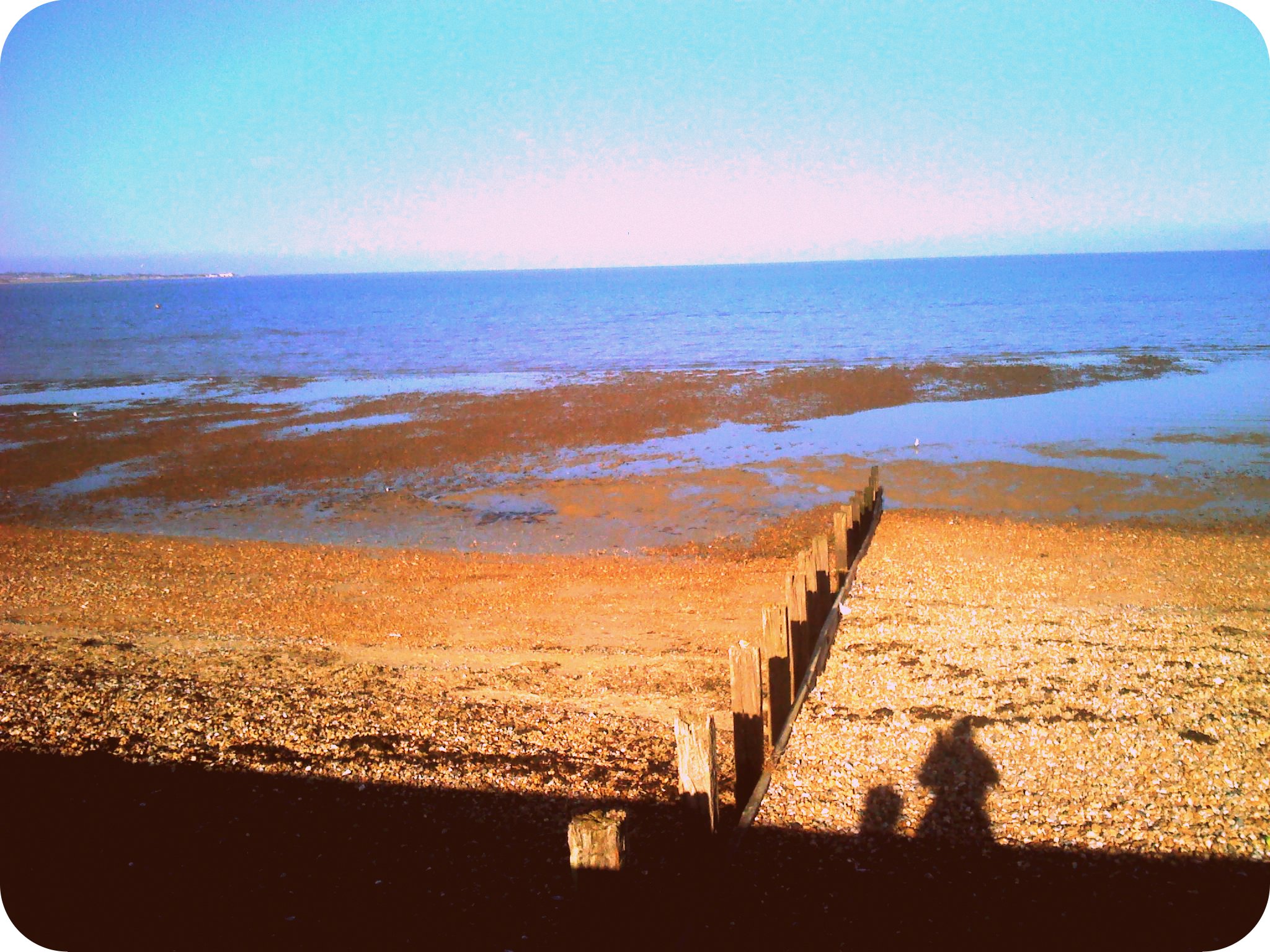
That’s why over the weekend it was nice to visit Seasalter, even if only for 5 minutes.  5 minutes just to pause and look out to an open sea, a sea which spans 70% of the Earth’s surface.  A sea which throughout thousands of years has remained resiliently lapping up to the shoreline – ebbing and flowing, but always there, always going.  This movement is profoundly peaceful to look at, and sitting there on the sea wall, breathing in the fresh salty air, I remembered how important it was to take that time every now and then just to relax and reflect – to just observe the world as it is, as it’s always been, and as it’s meant to be.  In those 5 minutes – everything else was irrelevant.

Song of the Day:  Destroyer – English Music

Destroyer is the musical alias of Canadian singer-songwriter Dan Bejar, fellow frontman of indie-supergroup The New Pornographers.  Predominantly indie-rock, Destroyer’s music draws upon influences from a variety of decades and genres, mixes it all up, and puts its own unique stamp on it.  This is Winter Music.

Natural – The Best Way

At a time when technology dominates and we’re more likely to be looking at our phones as opposed to out of the window it’s becoming easier to be blind to the beauty which surrounds us.  It’s especially easy to do this when you’re living in a country like England.  Grey clouds.  Office-blocks.  Litter.  Viscous traffic jams.  The angry honks of road-rage.  Ugly, rain-soaked 1960’s architecture.  These are the things we’re used to seeing on a daily basis when we’re making our way to work, or heading into town to buy a new pair of tights and some milk.  The metal-concrete infrastructures are unsightly but they keep our country economically afloat and so we have to accept them.  You can’t run a country from a muddy-field… as much as I wish it were possible.

But sometimes, it’s just nice to have that wonderful soiree with nature.  It’s the one thing that’s always been there, even when recession hits and companies submerge into liquidation, there’ll still be a fresh sunrise each morning reminding us that life goes on, and what’s more important?  Nature is more powerful, more valuable than anything and it makes me sad to see people abuse it.  Earth is seldom more beautiful than in it’s most natural state; because nature is real, raw and magical.  It’s no surprise that we often look to nature when we need a bit of time-out from the rest of the world.

Still trees seem to listen – they have centuries of experience, and glistening rivers seem to advise – no matter what the obstruction, they never cease to flow, flowing on until they reach the ocean.

Below are just a couple of photos, taken locally, when nature has put a smile on my face.  It really is a beautiful world.

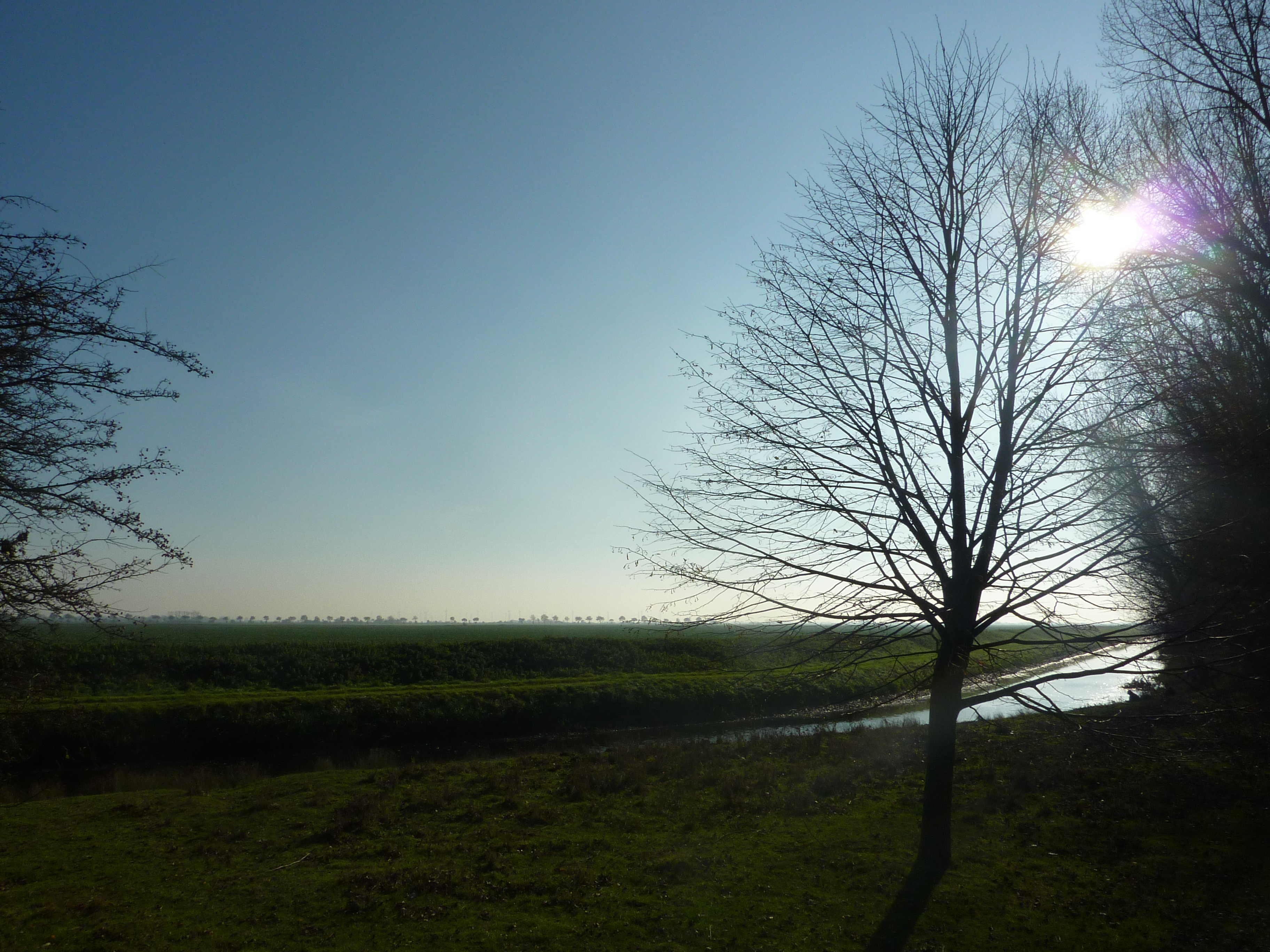
View from train on way home from work, February 2012

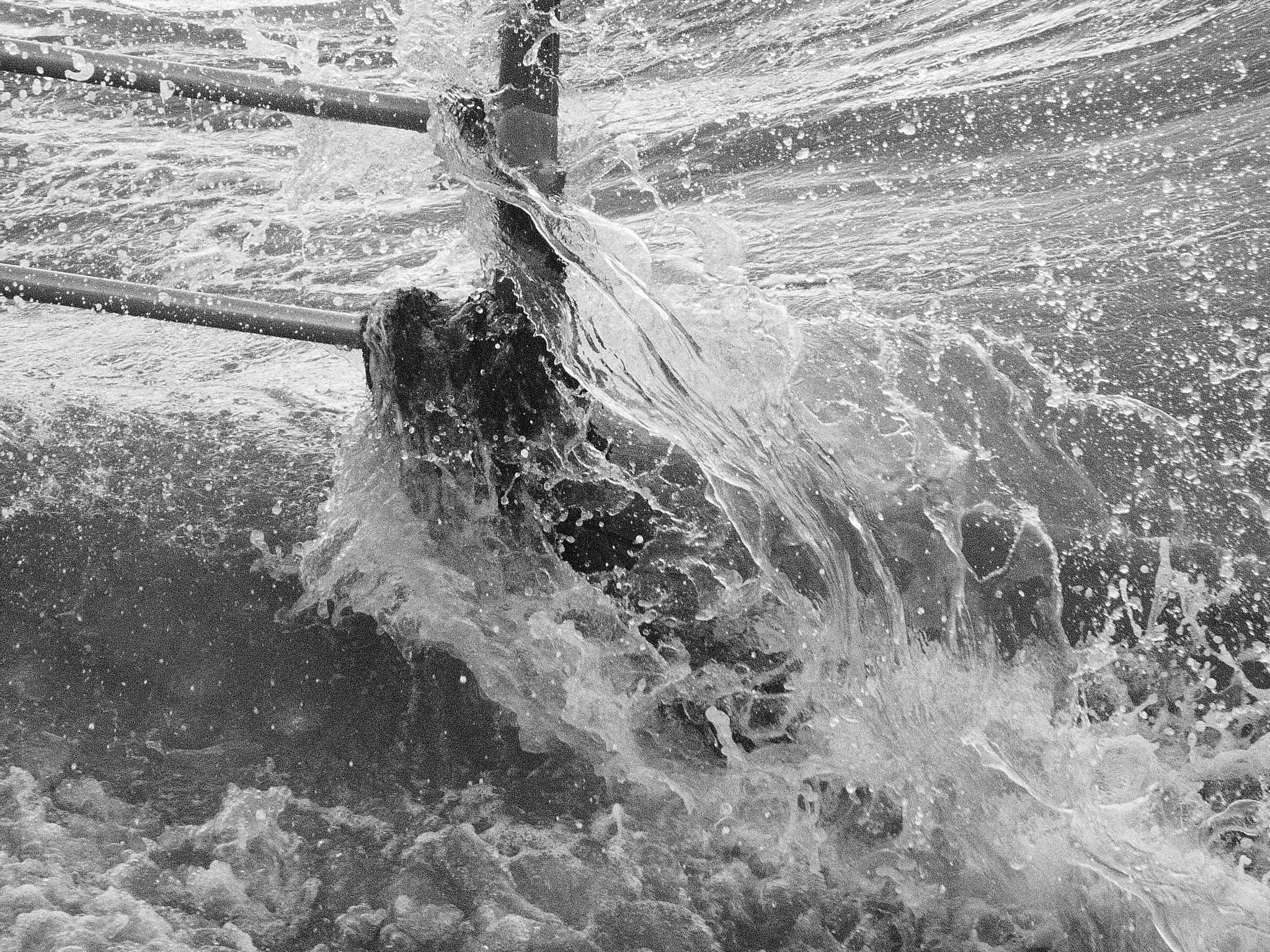
High-tide at Epple Bay, January 2012

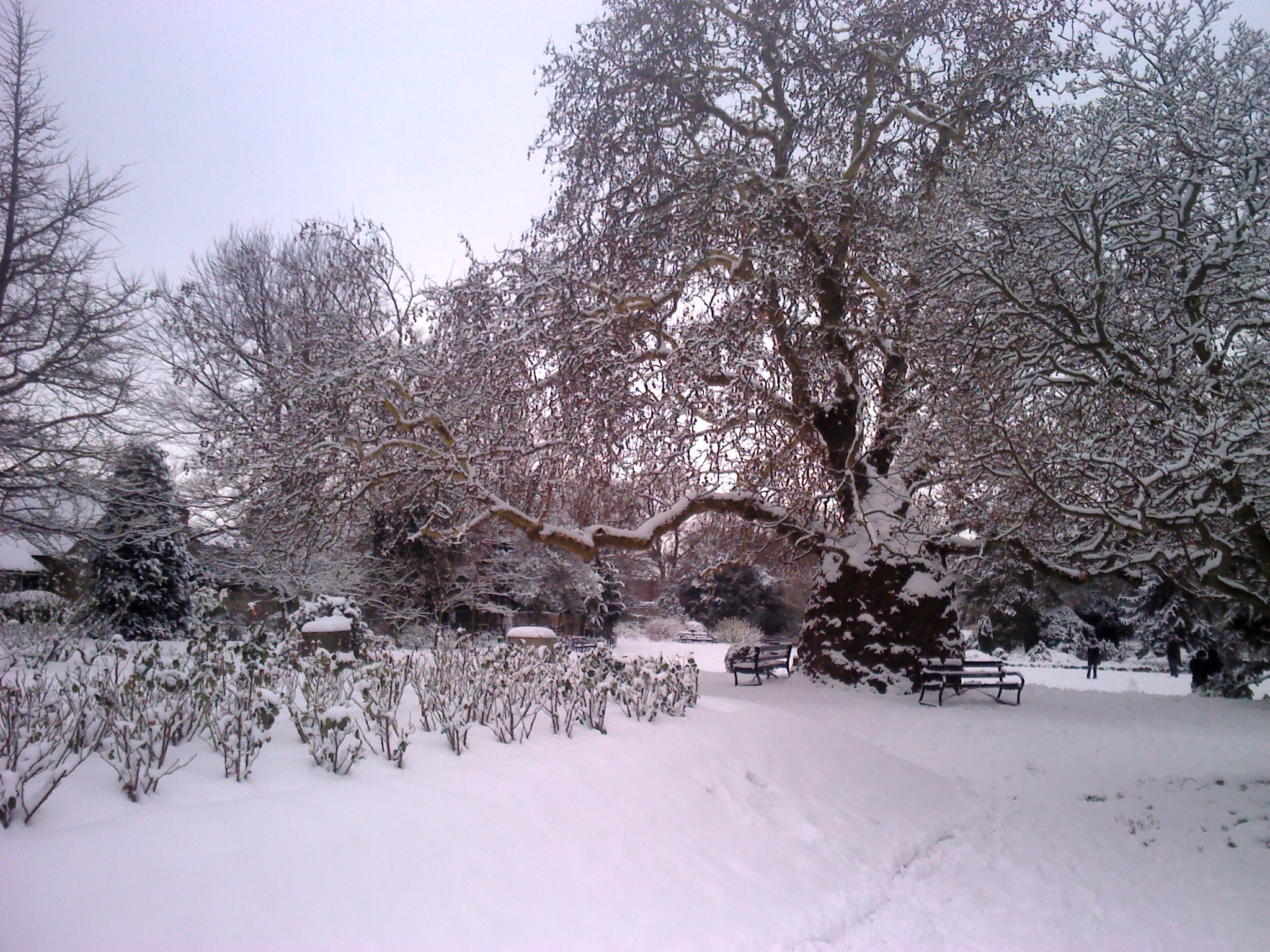
Snow in the Westgate Gardens, Canterbury – February 2012

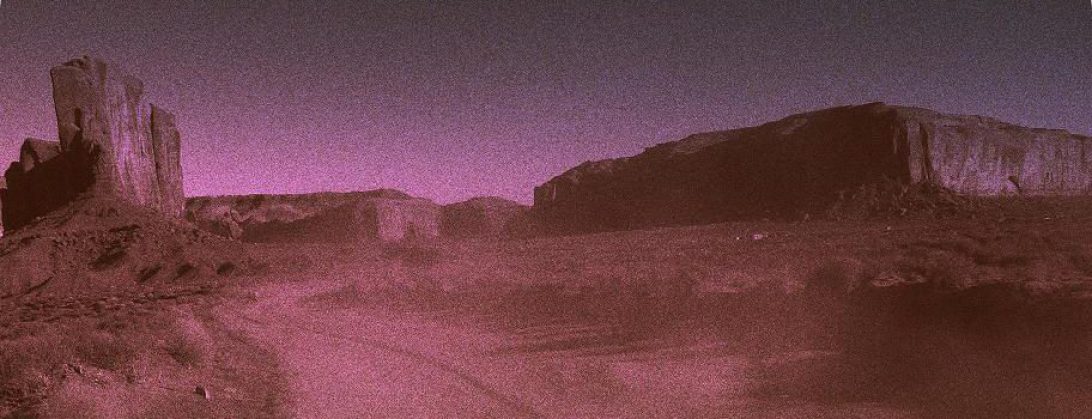
En-Route to Dungeness – November 2011