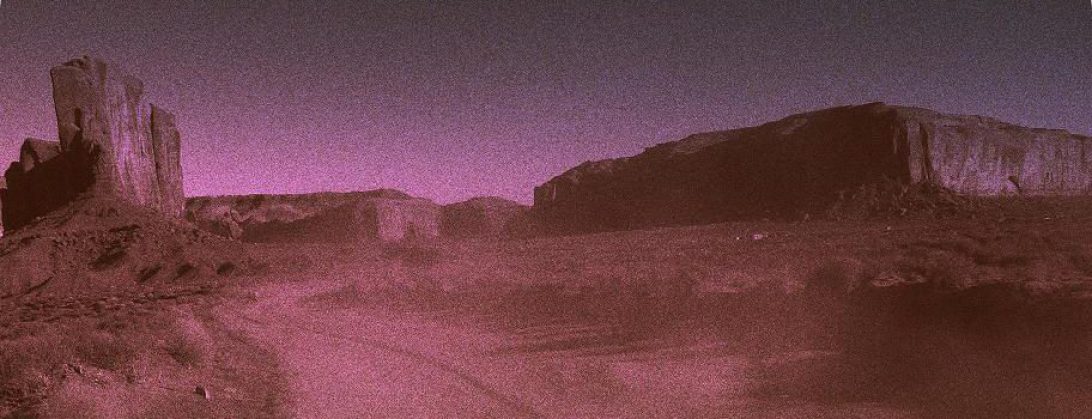
“You’re never really alone in the woods…”
These words were said during a recent talk I attended by a wonderful local author, Simon Pollard. The sentence does sound a bit like the premise to a low budget slash-horror movie. Blair Witch springs to mind.
“…how can you be, when you’re surrounded by so many different living species, including the trees.”
I went on to learn from him that trees have heartbeats, albeit very slow ones. I was amazed by that (though probably wouldn’t want to admit to my tree surgeon brother that I hadn’t been aware of it before).

I’ve always adored and appreciated nature, even though I often feel that I know so little about it. Sometimes I feel that that makes me a bit of a fraudulent fan, but you don’t need to be able to identify every tree or be literate in compostable irrigation to truly enjoy it.
All you really need to do, is observe it, in every sense. To look at it. Hear it. Feel it. Inhale it. And yeah, you can taste it too… but you kinda need to know what you’re doing if you want to go down that route. I certainly don’t, but a foraging course with somebody who does is definitely on the bucket list.
You also need to treat it with the same respect you’d give any other living being. Don’t do any harm to it, and let it simply be itself.
I had a week off work and knew I needed a change of scene rather than be in the same flat I work from every day, but I didn’t really fancy going too far away. I found a gorgeous bell tent on Air BnB in a village 20 minutes from home and decided to head there for a few days to focus on my writing and do some new blog posts, like this one.
The description of the site included a lot of words like “remote” and “secluded”. To some people these are scary words, and in normal life, they are to me as well, but for this purpose, they were perfect.
To get there I needed to drive along a number of tiny country lanes that I’d never been down before despite having lived so close to them for years. It was late afternoon on the hottest day in June, and the sun was beating down a golden glow over the Syndale Valley. I could only catch quick glimpses as I was too paranoid about having a head-on collision with a tractor, but whenever I did, I felt a similar glow within.
I was greeted by a very sunny, cheerful lady – the BnB owner – and was then left to my own devices in what was definitely a remote, secluded location in the woods. But it didn’t feel like it. Anything but, actually.
There were birds. Lots and lots of them. I can’t tell you what they were because I’m no ornithologist, but maybe somebody who is can identify them for me from the below phonetics:
“Twiddlywoowootwit” (or maybe they were just insulting me, I guess I am a bit of a twit at times).
“Twt. Twt. Twt. Twt. Twt” (okay. There’s no need to labour the point!)
“mmmHMMHMM,hmmhmm” (fairly sure that one’s a wood pigeon. Think I know that one. Either that or it’s just a bird agreeing with all the other ones that spoke before it. B***h).
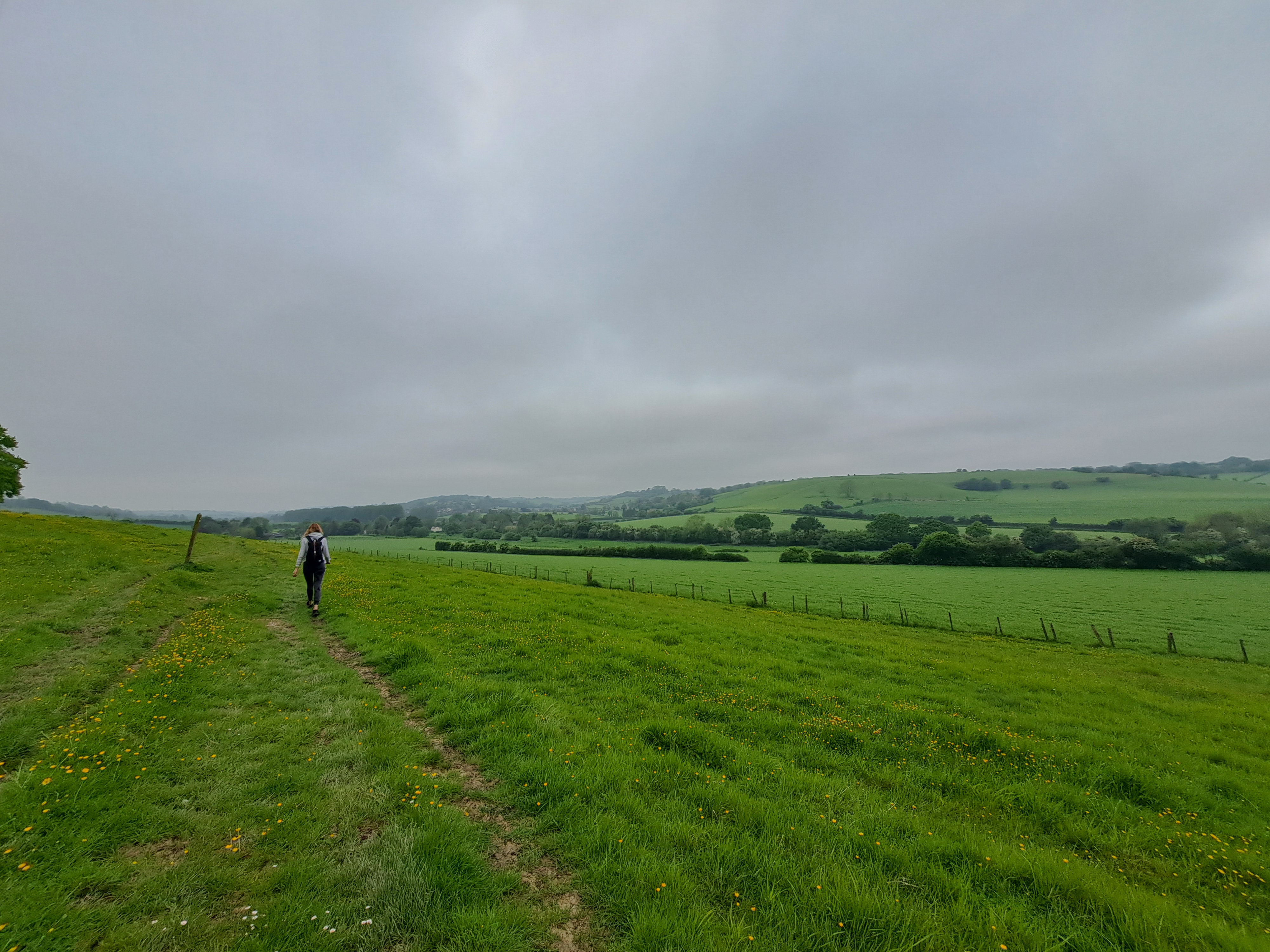
Having been sufficiently besmirched by my bird friends I wandered down to the meadow like the cheerful lady had recommended, and came across a gate which opens up to a beautiful looking valley. I wasn’t driving and there were no tractors to worry about at this point, so I could really afford to take it all in.
What a peaceful, glorious, hidden gem in the heart of Kent. A giant golden ingot in the middle of nowhere.

A few miles away from here, people are currently jammed on the ring road in Maidstone. A few miles in the other direction, they’re at the Costa drive-through in Sittingbourne, taking in breathtaking views of the Eurolink industrial estate . In Ashford, they’re steadfastly opening the windows on the High Speed trains in desperation for air.
And I guess I can’t leave out my hometown, Faversham, as the fourth corner in the urban rectangle that surrounds this field. In Faversham, they’re shoo’ing off the seagulls from swooping down to steal rashers of bacon off any more plates (as I’d witnessed earlier that day. And yes I laughed, because it didn’t happen to me, and I’m mean).
Back to the valley, and I just can’t fathom how a patch of land as magical as this exists and can feel so far away from the above, despite being so close.
I think about my love for Kent, and how it grows every day… or at least when I’m out discovering new parts of it. Watford was a great place to grow up, but its presence on my birth certificate is a bit like a dodgy tattoo that you try and cover with your fingers when anyone asks to see it. Kent feels more like home to me.
I walk into some dense woodland where I see a group of silhouettes in the distance. Sheep and goats, all gathered underneath the trees to escape the heat. They look at me suspiciously as I approach, and then start noisily BAA-ing to one another.
They’re probably insulting me too.
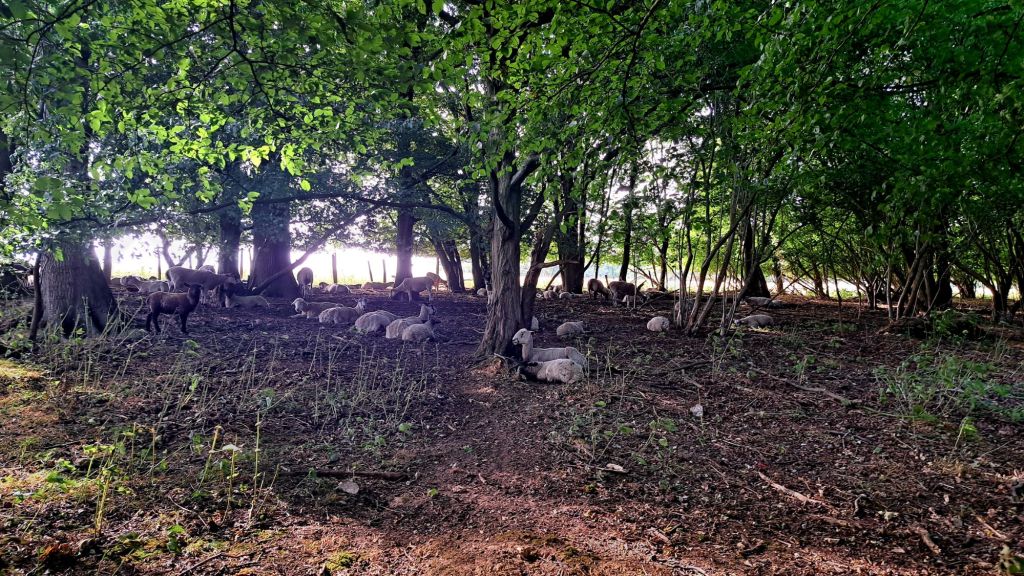
I walk in the other direction and see one standing completely alone.
“Were they rude to you, as well?” I’m tempted to ask, until he starts baa-ing at me too. I point in the direction of his friends in case he’s a bit lost but he’s reluctant to move.
Probably wants some space from them all.
I enjoy my explore, even if I have now been insulted by two different species and shredded my legs on a number of stinging nettles. It’s peaceful, and the surroundings are authentic. Authenticity is one of my favourite qualities, in anything – people, music, food – and it’s especially present in nature.
Magic happens when you just let something be its true self. To grow in the way it’s meant to. Stifle that for any reason, and you’re just left with something very underwhelming.
These trees have grown in the way they’re meant to, knobbly trunks and all. Those thistles didn’t grow with the help of a watering can, but with rain and sunlight. They haven’t been trimmed back. In nature, everything is as it intended to be.
I spend the rest of the evening writing away apart from having a small break to take an outdoor bath, an experience I recommend everyone do. I see a few planes overhead. One of them is flying from London to Tokyo, and I imagine all the passengers up there, 300 snippets of chitter chatter, and all the cutlery clitter-clatter.
But it doesn’t drown out the volume of the birds, as they flap against the bell tent and continue to insult me, a temporary guest in their home. I see a mouse run out from underneath the washroom, take one look at me, and scuttle away. Bit like some of those Tinder dates.
My heart smiles.
No, you’re never really alone in the woods. Try it.

 sophiekemsley