WALKING THE ELHAM VALLEY WAY

When a friend recently asked me if I fancied doing ‘a really long walk’, it didn’t take much convincing. Not only do I really like walks, but I particularly love ‘really long’ walks – the sort that make your legs feel totally jellified by the end – and at 35km, the Elham Valley Way walk is exactly that. We would walk and walk and walk, from Canterbury – with its impressive Cathedral backdrop – to Hythe, before celebrating with a mini pork pie and tin of beer by the sea. Perfect.

Our route followed the trail of what had once been the Elham Valley Railway, a commuter line which had ran between Canterbury and Folkestone from the late 1800’s until the 1940’s. The line is known by most for the role it played during the second world war, when it temporarily stopped its passenger services to assist with national defence. Three guns were mounted at various locations along the old track, the largest of which (known as the ‘Boche Buster’) was capable of firing shells a distance of up to 20km and could – and did – cause damage to many nearby homes when set off.

I’m no railway buff by any means. I leave that sort of thing to my Dad, who relishes in it. Yet, something about the Elham Valley Railway – or rather – the remnants of it, has always intrigued me. Not far from where my parents live in south Canterbury, down a litter-strewn alleyway that otherwise seems to lead into a rural nothingness, can be found a glorious old honey-toned Victorian railway bridge at the bottom of a steep verge. This was one of the first bridges that trains would pass through having departed from the city centre, and the fact it’s still pretty much intact today – albeit clad in litter, graffiti and discarded Vapes – feels incredibly romantic to me. Absorbing historic architecture – viewing the same bricks as those who came before us – is probably the nearest we will ever get to travelling back in time, and so it’s important that we preserve what we can of it.

My friend shares similar sentiments. She likes to imagine that when walking along a former railway line, personal artefacts may emerge from the earthy banks: an engagement ring, hastily tossed out the carriage window following a fractious conversation between lovers; a pair of binoculars dropped by an excited youth leaning out the window to take a closer look at the rolling hills of Kent; an old shoe – because they somehow manage to get anywhere – or any other signs of an Elham Valley Railway passenger.

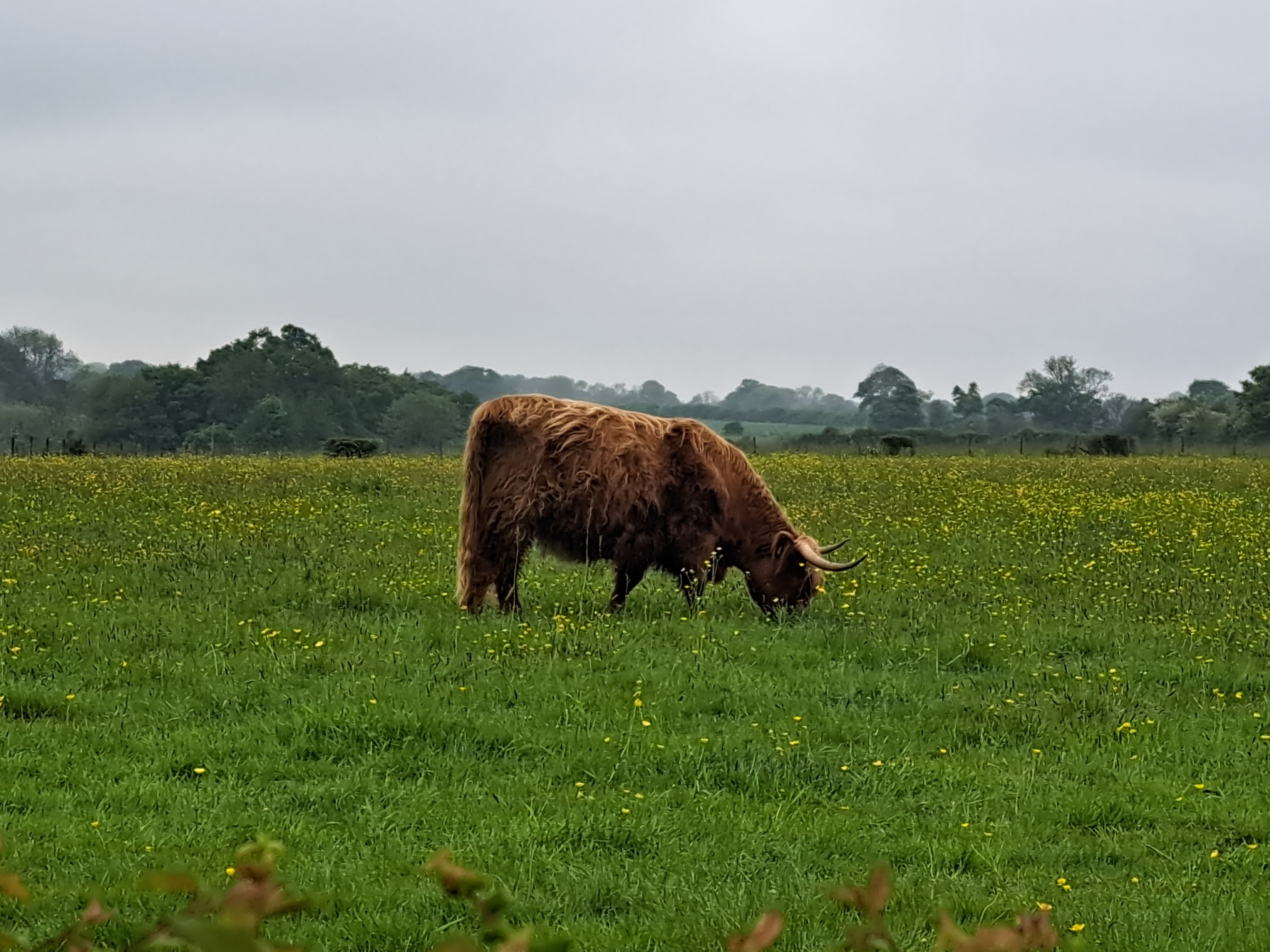
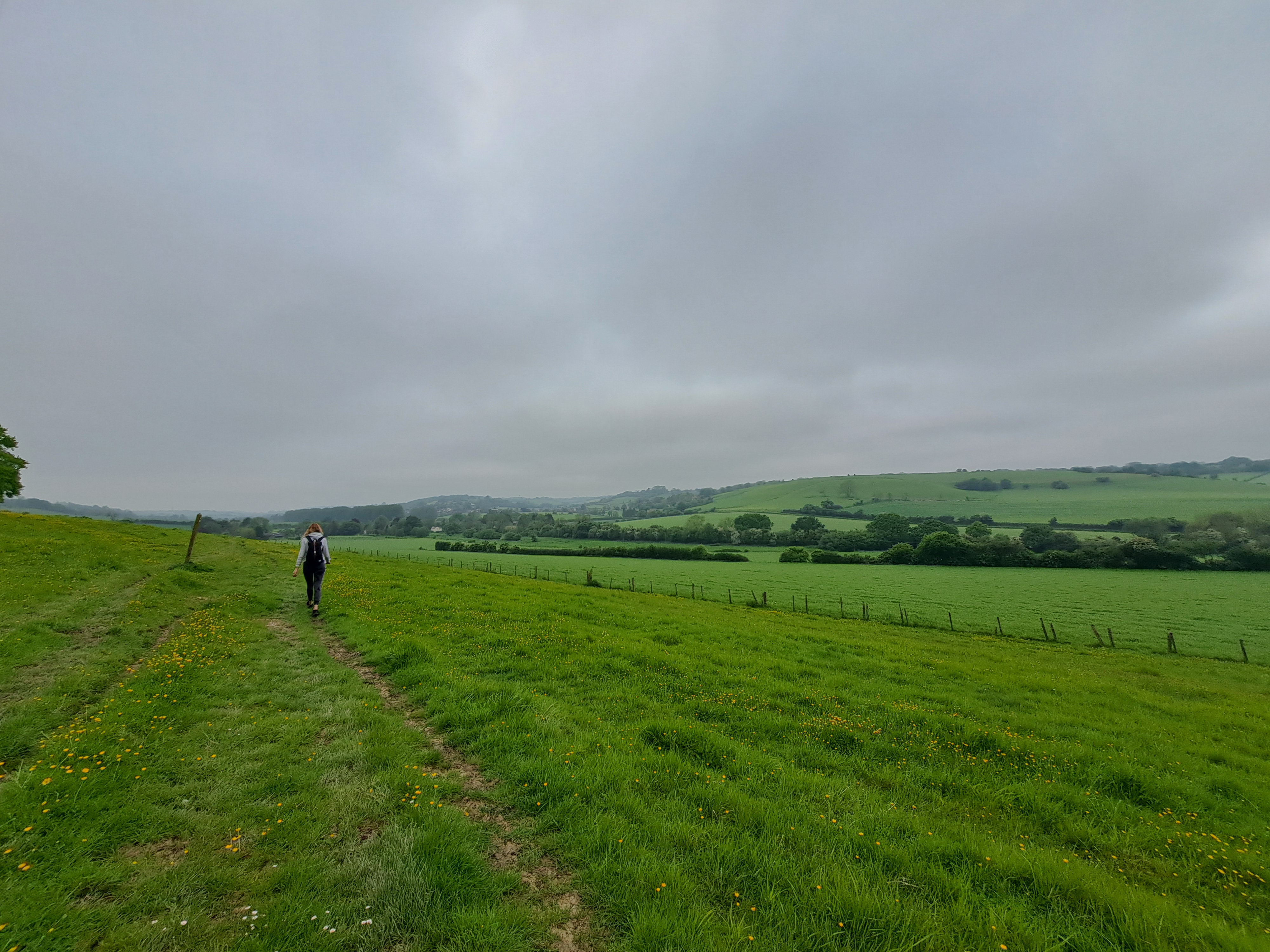
In reality we found no such things during our eight hour trek, but that in itself felt remarkable. Today, there is stillness in coordinates that were once the site of so much movement; peace in a place once associated with war. The Elham Valley Way is one of the most beautiful walks in Kent and a virtually bottomless trove of delights, boasting panoramic views, ancient woodlands, butterflies, cowslips and bluebells, among many other goodies! We ate our packed lunches rested upon a fallen tree surrounded by sheep and spring lambs, most of whom surveyed us carefully as we entered the field, before turning away nonchalantly. A few moments beforehand we had also come across some highland cows on a hillside, their horns silhouetted against the grey skies as they grazed on grasses several hundred miles away from their home. Neither of us had expected to see that.

In the villages that punctuated the journey we passed numerous cottages that gave us house-envy, a former home of Audrey Hepburn in Elham, an ancient well in Lyminge, and a friendly old man in Newington who approached us with an offer of help and a smile after observing us looking a bit lost. The railway museum in Peene had just closed up for the day when we passed but given the lack of engagement rings, binoculars and shoes en route, thank goodness it’s even there at all, to help keep the history of the former railway alive.
Our experiences on the outskirts of Hythe included being out-stared by a group of stern-looking cows the other side of a fence we were looking to cross, and wandering through a misty golf course, fearful of being concussed by a mis-shot. That wouldn’t have been a great ending after the best part of 35km, but fortunately was not to be the case. As we finally heard the lapping of waves and smelt the sea air we knew we had accomplished our mission for the day to reach the coastline, and both the pork pie and the beer lived firmly up to expectation.

Not only had this been a lovely and long walk, but it had surpassed all expectations in terms of what we would encounter along the way. In an age where digital technology attempts to simulate on screens as much of the world around it as it can, walks like this serve as a timely reminder of why it will never be able to fully do so. All the YouTube, Streetviews and online guides in the world cannot replicate reality, no matter how much you zoom in, nor can they tell you everything about a place. There will always be room for wonder and surprise.

There is always so much more beyond the map, just itching to be found.

Song of the Day: Kettel – Duck

Kettel is an artist from the Netherlands who specialises in playful and melodic electronica. Perfect for accompanying Summertime exercise!

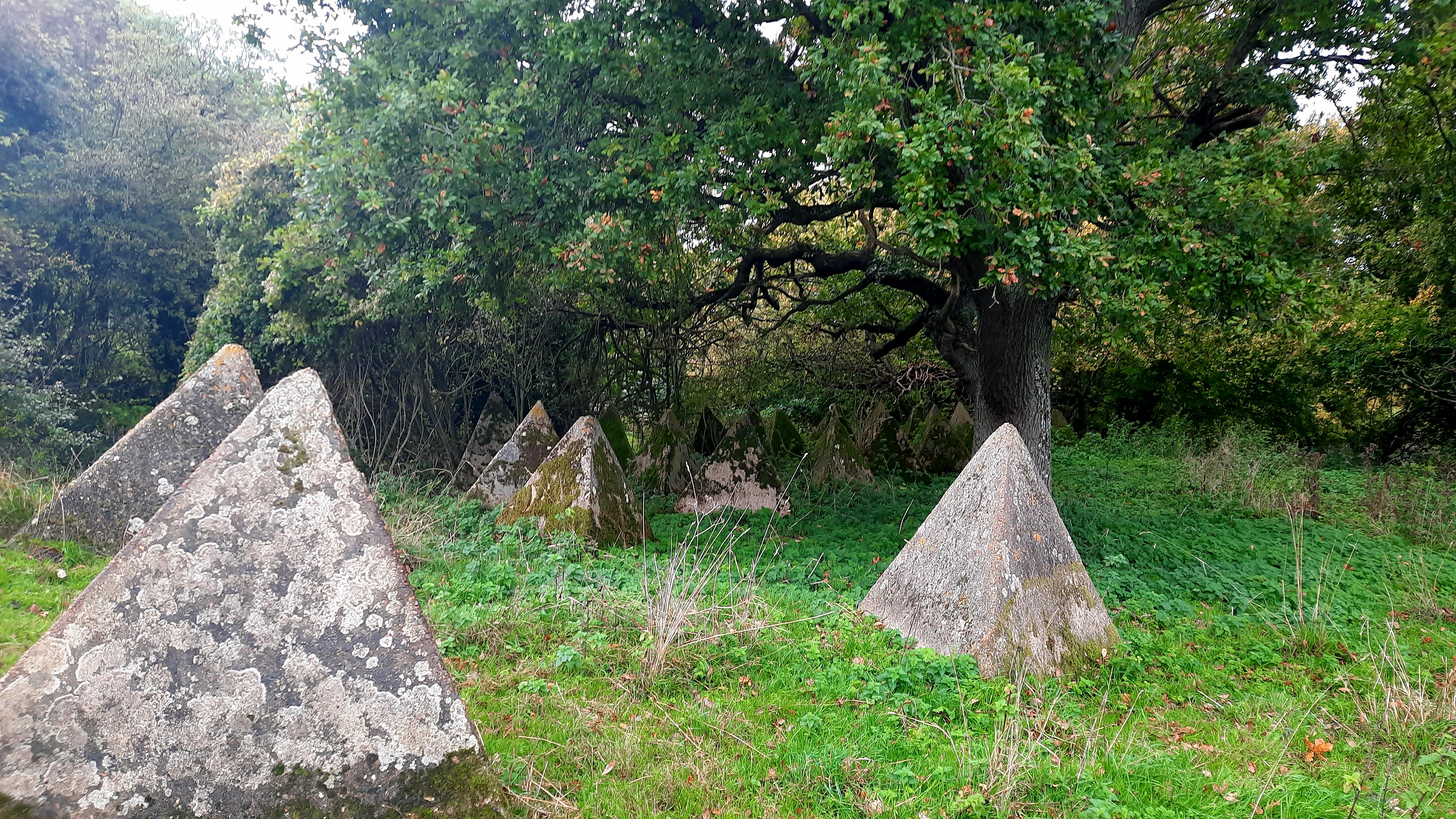
THE ANCIENT PYRAMIDS AT CANTERBURY, UK

Out of the 150+ posts on this blog across the past eleven years, I’d guess that around 50% of them reference things seen or experienced whilst out and about in rural Kent. That was never the intention, I never really warmed too much to the idea of keeping to a main theme, even though a lot of people suggested it was the best way to create an established blog. It’s just testament to the local area that so many of my outdoor rambles have managed to inspire the content for the monthly post.

It seemed to start about ten years ago with a trip to the beach, continued with a maybe slightly-cheesy-in-retrospect ‘life lesson’ from the maze at Leeds Castle in 2015, a fresh glut of writing upon moving to Faversham in 2018 and then an even bigger one in 2020/2021, because walking outdoors was essentially all we were able to do.

And though we can thankfully do a lot more again now, there are still few things that I enjoy more than being out exploring the pretty unique surroundings of Kent (or perhaps it’s just because I grew up in Watford, where postcards feature the ring road and you feel privileged just to see a tree.)

(That’s possibly being a little unfair, you’ll often see one. But only one.)

Nonetheless, in over ten years of living here I’m still not bored of Kent, and despite having walked round the countryside near to where my parents live in Canterbury countless times, it took until now to learn that we have our very own set of pyramids:

Giza, Canterbury

The photo above features what is known locally as the ‘Tetrahedra Field’. It can be found at the end of a private residential gravel-track road leading out of a village just outside of the city. With minimal footfall, it’s of little surprise that hardly anybody knows of it, and though it could be easy to assume (I certainly did) that these stones are probably nothing of note, the reality is much more intriguing.

It turns out that these triangular structures lie on what was once the site of a World War I aerodrome. Their purpose was to generally get in the way of the tanks that were used by the opposition, and if you look closely, you can still see the letters and numbers which identified them. When the airfield was closed down in the 1940’s, they were all moved into the random field above, next to the railway line.

At first glance it may only look like a graveyard for unwanted giant Toblerones circa Christmas 1972 (though that too would be exciting) but it’s also a classic example of the benefits of looking at some things twice. I will continue to be intrigued by what other hidden gems and pieces of secret history we may have lying around us here in the Garden of England, and I want to go and find and write about them all, ha!


Song of the Day: The Bad Plus – Silence is the Question

Eight minutes that’ll change your life (I exaggerate. But I promise you, it’ll do something). I don’t normally have the patience for long songs, particularly if they start off too slow, and nor do I really listen to jazz, but I somehow stumbled across this one and it sucked me in. I’ll say no more, you just have to listen to it all in one go. Just amazing.

A CANTERBURY TALE

During a recent rainy Monday morning, I popped into Canterbury Cathedral, a UNESCO world heritage site near to where I live.

My car was having its MOT nearby, and with the rain showing little sign of abating, I was hopping from place to place for shelter. The coffee crawl was fun to start with but by about Americano number four I wanted to head somewhere a bit different, and looking out the window towards Cathy’s Bell Harry tower, I felt inspired to be a bit of a tourist for the day, and made my way over.

I have visited the Cathedral tonnes of times over the years. It has played a notable part in our family history, and there’s so much more I could write about it beyond the content of this post, but those can be stories for another day.

Instead, for now, I’ll just tell you a little anecdote about a particular tile in the photo above, the tile with the reddy-orange stain on it next to the black rug.

During one of my first visits to Canterbury Cathedral, in the early 1990’s, I was too young to really understand anything beyond a very basic, watered down version of history. I knew that the Cathedral was famous for being the site of the murder of somebody called Thomas Becket – who had clearly irritated somebody (King Henry II it turned out) – and that it had attracted many visitors due to the belief in miracles which took place at the site after he was killed.

It all sounded quite scary and gory to a seven year old, like what might happen on Eastenders or one of Bowser’s Castles, but nonetheless it was intriguing too. As we walked around the particular area where the famous assassination had taken place, my older sister pointed down at the reddy-orange stain and looked at me with a grimace:

“That’s the stain from his blood when he was killed.”

Suddenly, a scary story became scarier and my infant self felt a shiver down her spine. Numerous questions abounded within – will we see his ghost? Will we have our heads chopped off too, if we stand here too long?

Well, evidently we didn’t, as I sit here writing this almost thirty years later, but there was certainly one long-term impact of this narrative which has made me look incredibly foolish over the years, and that’s the fact that it was only an embarrassingly few years ago that I realised that my sister hadn’t been telling the truth about the unusual stain on the floor.

It had absolutely zip-all to do with Becket, not then, and certainly not ever! I have lost count of the number of people I have given this misinformation too over the decades since; no wonder my Religious Studies teacher didn’t look overly impressed as I shot my hand up in class during year 10 as we learned about Becket, to tell a bunch of nonplussed teenagers of what they could see at the Cathedral.

And there’s an interesting lesson in all of this I suppose. Not to believe everything you’re told, for sure, but on the flipside I ask myself: would I have found the Cathedral as interesting as a seven year old if it weren’t for my sister’s gory story? Probably not. Would that one piece of stone still make me smile and recall memories of a family day out in 1992, thirty years later? Definitely not.

So yes. There’s a lot of history in Canterbury Cathedral. And that small, almost invisible speck, is mine.

Natural – The Best Way

At a time when technology dominates and we’re more likely to be looking at our phones as opposed to out of the window it’s becoming easier to be blind to the beauty which surrounds us.  It’s especially easy to do this when you’re living in a country like England.  Grey clouds.  Office-blocks.  Litter.  Viscous traffic jams.  The angry honks of road-rage.  Ugly, rain-soaked 1960’s architecture.  These are the things we’re used to seeing on a daily basis when we’re making our way to work, or heading into town to buy a new pair of tights and some milk.  The metal-concrete infrastructures are unsightly but they keep our country economically afloat and so we have to accept them.  You can’t run a country from a muddy-field… as much as I wish it were possible.

But sometimes, it’s just nice to have that wonderful soiree with nature.  It’s the one thing that’s always been there, even when recession hits and companies submerge into liquidation, there’ll still be a fresh sunrise each morning reminding us that life goes on, and what’s more important?  Nature is more powerful, more valuable than anything and it makes me sad to see people abuse it.  Earth is seldom more beautiful than in it’s most natural state; because nature is real, raw and magical.  It’s no surprise that we often look to nature when we need a bit of time-out from the rest of the world.

Still trees seem to listen – they have centuries of experience, and glistening rivers seem to advise – no matter what the obstruction, they never cease to flow, flowing on until they reach the ocean.

Below are just a couple of photos, taken locally, when nature has put a smile on my face.  It really is a beautiful world.

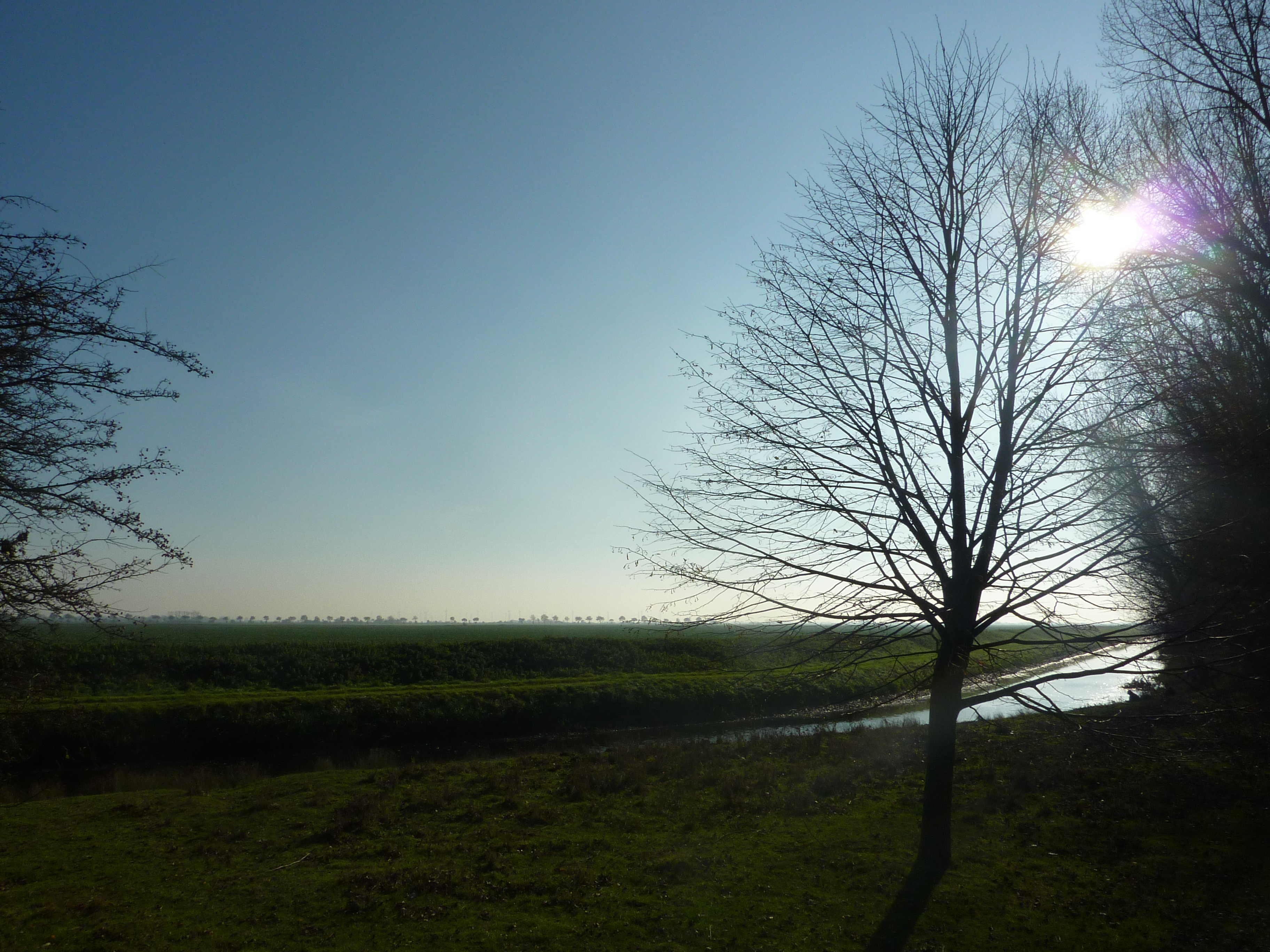
View from train on way home from work, February 2012

High-tide at Epple Bay, January 2012

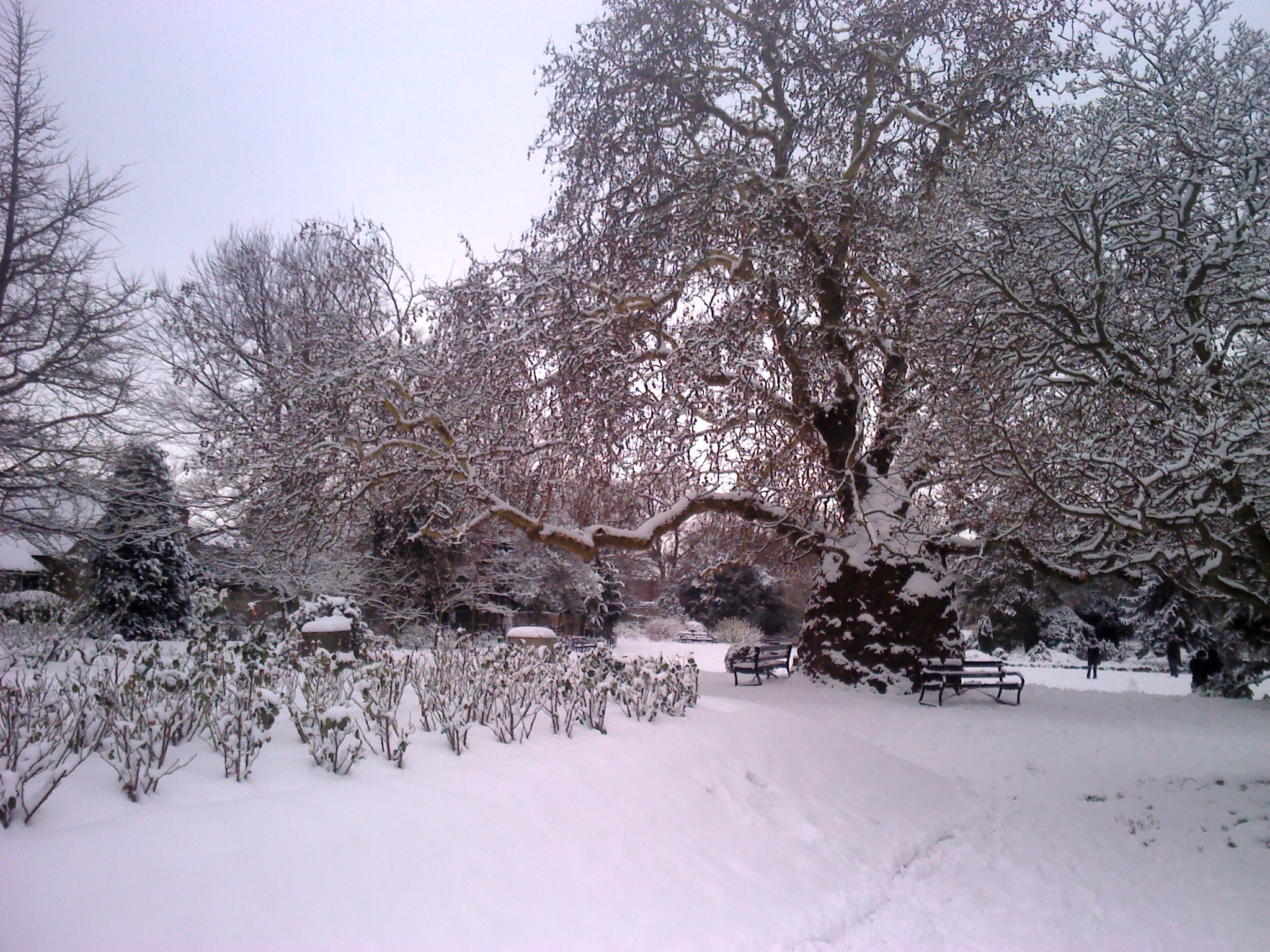
Snow in the Westgate Gardens, Canterbury – February 2012

En-Route to Dungeness – November 2011