YOGYAKARTA, PART I – SEARCHING FOR BATIK IN THE HEART OF JAVA

I still remember the first time I set my eyes on the ancient temple of Borobodur, a UNESCO World Heritage site, and the largest Buddhist temple in the world.

Except I wasn’t looking at the real Borobodur, but a miniature wooden replica, housed in a museum in West Sumatra, almost 2000 kilometres away.

It was 2010 and my fellow international trainees and I had been taken to the museum by our Indonesian hosts to learn more about the nation’s history and culture.

“Do you know what this is, sister?”
“Egyptian pyramid?”
“Haha no sister. This is Borobodur. Famous Buddhist temple, near with Jakarta. You should go one day ya sister.”

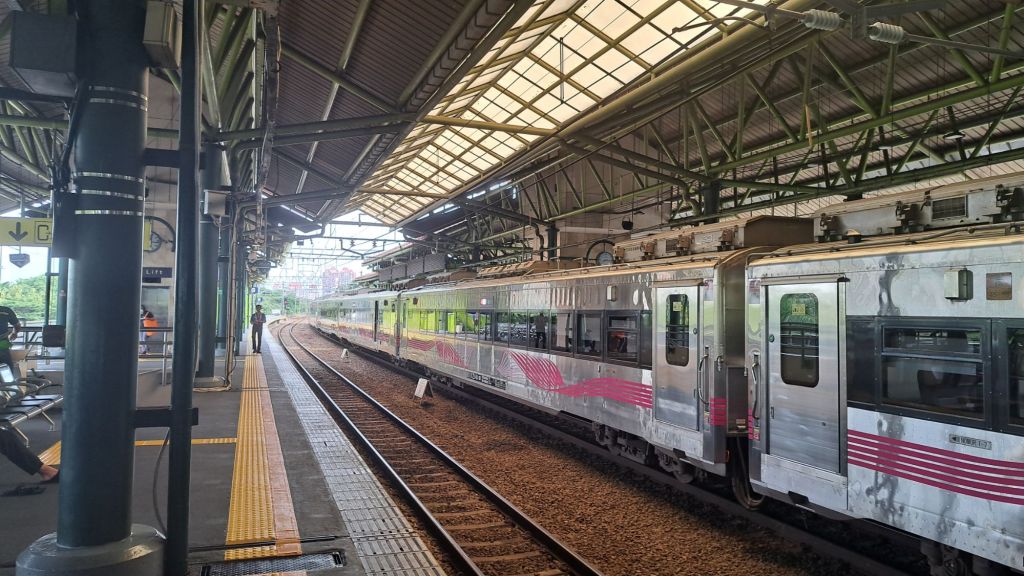
15 years later I alighted in Yogyakarta – the closest city to the temple – after a train journey from Jakarta which took 6 hours, a close proximity by Indonesian standards. My opportunity to see the temple had finally presented itself, but I was also keen to explore its home city.

Yogyakarta is a city most known for being the cultural hub of the island of Java. It’s also pronounced nothing like ‘yoghurt’, which is how I’d been saying it to the Indonesians all week, but ‘Jogjakarta’ , or usually referred to as just ‘Jogja’. I was staying at the hotel ‘Royal Malioboro by Aston’ (not selected because of the football team I’m unfortunate enough to support) which was handily located opposite the train station, according to the description. Despite this convenience, I still struggled to find it, and mustered up my best Bahasa Indonesia to ask a stranger for directions:

“Saya (I am) looking for hotel Royal Malioboro Aston”

I was met with a puzzled look that I initially thought was down to the bad Bahasa, before being motioned to look across the road at a building with a sign at the front that said in big letters, ‘Royal Malioboro Aston‘. Oops.

After dumping my things in my room and changing into clothes that weren’t dripping with sweat from the long train journey, I was keen to head straight back out to check out the markets. Due to its rich cultural heritage, Jogja is considered by many to be the home of Batik, a traditional Indonesian dyeing technique involving wax which coincidentally I happen to love, with its bright colours and patterns. It’d been many years since I’d last had an opportunity to buy authentic Indonesian Batik clothing, and I was keen to add some more to my collection.

I started browsing around the various shops and stalls along Jalan Malioboro – a renowned shopping street – before a smiling man with a very friendly round face started speaking to me in English, asking questions about who I was and why I was here.

“Oh, you like Batik? Follow me, we have a special exhibition in town today. One day only.”

I followed the man around numerous winding backstreets into a gallery adorned with what were indeed, some amazing bits of Batik. I was served a glass of sweet tea and began to hear about the process of making it all. Hot wax is drawn onto a fabric which is then dyed. The wax prevents the dye from penetrating the waxed area, and when the fabric has dried the wax is removed, leaving behind a pattern. Depending on how intricate and colourful you want to make your design, you can then repeat this process many times.
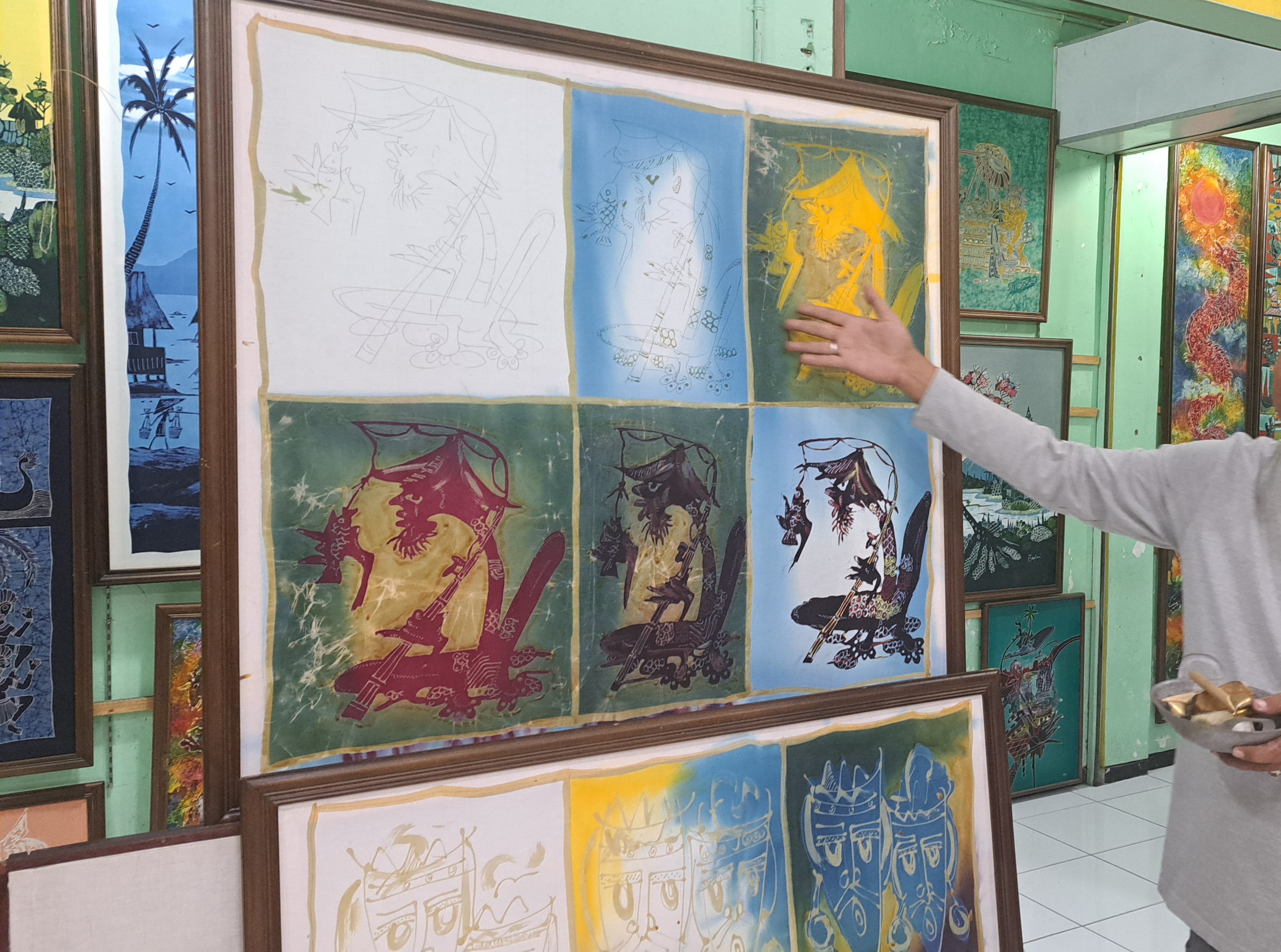

“Now, take a look around. Remember this exhibition is one day only, so you can get good price.”

I would have happily bought all the prints if I had had the money and luggage allowance, but there was one in particular that really caught my eye, which depicted an evening scene featuring a traditional Javanese horse-drawn andong silhouetted with some volcanoes against a hazy dark purple backdrop.

“Berapa ini?” (“How much is this?“)
“150 USD”
“Ohhh, I didn’t realise, I don’t think I can – “
“One day only, Miss!”
“Saya tahu (I know), but I can’t afford to – “
“ONE DAY ONLY! Tomorrow – gone”
“Maaf (sorry) but I can’t – “
“Oke oke 130 USD because you seem nice Miss?”

Now I know that bartering is commonplace in this part of the world, but as much as I had fallen in love with this piece of art and would have loved to have taken it home with me, I didn’t have the energy for negotiating that day, and no amount of complimentary cups of sweet tea were going to convince me to change my mind, as much as I appreciated this gentleman’s time and explanation of the Batik production process.

I apologised awkwardly and scuttled as far away from the gallery as fast as I could in search of some street satay.

After my snack, I continued shopping and went to ‘Hamzah Batik’, a well renowned Batik shop recommended by a friend.  I was able to recognise it instantly from the assembly of people sat outside the shop playing local Javanese music in traditional costumes, just like my friend had told me they would be. Javanese music centres around the ‘gamelan’, a distinctive collection of tuned percussion and bronze gongs, and it accompanies you as you browse around the shop’s many floors.

You’d probably need a good few hours in Hamzah Batik to be able to leave feeling like you’d seen it all. Not only is the space itself massive, but the literal thousands of items and fabrics are piled high from floor to ceiling, which makes you wonder how many years some of them have been in there, waiting to be purchased. I observed a number of keyrings and other ornaments where the colours had faded and the dust had started to collect, and that only consolidated my feeling that a lot of the things here have been so for a very long time. There was something that felt quite sad about that.

Whilst rifling through what felt like the hundredth aisle of tunics, something very strange happened. A particular song being blasted through the speakers from the musical performance outside had seemed to be playing for an inordinate period of time, and I was beginning to find it ever so slightly irritating.

But then something suddenly switched. A key change grabbed my attention and I realised that whilst I had been conscious of the music playing during my visit, I hadn’t really been listening to it. When I finally did, I realised just how beautiful it actually was, and felt a strange sense of emotional overwhelm. I suddenly felt very far away from the life I know – 12,000 kilometres away to be precise – and even the old friends who’d made me feel so at home in Jakarta were now 600 kilometres away too. I felt very small and alone, though not lonely, and in many ways galvanised by the sensation that I was living a very different life to the one I normally do, and could do absolutely anything I wanted and nobody would know, like go back to the hotel with a hot…

…beef Rendang curry. Which is exactly what I would do for dinner that evening, in bed, without shame.

Maybe it’s not such a different life on the road after all.

After browsing for an eternity I eventually settled on a couple of blouses and a dress – the total of which cost about £10 – and left the shop. As I did so I was keen to learn more about the beautiful music that had accompanied my visit, so asked an assistant if they spoke English so that I could ask some questions. They didn’t, but in true Indonesian style they were able to quickly help me out anyway by finding a colleague who did, and I found out the name of the song that had instigated my ‘moment’, Nyidam Sari. I also checked whether it would be considered either welcome or patronising to give some change to the musicians outside the shop in appreciation of their performance. The assistant confirmed that it would be very much welcome, so I went outside, bought an ice lolly, and sat there for a little while longer to take it all in.

Nyidam Sari is a well known Javanese song that has been performed by many, but this version is perhaps the closest to the one I heard in Hamzah Batik:

I would spend a further two days in Jogja, one to finally explore Borobodur and the second to visit the shops again before leaving for Bali. As I made my way back down Jalan Malioboro to visit Hamzah Batik for the second and probably final time ever, I passed a man stood in a similar spot to where I’d encountered the one from my first day:

“Miss do you like Batik?  We have Batik exhibition. Good price. One day only!!”

My guess is that the exhibition would be sticking around in Jogja for a lot longer than I was…

THE INDO WINDOW – JAKARTA

“Jakarta, the city you’ll never love.”

The two friends I was travelling with and I were on a flight to…well – Jakarta – as we read this sentence. And having known nothing of it besides the fact that it was Indonesia’s capital and so the best place to sort the necessary logistics of our next travel plans – like obtaining visas and being able to take onward international flights – we had enthusiastically jumped to its section of the Lonely Planet guide to read about what else we could experience there.

We giggled at the underwhelming opener. A capital city which even the travel guide – a book designed to encourage tourism – had given up on, with what was basically a politely worded version of “CBA” before it even started. When does that ever even happen? Poor old Jakarta.

That was 2010. I spent several weeks there waiting for a visa to be processed at the embassy and have been back three times since, most recently in March of this year. Jakarta is a place that has – in spite of its ‘unloveable’ ways – become very dear to me. It was back then, and it remains so now.

A pretty place it most definitely is not. It consistently ranks among the highest of the world’s most polluted cities, both in the air and in the water, and when you combine the scents of that with those of the durian fruit – famed for its pungent smell and sold in massive batches down every street – you get an aroma unlike anywhere else. It’s a unique blend of exhaust fumes, heat, sweat and – owing to the durian – stale cheese and nappies. With a bit of South East Asian lemongrass thrown in for good measure.

As soon as I exited the city’s Soekarno Hatta airport in March this year, that very same smell enveloped me like an old friend offering a warm embrace (literally warm, we’re only a little below the Equator). And it made me smile and feel like I had walked back into an old home, because I had in a way.

Jakarta, and Indonesia generally, has been home to an annexed piece of my heart for fifteen years. I don’t often get to tap into it these days, but when I do, it’s still there, and – unlike an old watch in a drawer – it’s still beating like it’s never stopped, and that’s never going to change. A lot of people who I care about a great deal live there, and meeting up with them again for the first time in many years was incredibly special. What the city might lack in terms of organised infrastructure and beautiful aesthetics, it makes up for in the warmth and wonderfulness of its humans, and I much prefer things that way round.

Monas, a powerful symbol of Indonesian resilience and independence

I had chosen to stay at the Sparks Hotel, which was situated in a bustling neighbourhood known as ‘Mangga Besar’ (‘big mango’). Now I do enjoy mangoes, and so I’d be especially delighted to come across a big one, but that wasn’t the reason I chose to stay here (which is for the best since I didn’t even see any of the famed trees that apparently used to rule this ‘hood and gave it its name).

I’d chosen Sparks because it was the same hotel I stayed in for three weeks 15 years ago, and I was intrigued to see how much or how little it had changed. I also recalled it had an epic swimming pool on a mezzanine near the roof, so that you could cool yourself down whilst being even closer to the grey, traffic-choked clouds than you would be if it were on the ground.

Walking in jet-lagged, and stale from the sweltering, evening heat to a brightly lit lobby with its overwhelming smell of lemongrass felt like deja vu. It was 2025, but it could have very easily been 2010. The hotel had recently undergone a general refurbishment, and the new restaurant area behind the reception desk looked very inviting. Yet when I stepped into the elevator to get to my room, I recognised the same interior design, the same buttons, and the same sign prohibiting the presence of durian fruit that I had seen fifteen years ago, only a lot more worn and faded now.

The rooms themselves were also just the same. The same suitcase rack – more dimpled from all the heavy luggage dumped on it over time – the same yellowing plastic kettle, the same night stand, the same clunky safe in the wardrobe, the same feeble hairdryer. And the same view from the windows…

I’d spent many an evening in August 2010 gazing out of these windows. I had been on a shoestring budget and so had to spend a lot of time confined to the hotel, where I didn’t need to spend any more money. I remember explicitly at the time noticing the neon yellow lights of the Grand Paragon Hotel in the distance. It was one of the main (only) focal points of the view, and I remember staring at it once whilst making a very expensive phone call to the Student Loans Company in Scotland. They had sent a letter to my parents’ whilst I was away asking me why I wasn’t making any payments, and demanded I get in touch to explain. I remember this call for two reasons, the first being that it was very lengthy and I was squirming the entire time about how much it was costing me, and the second because the adviser made a snippy comment about the fact I was travelling and not working. I was so annoyed by her judgemental tone, that it made me want to stay travelling and not work. Ever.

The view from the window

In March 2025, I looked out again at the Grand Paragon – same neon yellow sign – and internally responded to my 24 year old self, the one who’d just ended the call with the SLC and had vowed to bum about travelling forever just to make a point to the moodywomaninScotland:

“Bold plans there, Sophie, but in two months’ time you’ll be catching a bus at 7am every morning to deal with customer complaints for 9 hours a day. In Hemel Hempstead.” 

Moody SLC woman would win in the end, it would turn out. Damn her, although I also partly cringed at the brashness and naivety of my younger self for thinking I could spend my whole life avoiding reality and not paying back my student loan. Selling coconuts on Sumatran beaches to get by, that had been my grand plan. Instead, I’d soon be desperately trying to appease customers who were angry that the brown boots they’d ordered were missing from their delivery.

The longer I looked out of the window, the more the vivid memories came sweeping back. Things I hadn’t thought about since that time – the clothes in my suitcase – which I wouldn’t wear now. My old Nokia ringtone. The content of Skype conversations that took place at the table next to me each evening. How I spent a lot of that time missing the experience and people I’d just met in West Sumatra, and the crispy prawns I’d enjoyed once from room service. Visual memory recall does some incredible things. I almost felt like I was still my 24 year old self, only more grey, creased and knackered by life – but still with a fondness for Indonesian satay and Bintang beer – and maybe that’s the closest to time travel we can get.

The longer I stayed in Jakarta this year, at 39, the more I wondered how the younger me had ever managed to navigate its crazy and chaotic infrastructure. The traffic and sprawling neighbourhoods that blend one into the other, and the other, and the next. No Google maps, no smartphones, no mobile WiFi, and certainly no GoJek (Indonesian Uber, but with motorcycles instead of cars).

Even with all of these digital additions now to assist, Jakarta still feels like an intense and sometimes intimidating place. One which never sleeps and which keeps you on your toes – literally – since the pavements are speckled with gaps that could take you plunging right down for a bath in the sewers if you mis-step.

Yet somehow, it all just works. There’s always a way. You always get to where you need to on time, even when the odds feel stacked against you, even when the traffic is stagnant and the clock ticks down. The train will depart from Gambir Station in 45 minutes, and that’s 60 minutes away, but you can feel assured that you’ll be on that train. Somehow.

I needed a new set of headphones to enjoy music on the 6 hour train journey to Yogyakarta that followed, and somehow they were the first thing I spotted on sale at the station. I needed to obtain a refund for another ticket and expected a battle at the ticketing office, and somehow I was met with a welcome “Here you go” as the Rupiah notes were handed over. A friend wanted to meet me to say goodbye and he was miles away with minutes to spare, yet somehow I was boarding the train with the bag of travel snacks he’d just bought for me in what felt like just thirty seconds later.

A train arriving at Gambir Station (their trains are infinitely better and cheaper than ours, by the way)

And if you need help, they’ll bend over backwards to help you, even if the conversation is a mixture of the most basic English and Bahasa. And it somehow feels easier and more straightforward than it does at home, suggesting that sometimes it’s better to just roll with the chaos rather than to stress and try and deconstruct the problem to find a logical solution that may or may not even work.

One evening this year, I booked a motorcycle taxi to take me back from my friend’s house to the Sparks Hotel, a 30 minute journey which cost the equivalent of one pound. As the motorcycle – driven by a guy wearing flip-flops and no helmet – perilously weaved between the cars on the freeway underneath the night sky, I realised I was doing something I don’t think I’d have the courage to do at home. It would feel too scary to sit on a motorcycle there, even though the roads are safer and driving standards more uniform. I wondered why that was, and then that same thought hit me again: sometimes it really does take more mental energy to try and coordinate the chaos than to just sit back and surrender to it.

Indonesian windows offer many alternative views.

I thought back to those now infamous words:

“The city you’ll never love”

But, I do. And I always will.

And not just for the people.