There is a large number of things that I have loved about Germany for a very long time. They mostly centre around food (Spaghettieis for the win!), music (Blümchen, Die Ärzte and Fettes Brot to select from a variety of genres) and the varying landscapes that characterise so many different corners of the country, from the alpine mountains in the south, the industrial cities of the north, and the various yellows, greens and blues that form the Rhineland in between. Then of course, there’s all of those gorgeous colourful timber-framed buildings that you can see all over the country, often evoking imagery of something out of Hansel and Gretel (minus the witch, hopefully, but also minus the Battenberg windows, sadly).
This year, I was delighted to have the chance to get back out to Germany with a friend. I had seen some extremely cheap flights to Cologne in the Summer, and snapped them up whilst I could. It was a very busy and extremely entertaining weekend, not least from the fact we had arrived during ‘Karneval’ weekend. This was something which had been unbeknown to us but not to the entire rest of the German population, who all seemed to descend upon the city every 11th day in November, our first full day there. This centuries old tradition was originally celebrated as a way to scare away winter spirits, and nowadays translates into revelers from all over the country packing every square inch of the streets of Cologne in fancy dress and enjoying several biers and glühweins whilst singing songs together extremely loudly. After the initial shock to the system, we felt extremely pleased to have been able to experience it, but were admittedly extremely grateful when the crowds started to clear and we could move about more easily.
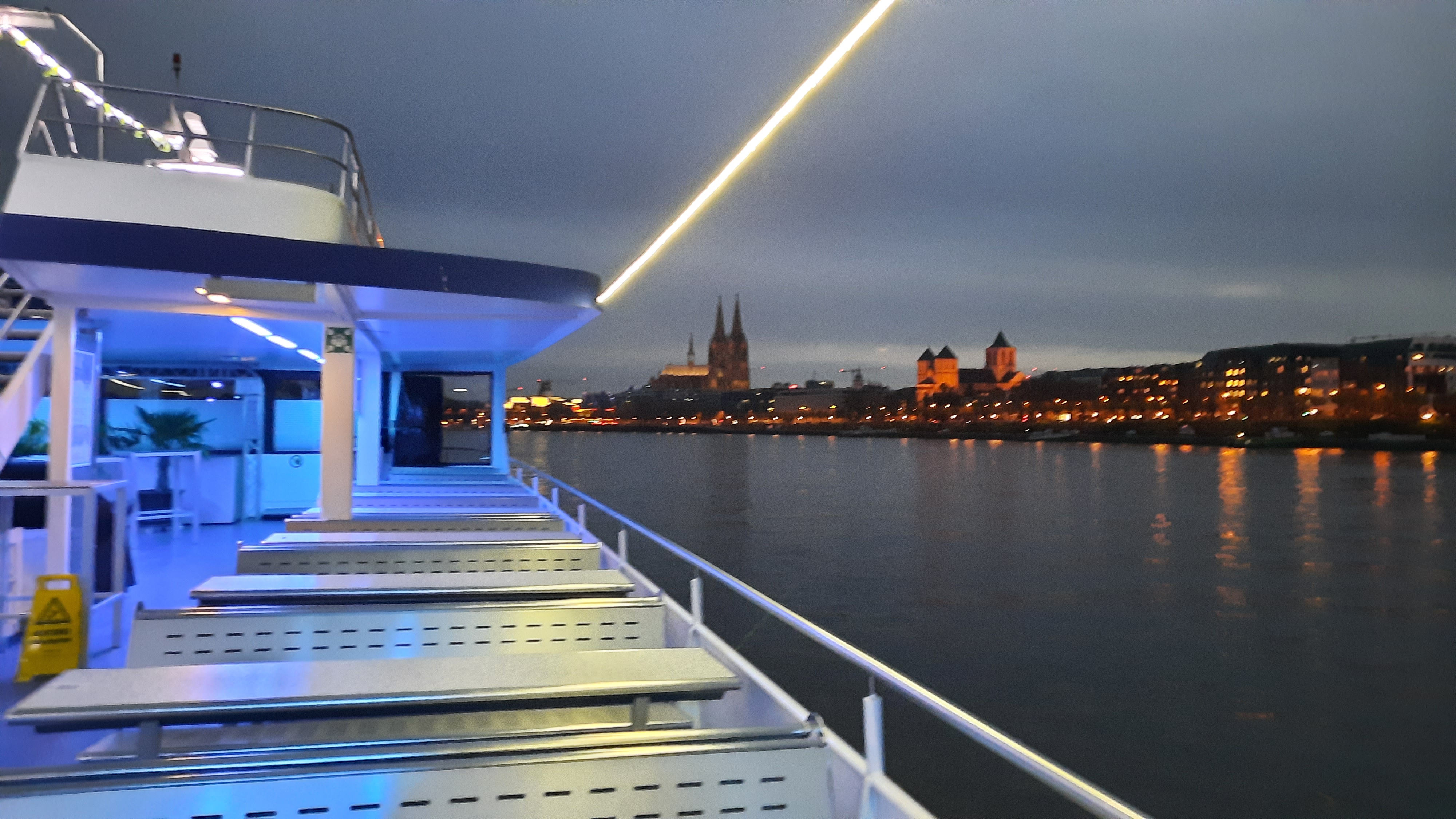
However, my favourite part of the weekend was a boat ride along the Rhine that we had booked for the Sunday afternoon. To me, the experience brought together all the things I love about Germany in one river-roving vessel. During this 1.5 hour journey towards the southern borough of Rodenkirchen and back, a gentleman played classic German pop covers and traditional songs on a keyboard whilst groups of friends and families jigged about on the dancefloor, cheering on all those who came to join them. Extremely polite waiting staff took drinks orders and talked us through the different varieties of schnapps on offer, before bringing back a Kölsch and a shot glass of dark, syruppy matter which would clear the airways for the next decade.
Next to us, an elderly lady appeared so delighted with the size of the sausage brought out to her that she held it up in the air in disbelief, waving it about whilst her daughter grinned on. Up on deck, a young man named Ben enjoyed practising his English on us, although I was keen to try to speak the best German I could remember from school whilst conversing back at him. Ben explained that his family had traveled to Cologne from Berlin, especially for Karneval. We spoke about his life in Berlin, and how he supported F.C Union Berlin and specifically not F.C Hertha Berlin. Ben volunteered to take a picture of my friend and I, before heading back down to his family, a group made up of several generations.
Alongside the friendly company, amazing hospitality, classic tunes and good local beer, what I also loved was the river itself. This huge expanse of water was a true gift to the senses, and conjured up much in the way of imagination. At 1,225 kilometers long, from Switzerland to the North Sea, our little boat ride barely scratched the surface of the entirety of what the river has to behold, and that’s not even accounting for the vast history, which includes being a vital conduit for trade during the Roman era.
No sooner had I arrived back in the UK, I was looking up how much it might cost to travel a longer distance along the Rhine, and the general upshot was that I’d need to sell my home and probably a limb to be able to do so. So, with that dream out the proverbial porthole, I’m instead just basking in the memory of a very magical 1.5 hours in November.
Song of the Day: The Dining Rooms – Wild Love
The Dining Rooms is an Italian band who combine ambient and electronic music together in a fusion they refer to as ‘downbeat’. This isn’t the sort of song I’d put on whilst getting ready to head out, but it’s perfect for a long drive on dark and rainy evening. Very atmospheric and appropriate for this time of year.
One of the most endearing experiences of natural light I’ve ever come across occurred last weekend, not far from Calais, France. A friend and I had some time to spare before catching our ferry back to England, and thought we should use the time to try and juice being abroad as much as possible, and see as much of it as we could see.
It was a Sunday, and most of France was typically shut beyond some vague signs of life at Cite Europe, a shopping estate reminiscent of a bunch of metal shipping hangars with an enormous car park where the painted arrows seem to have a mind of their own. We browsed around and found only a couple of uninspiring English-themed pubs and a Thai cafe – where we ended up ordering a quick snack from a very unobliging waitress – open.
It’s fair to say – after we finally received our food – that this experience wasn’t making us feel that we were making the most Frenchy use of France, so we took a look at Google maps and noticed an appealing streak of yellow on the coastline a twenty minute drive away. A drive there followed by a quick walk on the beach would then set us up nicely to get back to the port in time to catch our boat.
As we drove to Plage de Strouanne near the small town of Wissant, the enormous grey constructs of Cite Europe became smaller and smaller in the rearview mirror and were replaced with some of the brightest greens and blues I had seen in a while. The small village of Peuplingues that we went through en-route could have been right in the very heart of France, since it felt so far removed from the industrial environment we had been sitting in just a few minutes and kilometres earlier.
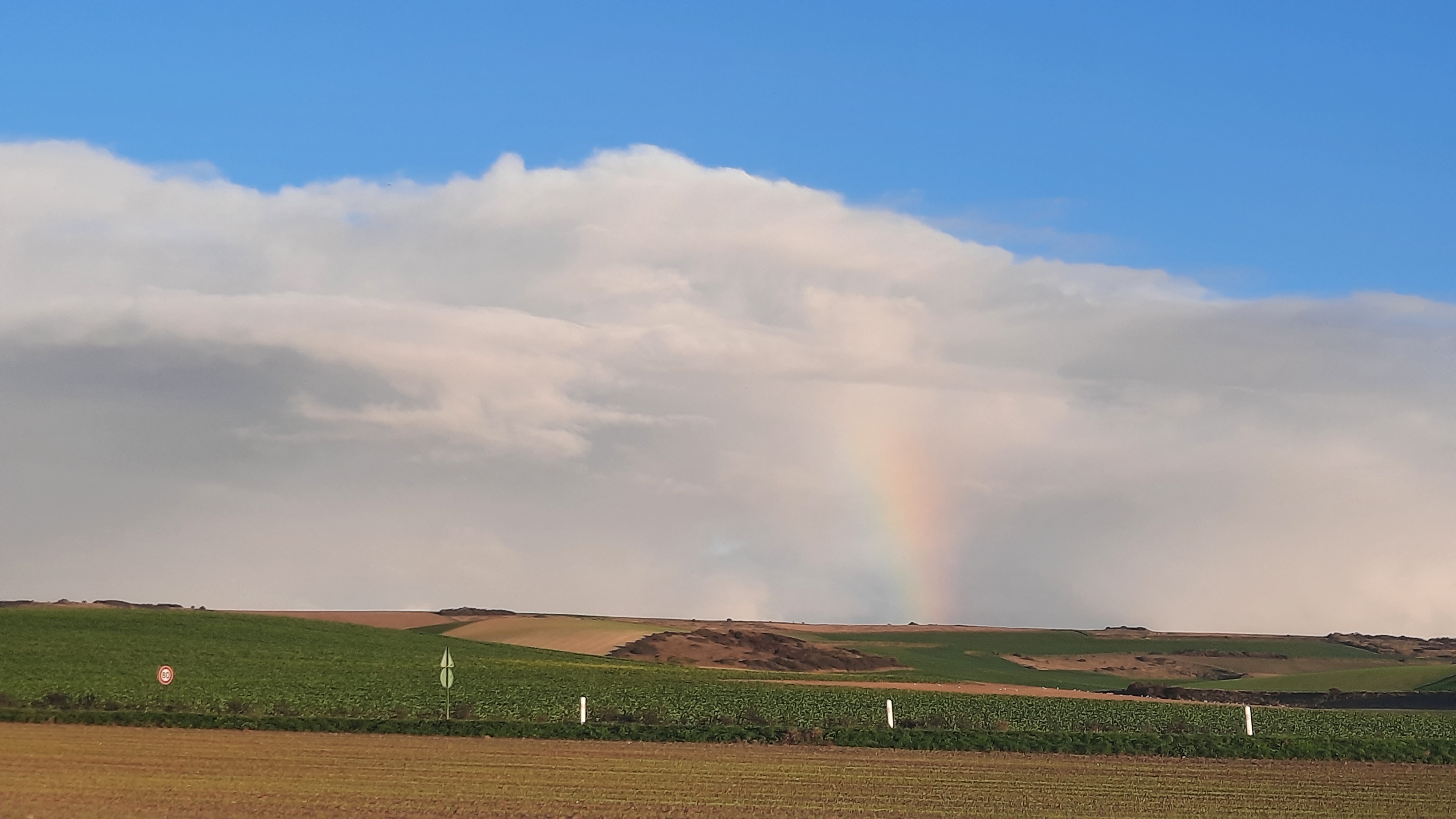
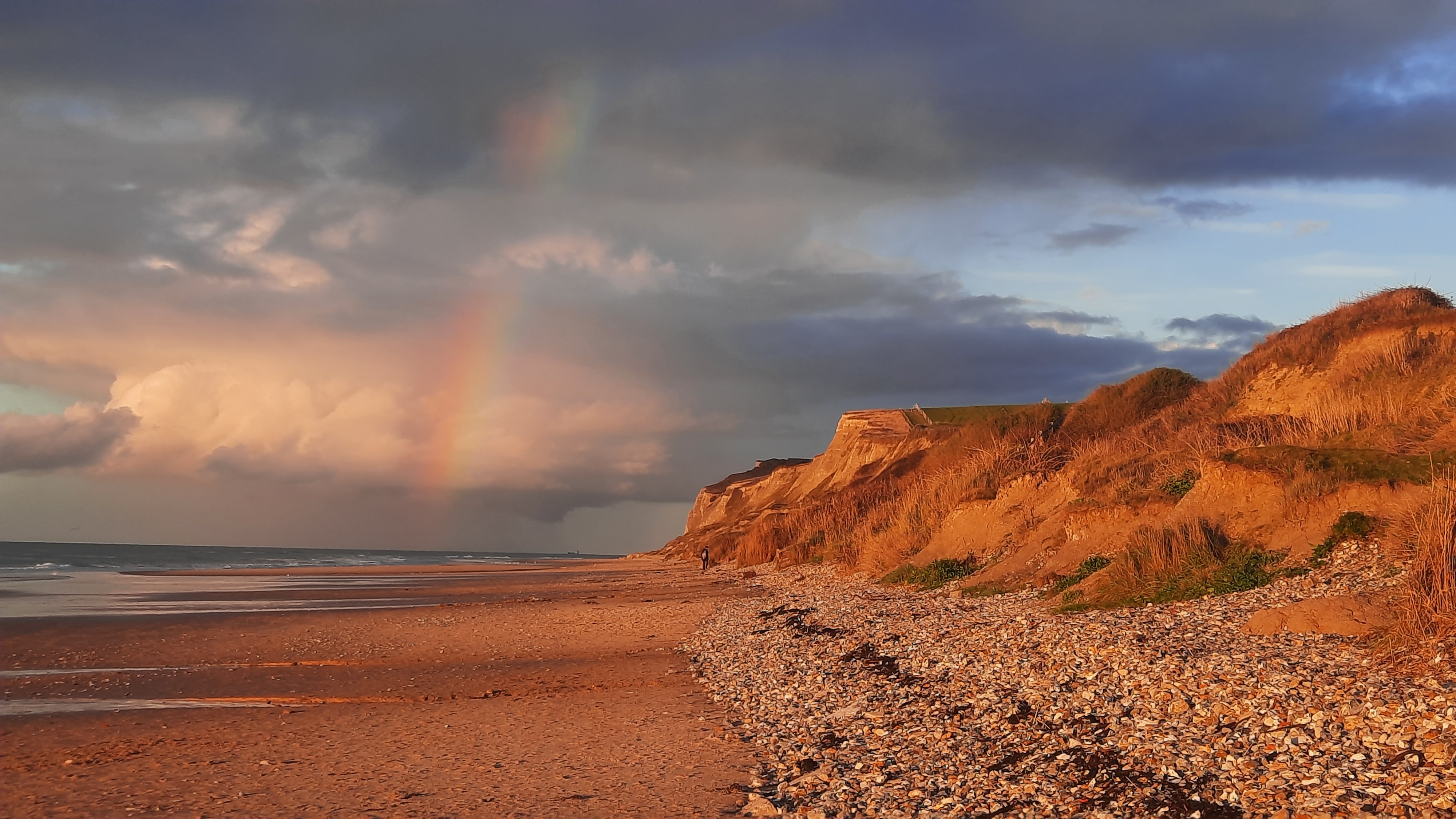
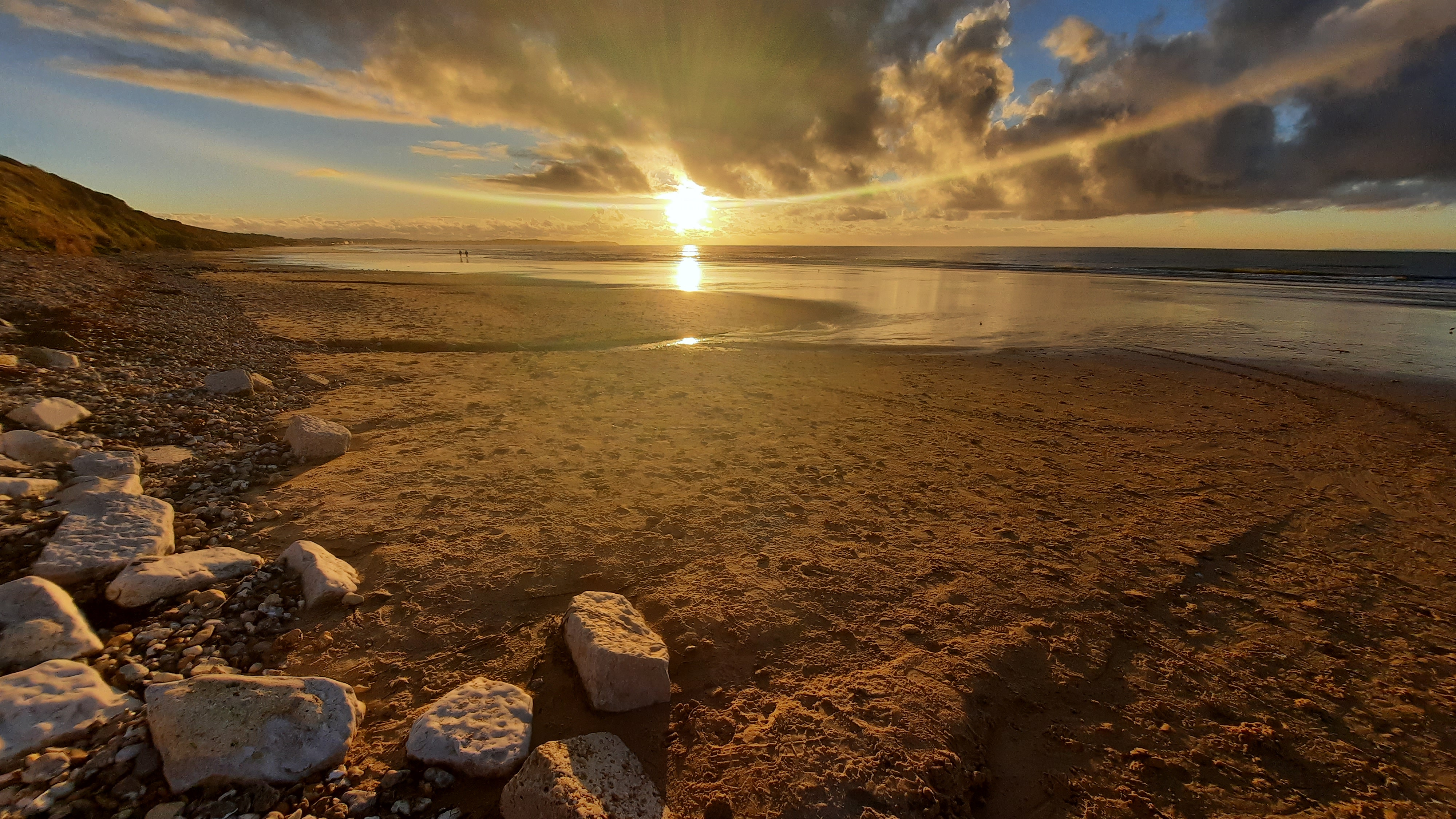
We were making our journey during that magical window of time just before the sun starts to set, a time when it seems to be saying to itself, “I know I’m about to disappear for a few hours, so let’s leave them all with a little parting gift.” The golden gloss it had lacquered across the French hills was accompanied by a rainbow that seemed to last for about twenty minutes. I’m not sure I’ve ever seen a rainbow as close to a sunset before, but it was the most perfect fusion of lighting and colour.
When we reached Plage de Strouanne we parked up and followed the footpath towards the water, eventually working our way down a steep set of sand dunes to reach the beach itself. From here the panoramics were pretty incredible, and though the photos don’t do it justice, I hope they’re enough to make you consider taking a little detour here if ever you have some time to spare before catching a ferry from Calais.
No sooner had we driven away to make our way to the port, dusk set in, the blinding lights of the A16 no patch on the natural lighting we had just experienced.
We reached the ferry port, took it in turns to seriously believe we had lost our passports evoking much panic, and then ate far too many Kinder Schoko-Bons in quick succession to heal said panic before catching the ferry home across a pitch black channel.
It had been a detour well worth making, and I was strangely thankful for the fact everything else had been closed.
Song of the Day:Siriusmo – Gummiband
Sticking with a continental theme for this month’s post I’m sharing this track from Berlin-based electronic whizz Siriusmo.
A few weeks ago, we had our Summer. It was admittedly a little short-lived (though whilst large swathes of the continent are literally burning right now, maybe that’s nothing to complain about), but it was nice whilst it lasted. One weekend, the local bus services were all running for free, and it made sense to make the most of this offer. I took a bus ‘out into the sticks’ and wandered around for hours in an area I’d otherwise only be able to get to by car, and maybe wouldn’t even have thought to go to at all. There was something quite liberating about all of this; being able to look out the window properly during the journey there, not having to think about where to park, and not needing to worry about finding a walking-route that would get me back to my vehicle (plus the financial and environmental benefits of course!). In every way, this was a day to really feel free and explore.
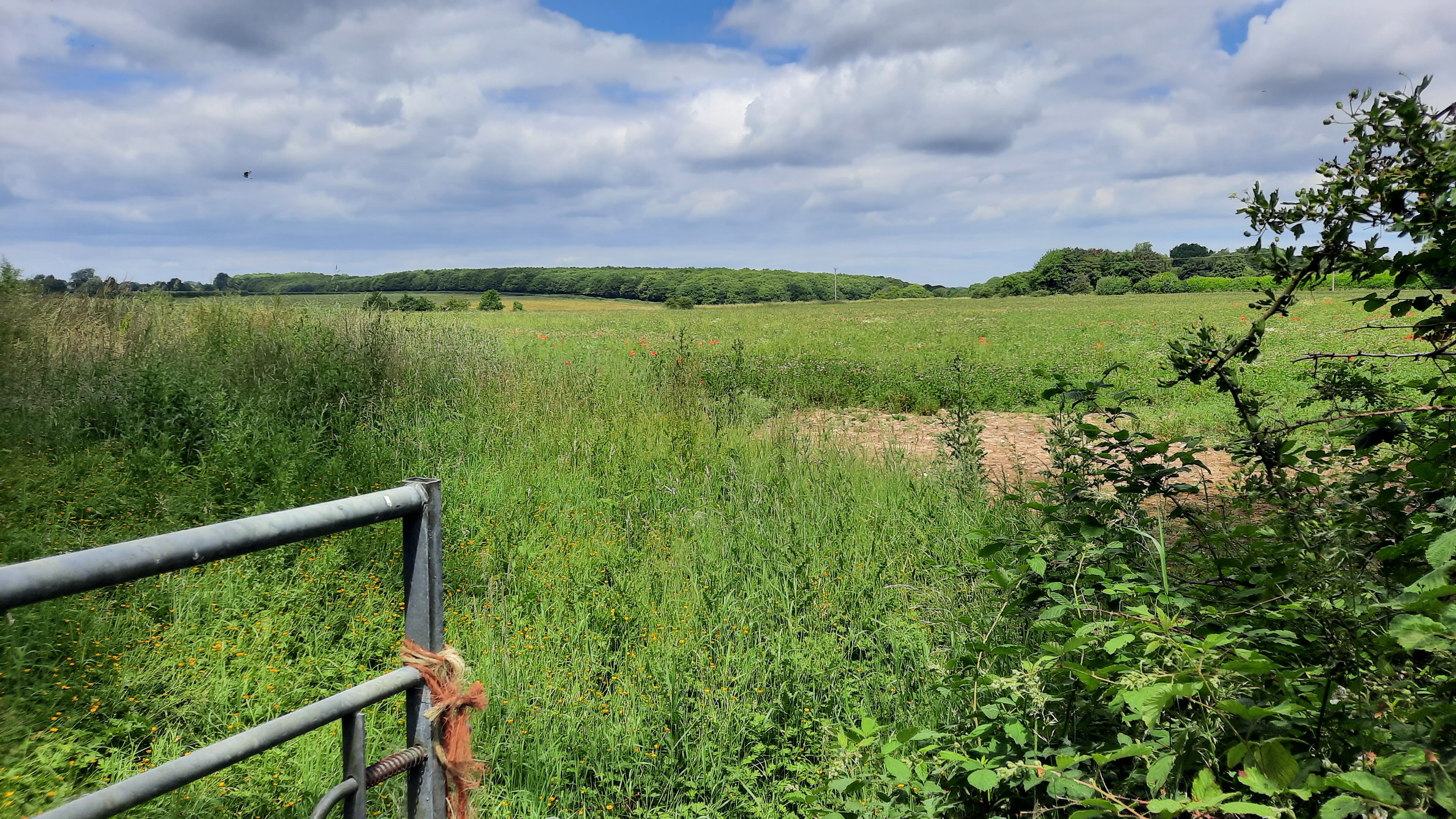
There were some beautiful sights to take in. The vibrant purple hues of foxgloves flashing in otherwise eerie ancient woodland. Meadows spanning miles, peppered with the fluttering of families of Red Admirals. A freshly shorn sheep hydrating itself as it sipped from a trough. Tidy topiaries in the back gardens of homes which I’ll never get to own, but like looking at.
Eventually, taking heed from the sheep and feeling the need for some hydration myself, I went to the local village pub. Here, I was greeted with a warmth that was in-keeping with the day’s weather, and a lady telling me the tale of how her cute dog – that was sniffling around at my toes as we spoke – had been coming to terms with recently losing an eye. I then experienced another benefit of having caught the bus by being able to refresh myself with a beer whilst doing some writing in the pub’s pretty garden, before returning home.
All in all, a nice, easy little adventure for a Summer’s day, and I’m excited to do more ‘bus explorations’ in the future.
Song of the Day:Russian Red – This is Un Volcan
This is a beautiful new song by a Spanish folk singer whose real name is Lourdes Gonzalez. She’s been around for about 15 years now and has produced some incredibly emotive and listenable pieces, the kind you keep on loop and keep finding new layers to the more you listen. One of her earlier pieces, ‘My Love is Gone’, is another favourite of mine for similar reasons.
When I told people I was heading to Morocco, it was often responded to with words of warning:
“You’re going to have to be so careful!” “Alone? You’re crazy!” “Prepare to be heckled!”
With these words ringing in my ears, I touched down in the country somewhat nervously expecting to be accosted as soon as I left the airport. In reality the welcome was much less eventful. My first exchange was with a young female compatriot who was off to a yoga retreat as we tried to work out how to use the ATM, before exiting the airport and being met by taxi driver who was very polite but didn’t speak much as we drove along the coast to the riyadh where I spent my first few nights.
I am very appreciative to those who meant well by recommending I stay vigilant, and whenever you’re travelling alone – regardless of whether you’re male or female – it’s important to keep your wits about you at all times and not be too naive. But when I came away from Morocco after eight enjoyable days, the imprint it had made within was far wider ranging than the preconceptions I had gone there with.
By listing five things I loved about Morocco, I hope this will serve as a more balanced picture of what it’s like and some of the things that make it special: 1) It’s more laid back there than you think
This may vary depending what part of the country you’re in. Marrakech, as a major city, felt a bit less laid back, but along the coast there were numerous times when an efficiency of informality caught me by pleasant surprise. A classic scenario is buying coffee from one of the sellers on the beach, for example, and realising that you don’t have enough cash:
“It’s okay, just pay me tomorrow”
And the very next day, you see the same seller and they can’t even remember that you owe them cash until you point it out.
I was also impressed when it came to booking a taxi to the airport, which I did at the hotel front desk two days before departure (how very British of me). The man behind the desk asked me my room number but didn’t appear to write anything down and said that all was booked. With some doubt in my mind about whether he had actually booked one, especially since I’d paid up front, I went to the front desk the next day to confirm that a taxi was arranged.
“Room 113? It’s all confirmed” said the receptionist – a different man to the previous day – without even checking anything. The following morning I walked into the lobby and the security guard knew that I was Room 113 instantly, and that I was due to be getting a taxi, and pointed outside towards where it was there waiting for me. Turns out I never needed that receipt or confirmation email I had expected.
2) The landscape is utterly gorgeous
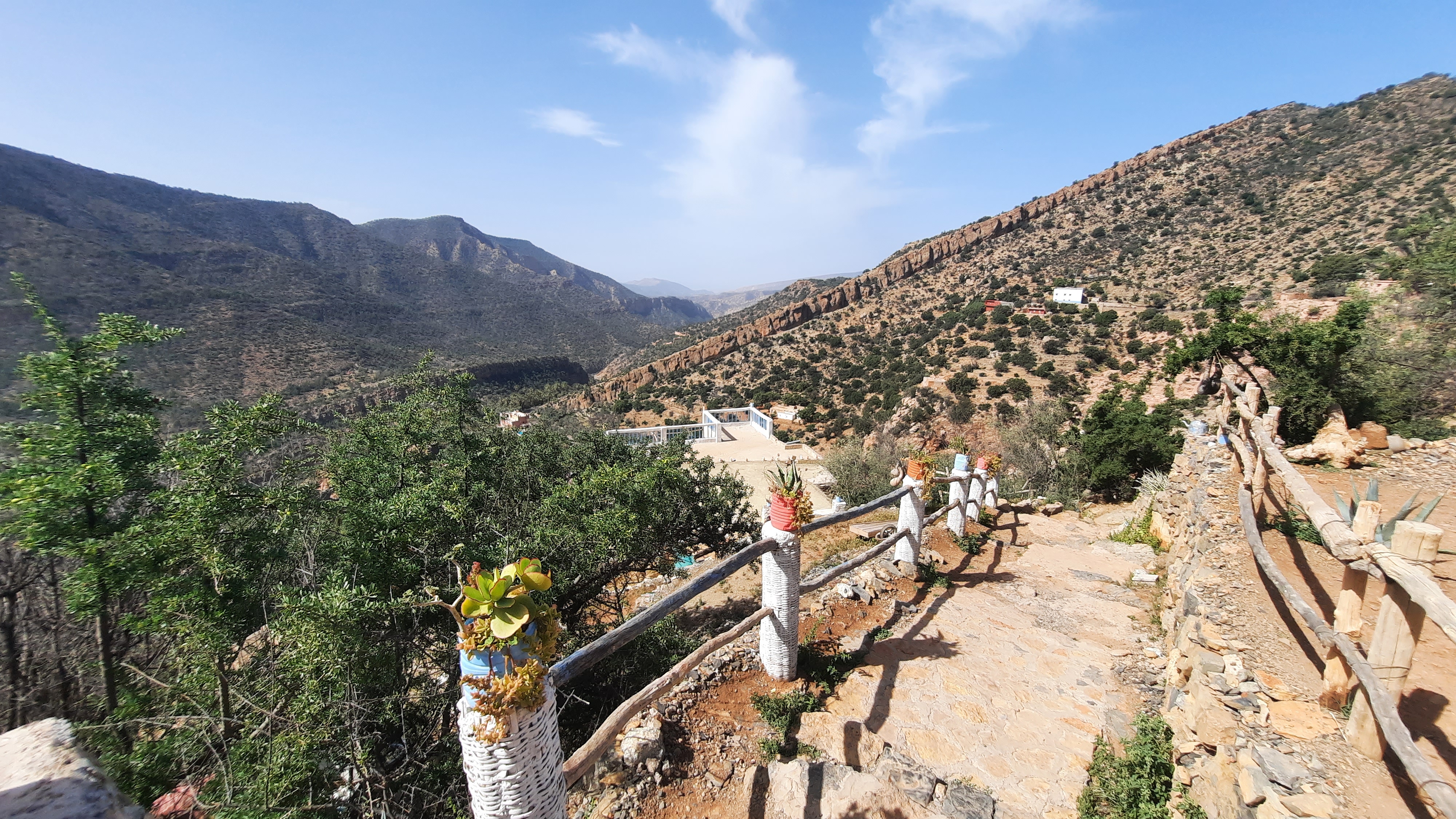
Place the images of intimidatingly bustling souks to one side and you realise that there is so much more to the geography of Morocco than instinct may suggest. Staying predominately by the coast filled me with an appreciation for the white sandy beaches and bright blue water that forms a large part of the country. Meanwhile,the bus to Marrakech afforded distant views of the snow-capped Atlas mountains, ancient honey-coloured apiaries and gaping caves. Paradise Valley, a well known tourist attraction, lived up to its title with its collection of secret waterfalls, natural pools and virid palms. Morocco is an extremely photogenic country, and there are views round every corner.
3) It is steeped in tradition
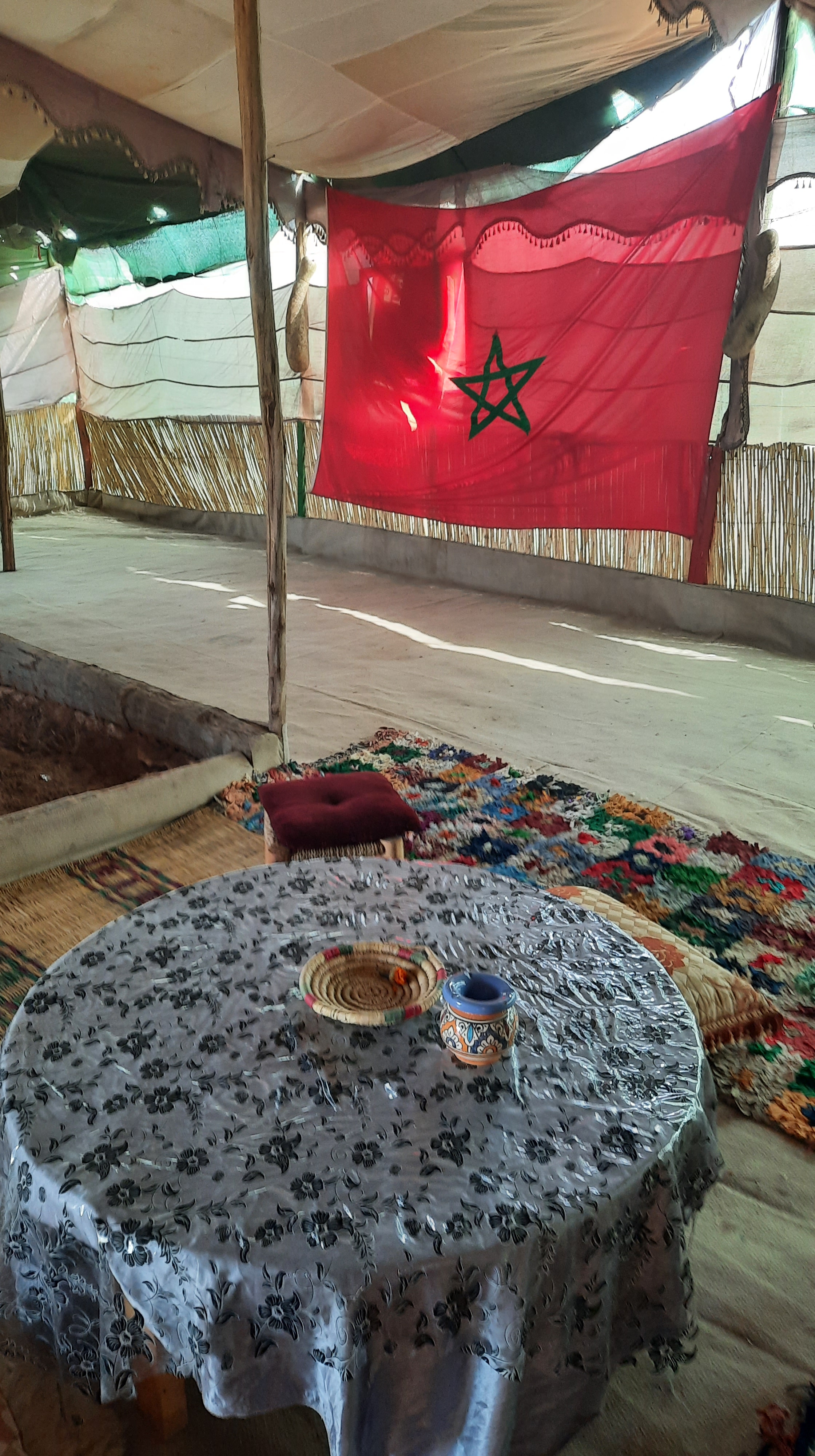
Berbers – also known as indigenous North African natives – are still living in communities across Morocco, and they have a well established reputation for being incredibly friendly and hospitable. During a quad biking activity, we took a break to head into a Berber village where they provided us with complimentary Moroccan biscuits and sweet mint tea. This is a common experience for tourists visiting Morocco, and was a lovely way to experience a culture so very different to our own, which has always got to be one of the primary purposes of travel.
4) The people are friendly
Everybody I encountered during my week away – without exception – was polite and smiled. I especially recall a taxi driver – Hassan – who drove me from Agadir bus station back to my hotel and spent the whole time talking about his wife – Sara – and their four children. With a sense of real pride, he told me all about what they were studying in school and their dreams to work overseas in time. He also spoke of his life as a taxi driver in Agadir, and how his bilingual skills have enabled him to help out many a lost tourist at the bus station over the years. These are the stories you don’t get to read in the guidebooks, but they form a large part of the Moroccan fabric.
5) The colours
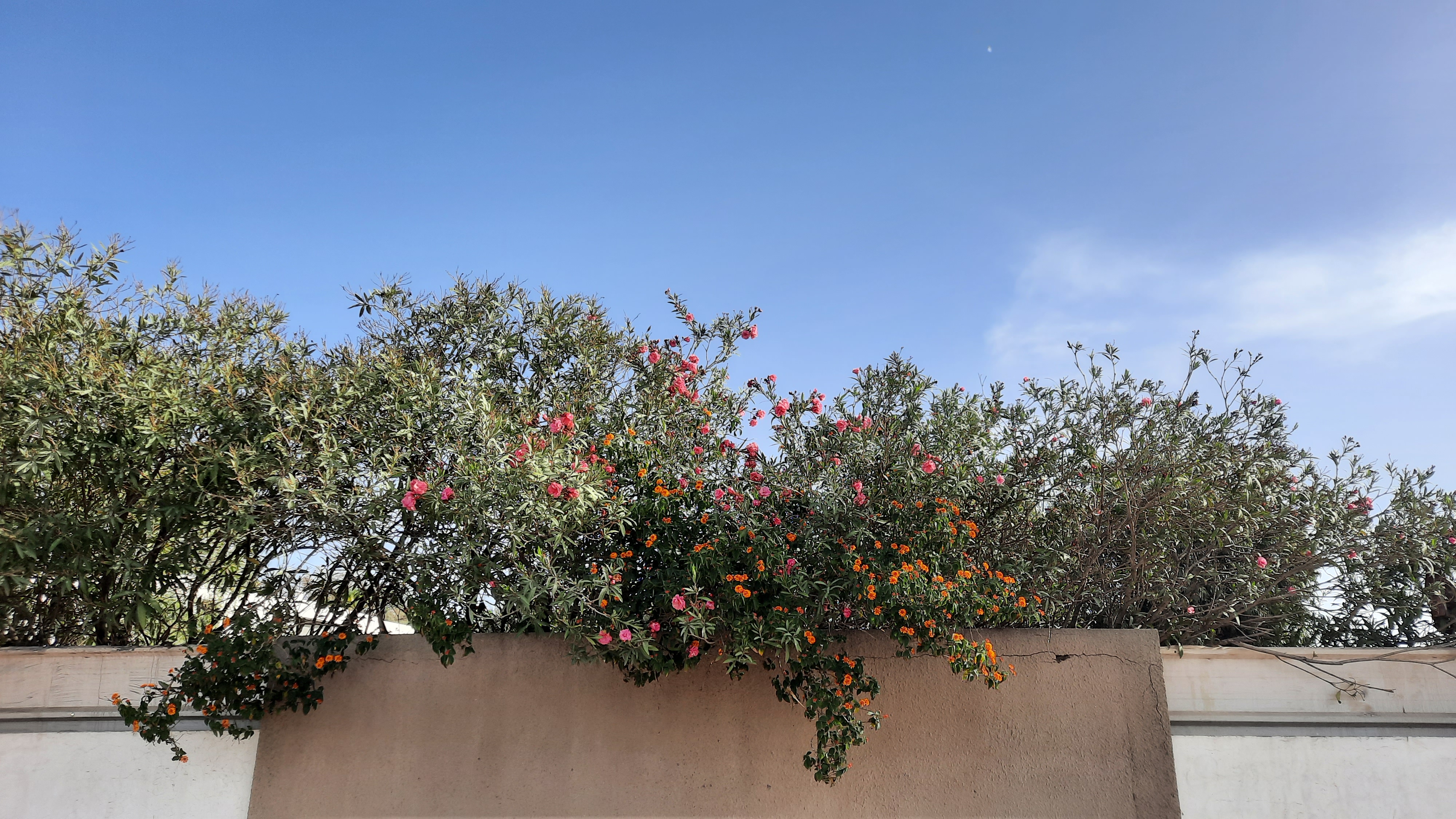
A botanical garden we visited on the way back into the city from Paradise Valley was as beautiful as you’d expect it to be, but even beyond dedicated space like this, bright floral colours could be seen all around. I was particularly struck at how they managed to breathe life and joy to the otherwise grey, concrete facade of this random, everyday wall:
There were lots of other things that I loved about Morocco that didn’t quite make the list, like the salt-cured black olives and various other foods, but I also acknowledge that in eight days I’ve barely scratched the surface of the country. Hopefully one day I’ll have an opportunity to get back out there and continue scratching.
Song of the Day:Havana Swim Club – Lagoon
“Sample based instrumental dance”. Many will recognise the sample used in this song as the theme to Desert Island Discs. A nice piece for this time of year.
On the surface of it, the idea of a weekend away in which you spend almost half of your waking hours in the car may not sound overly appealing, but after being grounded from travel for a couple of years, any time away at all seems a privilege now, and that’s probably the way it should always have been.
We had booked flights to Oslo because neither of us had ever been to Norway and the tickets were really cheap. Granted, this meant going away with nothing beyond an acorn in an envelope for luggage, but that alone was quite liberating, and substantially reduced the amount of time spent packing for the trip. And the number of items that we could lose.
Our decision to rent a car from Oslo airport derived from the main perception that we’d had of Norway, that of green fjords and snowy mountains, and we were keen to see them during our weekend away. From research it became clear that in order to fulfil this we would need to venture several hundred miles north of the city; and from the safe distance of four months earlier, a ten hour journey in the car each way seemed a breeze. Yeah, we can manage that, just need a few snacks and a couple of breaks and we’ll be fine. And we really were, but we hadn’t anticipated some of the characteristics of Norwegian road-travel which we would encounter on the way.
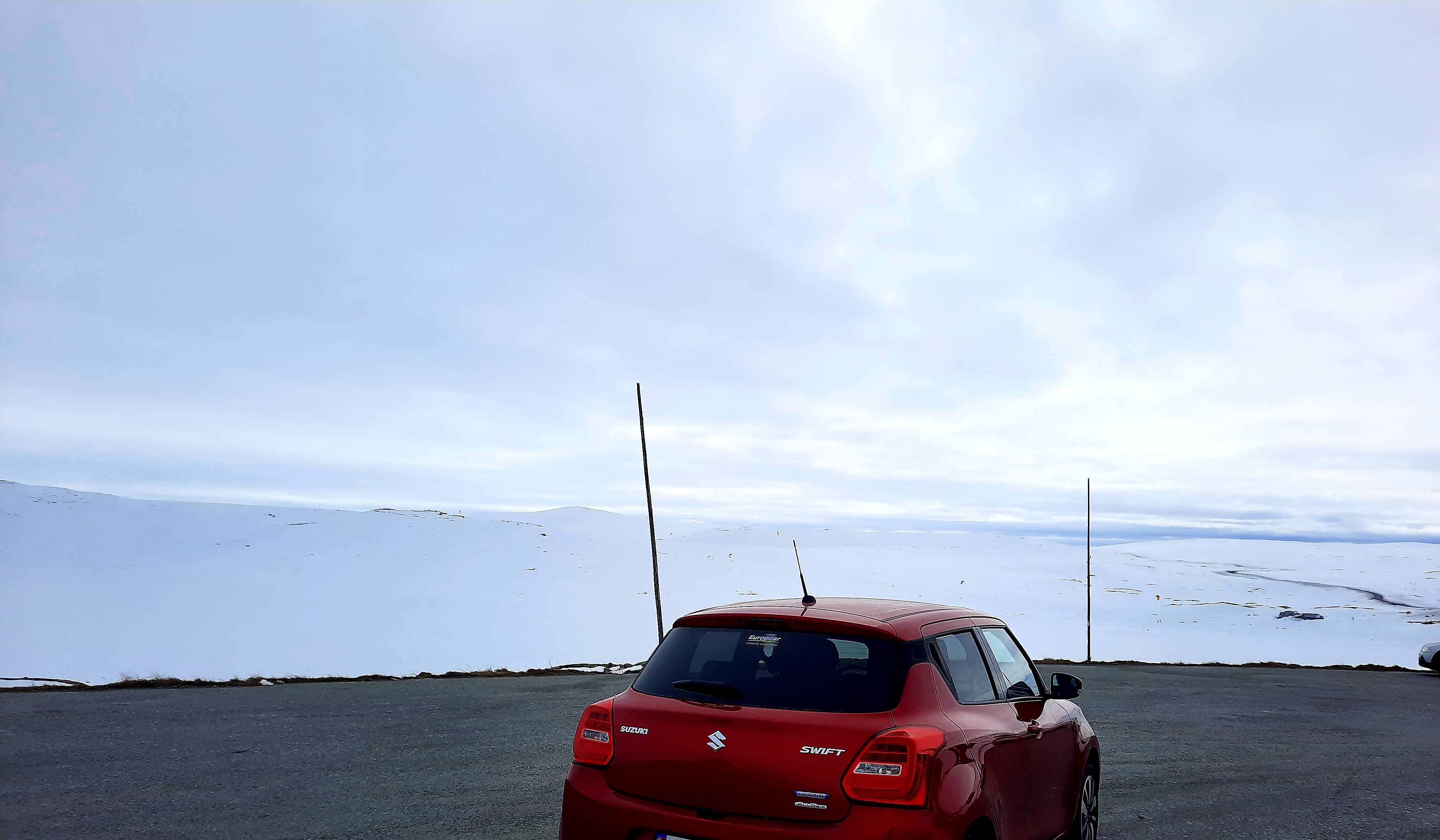
The grand plan very nearly fell apart within the first thirty minutes of our arrival into the country. Just as we were about to be handed the keys for our rental car, we discovered that the allocated vehicle was an Automatic, despite our booking confirmation stating otherwise. The slightly nervy lady behind the desk, backed up by her more aggressive sounding boss on the phone, advised us that they didn’t have any Manual cars available, and that it was this or nothing. Neither my friend or I felt comfortable driving a car with an unfamiliar transmission type on unfamiliar terrain, so we had to almost consign ourselves to a whole weekend in the city but for the fortune of a rival car hire firm who happened to have just the one remaining Manual car available. We snapped it up immediately. The shiny red Suzuki Swift became not only our saving grace but our passport to the fjords and mountains which we had so nearly missed out on due to the rising prevalence of Automatic transmissions in Norway.
After an evening in the city, during which we ate baked potatoes and took out a small mortgage to pay for the overnight parking, we set-off first thing the following morning towards Bergen, around five hundred kilometers north, on predominantly mountain roads. It was a long time to be sat in a car, but it was so worth it. Cruising round the perimeter of Tyrifjorden – the country’s fifth largest lake – within the first thirty minutes of our journey seemed breathtaking enough and I was incredibly excited to see snow-capped mountains in the distance, but this only proved to be the beginnings of some of the best landscapes we’d ever seen.
Before we knew it we were up high within those very same mountains I’d marveled at from hundreds of meters below. There was nothing to see beyond white: lodges caked in thick layers of icing sugar, some visible only by the tops of chimneys poking above the ground, and the occasional flashes of colour from kites being flown by people from Oslo Kiteklubb, decked out fully in ski gear. The sunshine, which gave the white rug around us a warming buttery glow, belied the temperature. When we stopped to take pictures and stretch our legs, we were reminded that whilst it may have been May and the sun may have been shining, we were still on land level with the Shetland Isles, and we felt it! After a quick photoshoot, it was a swift return to the Swift, and on we went.
The landscape on the journey continued to astound, regardless of the number of hours that passed and the number of joint-swiveling seat exercises required to prevent ourselves melting into the seats. Much of it evoked memory of studying Ibsen’s ‘Peer Gynt’ during school. Looking out upon miles upon miles of sparsely inhabited deep green valleys, forests and fjords, you can understand how imagination may run wild in these parts, and how well-known Nordic folklore such as trolls and elves came into being. I wouldn’t know where to start with trying to guess how many Norwegian square meters have remained untouched for decades, but I would imagine that it is a considerably greater percentage than those in the areas we are more used to here in the UK. I also wouldn’t be surprised if spruce trees outnumber people by about a thousand to one.
One of the defining moments of our Norwegian road trip came as we were on the cusp of excitement at being just forty five minutes away from our destination. After hours on the road we were absolutely exhausted and itching to take a break from the Swift for a day, and to actually feel the fjordland, not just look at it. It wasn’t the ideal moment for the Sat Nav’s loyal pink line to mysteriously break by a circle of blue on the screen.
Oh yes: archipelago = an abundance of car ferries. We needed to take a boat to the peninsular on which we were staying. Of course.
It would no doubt have been a wonderfully exciting addition to the trip, were it not for the fact that there was absolutely no sign of the life at the port and no boats about to leave any day soon. We had no choice but to go back on ourselves for at least thirty minutes, before taking an alternative, much longer, route which added a further hour onto our journey. We were tired and a little fed up by this point but still able to absorb an important lesson which would stand us in good stead for our return journey:
‘Route Options’
‘Avoid Ferries’
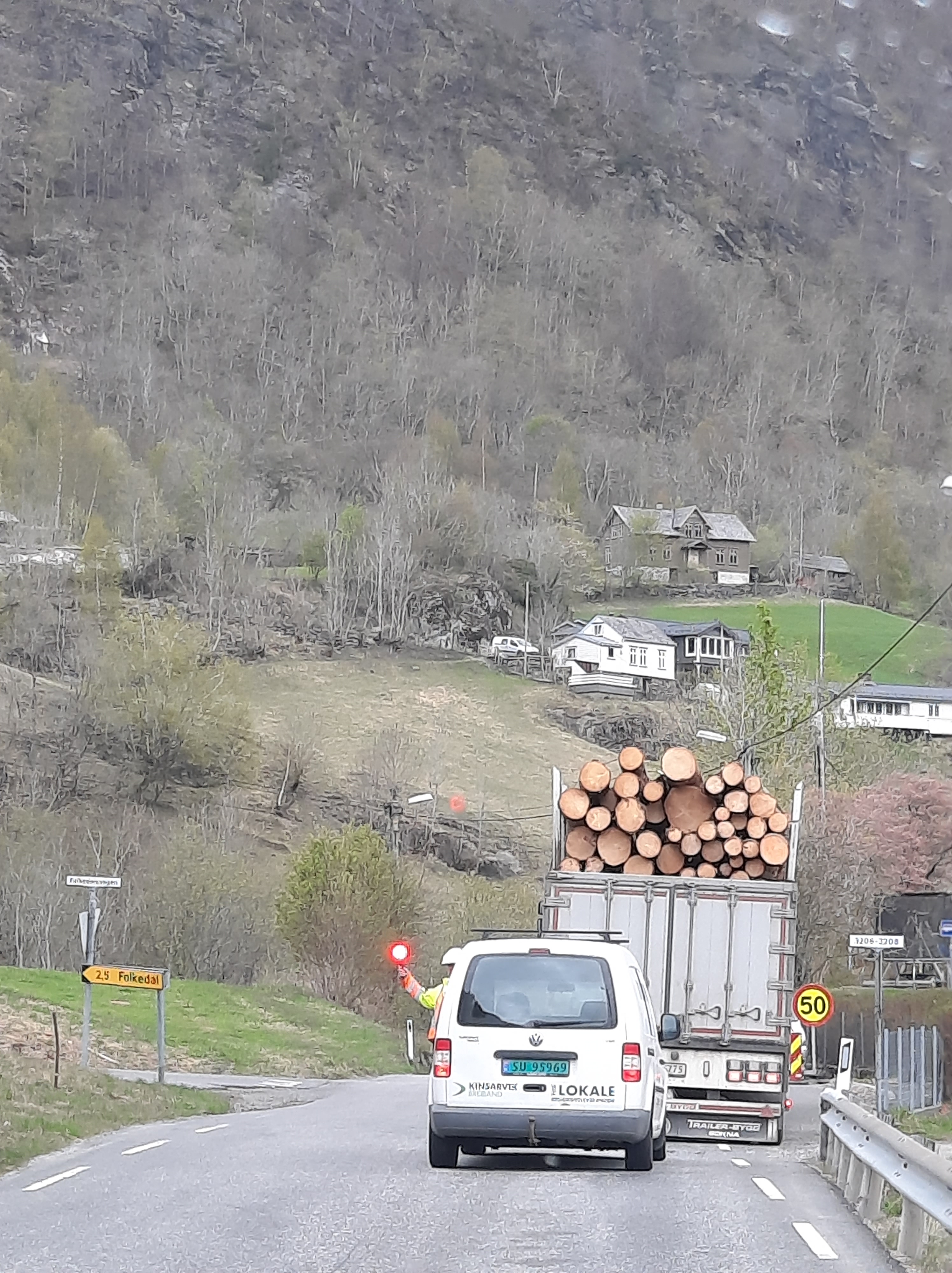
Of course, what we also hadn’t anticipated about our Norwegian roadtrip, and what would create a nail-biting delay on our tightly time-bound journey back to the airport on our final day, was the sudden appearance of a fella in a high-viz jacket waving a red light on a stick instructing motorists to wait for an undefined period of circa twenty minutes whilst the world’s slowest traffic emerged from the tunnel ahead during roadworks. With little in the way of visible signage to explain what the wait was about, we had wondered whether the stick denoted a temporary or more permanent stop to traffic, and even reached the point of getting out of the car to ask Mr High Viz, only to be met with a very stony-faced response which was thankfully followed shortly afterwards with a green light on a stick. Phew.
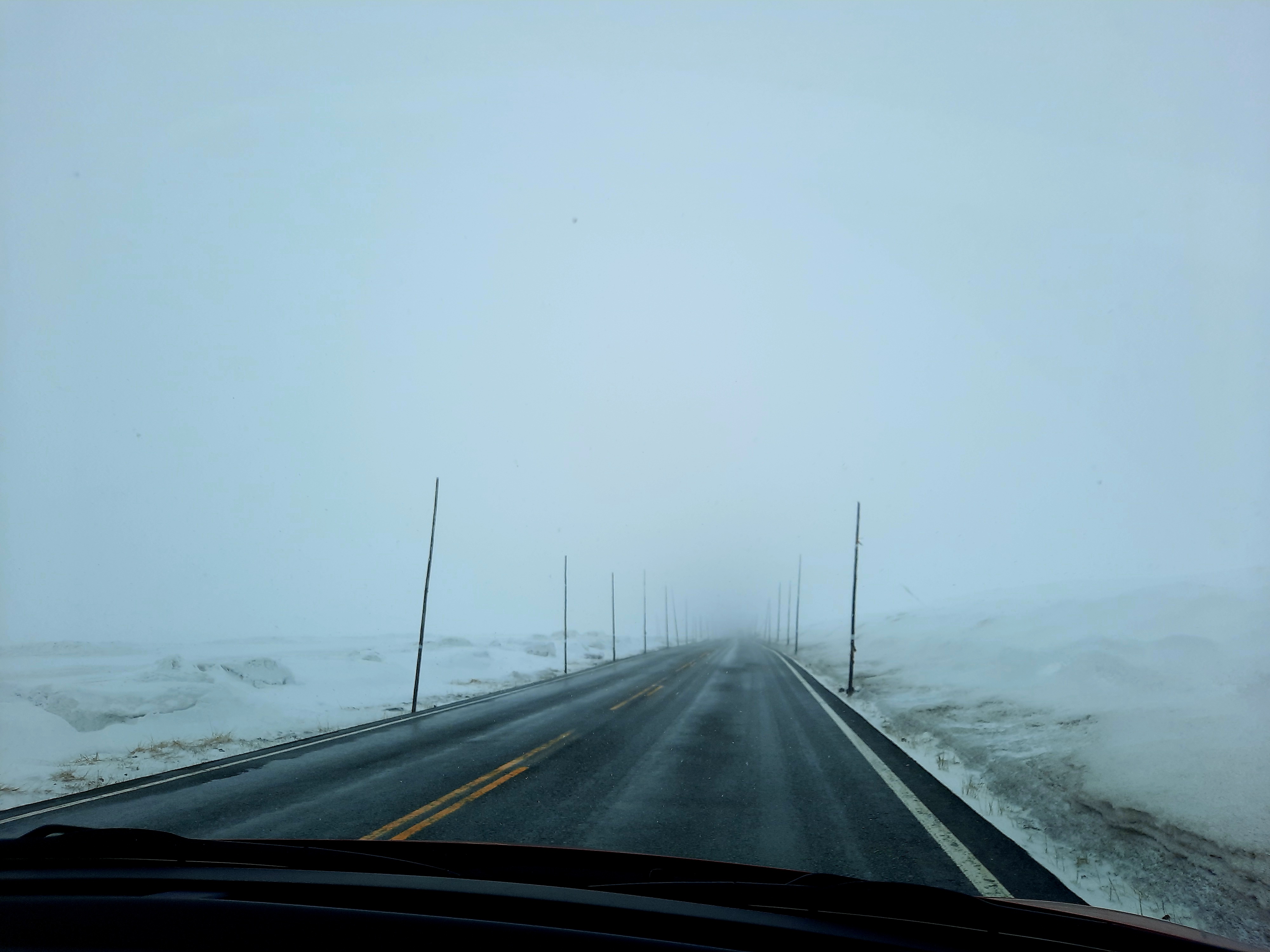
When we had turned down the Automatic car at the car hire at Oslo airport, and refuted Mr. MoodymanonthephoneatSixt’s assertion that “everybody else just takes Automatics, why can’t you?” we had done ourselves an even greater favour than we first thought. On the day of our return journey to the airport, further snow had fallen in the mountains and we were driving through it before the gritters had made their way up there. To say it was a precarious thirty minutes of driving would be an understatement. Not only was my friend driving an unfamiliar vehicle, across sheets of black ice, but a heavy goods lorry had decided that this was the perfect time to tailgate us, and became quite unjustifiably irritated by our caution, flashing its headlights and casting us a long, bullying beep as it eventually overtook us on an icy decline. My friend did remarkably well to manage this and keep us safe, and neither of us feel we would have quite known how to do this on a totally different gear transmission.
From the ice and snow, the unanticipated delays, the lengthy tunnels and breathtaking scenery, it’s fair to say that this roadtrip had been one like no other, and back when booking the trip earlier in the year we could have had no idea about what would be awaiting us.
We returned the Suzuki Swift to Oslo Sandefjord airport just an hour before our flight was due to depart, and having set off from our chalet south of Bergen at 5:30am. We had spent a long time in the car but seen so much of the country that way, way more than we would have seen otherwise, and it only compounded my growing belief that there really is no travel quite like slow travel, no matter how much time it takes and how narrow the window with which you have to do it.
‘Indonesia’ – a name that will immediately evoke images of the exotic. An archipelago characterised by colour: blue seas, white sands, lush green palms and dazzling yellows of Durian flesh alongside the ravishing reds of the ‘rambutan’ (it means ‘hairy fruit’). Not to mention, of course, the ‘Angkots’, which are painted in bright purples, blues and oranges and zip dozens of huddled passengers wearing colourful hijabs round dusty streets whilst blaring out that same old D’Bagindas album from 2010 through speakers that crackle under the pressure of the driver’s desired volume. Sun-faded knick-kacks, accumulated over decades of travel, dance around on the dashboard, never failing to resist gravity with each sharp turn the vehicle makes.
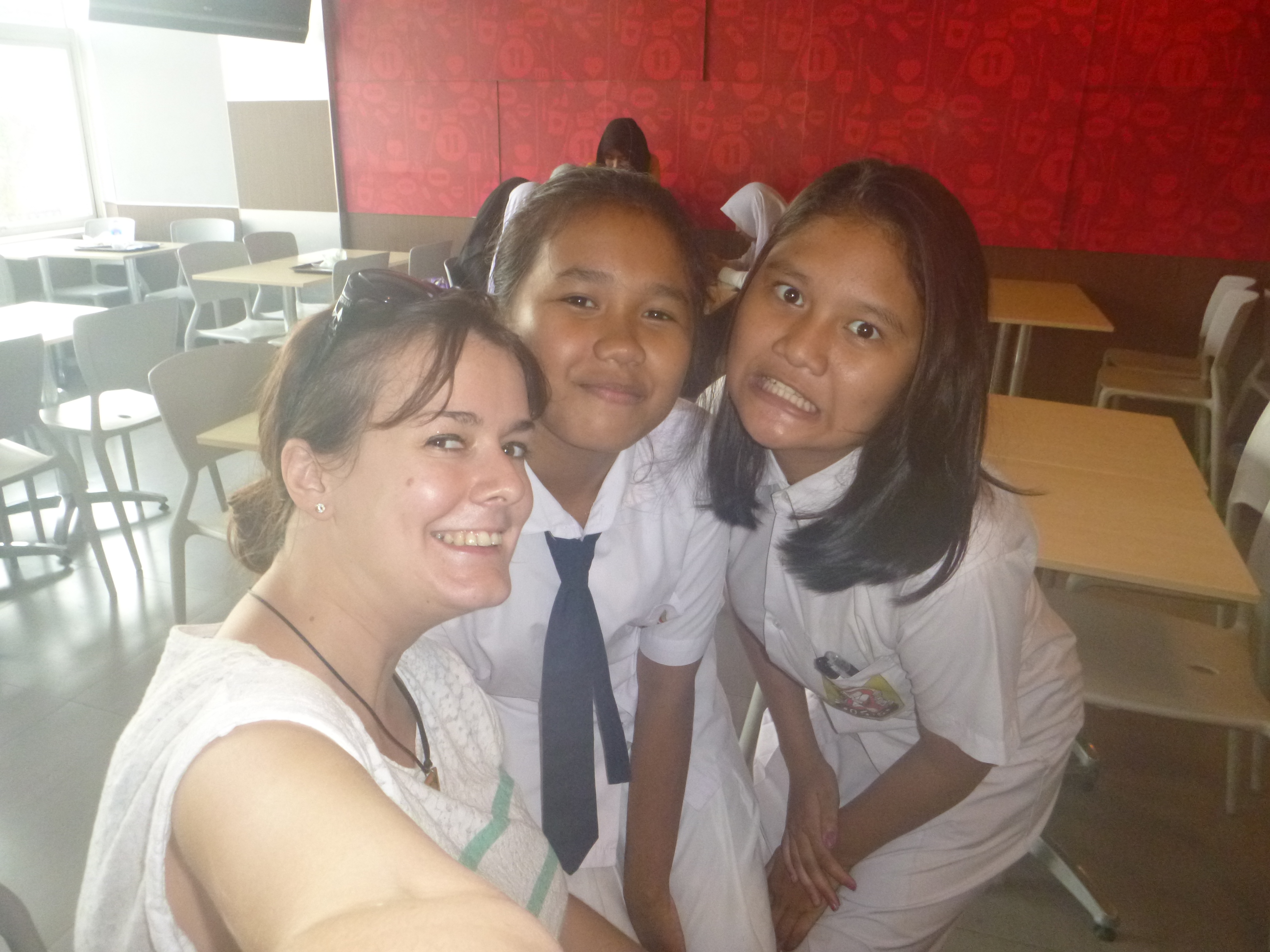
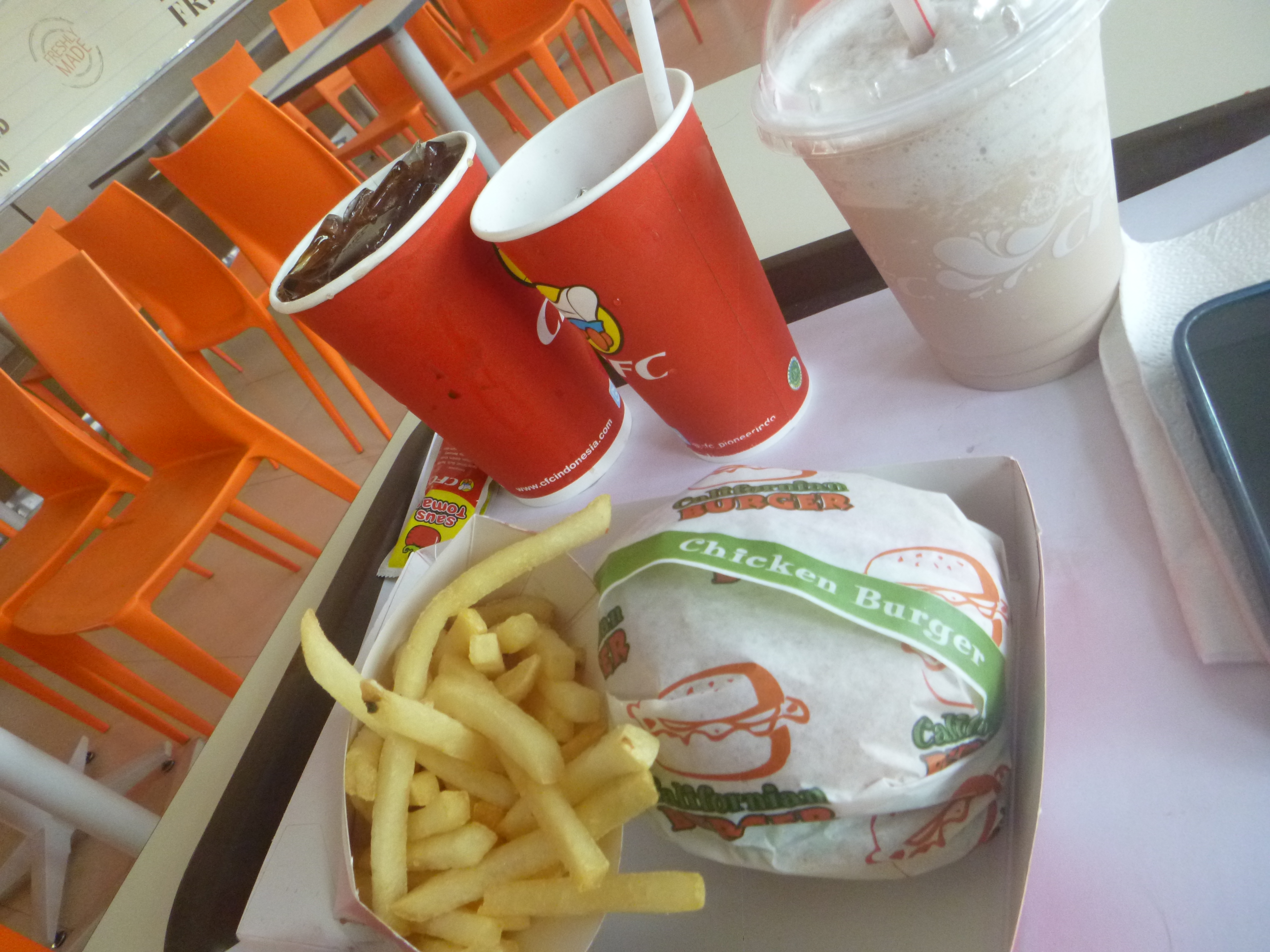
…And the ominous dark grey skies that hang over the nation’s capital, Jakarta, as I sit alone inside a fast-food outlet at Arion Mall in the east of the city. Outside, the rain hammers down on traffic that will choke up the streets for hours to come, but the inevitable arrangement of horns thankfully cannot be heard from the refuge provided by this Mall. Instead, I am heckled by a quartet of teenage girls who marvel at the colour of my skin. Tourists don’t really come to these parts. I am here visiting friends who grew up in neighbourhoods not far from here, and if it weren’t for them, I doubt I would have come here either.
The young girls ask me a series of questions and take it in turns to pose with me in a picture. Picture after picture. The forced smile slowly dwindling into complete lack of expression with each flash from a Blackberry emblazoned with emoji stickers. I have humoured this contact for a while, but now I really just want to be finishing the half-eaten plate of fried chicken that sits before me. The girls ask for my Instagram username and when I eventually return to a place with WiFi I’ll suddenly see that I have four new followers. They’ll upload the photos from our meeting and decorate the captions with #foreigner.
Before I leave the Mall, I decide that it’s time to buy some Batik garments. I have always liked Batik, with its bright, bold colours and patterns. The clothes are always so unusual, and so unmistakably representative of the country I have come to love since completing a voluntary internship in 2010. An assistant with a huge smile approaches me. He is wearing a waistcoat and looks like he could be about to break into song. “Hello Miiiiss, can I help you?”
I immediately reply in basic and broken yet better-than-nothing Bahasa Indonesian that, “I like Batik. I look for Batik”
The assistant’s smile extends further and he begins to rifle through the collections passing me every single item of Batik to try on. He’s a natural salesman who no doubt has Rupiahs flashing in his eyes as I strenuously attempt to voice my approval of each piece using a very limited vocabulary of “Saya suka” (“I like”) or “Bagus” (“good”). Having trialled around a dozen or so garments, I eventually emerge from the changing rooms with the couple of dresses I have selected to go on and buy. The assistant eagerly waits by the door, enthused to hear about how I got on. He is pleased with the items I’ve chosen, but is also keen that I reconsider my decision not to buy a surprisingly rather dreadful-looking black and red piece. Whilst watching him redundantly point out all of its merits another dress catches my eye, and it looks like the size I see on display would fit me perfectly. I go and take a closer look.
“Errr maybe not this dress for you Miiiiiss as we only have this size, and errr you have fat”
For a second I take offence though it’s hard to continue to do so when it’s clear that none was meant. What amuses me most is the way in which a steadily growing rapport could suddenly cease due to a moment of lingual naivety. I smile at my new friend – my new attentive stylist – as he goes on to initiate the payment process before we bid one another Selamat Tinggal(goodbye) forever. Who could’ve guessed that this inconsequential scene, which lasted only 20 minutes and involved a man whose name I can’t even remember, nor probably never even knew in the first place, would’ve stayed in mind in the way it has all these years later? What is it about the characters we meet when travelling? Is it something to do with the language barriers, and how they enable us to view people in different ways? The smiles, the looks, the way in which any verbal exchange ends up holding considerably more weight because it took more effort? Maybe it’s to do with the scope for brutal honesty that is actually somewhat refreshing, for it is harder to maintain tact when you can only speak a few words of the language.
I go out into the rain and join the traffic on the Transjakarta busway back to my friend’s house. A five minute journey takes half an hour due to the clogged nature of the traffic. Equatorial rule dictates that daylight is limited, and so it’s already dark outside. It’s September 2015 and this is worlds away from the Indonesian experience of 2010, where I taught English to orphans in the beachside city of Padang, West Sumatra. Padang hosted a landscape much more reminiscent of the opening paragraph to this piece, but it doesn’t matter, because these real, rugged, unfiltered experiences are all just a part of the world I love. A world that hides beneath a map. A world that doesn’t make the guide-books because it’s not always deemed interesting enough, but a world that’s real and which leaves a permanent impression in the mind of a 29 year old (back then!) woman who originally set off only to eat some fried chicken in order to pass the time whilst waiting for a friend to finish work.
Song of the Day: D’Bagindas – Apa Yang Terjadi
The most apt choice. It would feel impossible not to hear this song at least five times a day whilst out and about in Indonesia, impressively during each of my visits there (2010, 2012 and 2015).
Opposite one of the main railway stations in the Midlands stands an hotel which has been there since the mid-19th century. Built to resemble an Elizabethan manor house, there is a certain sense of elegance about the structure, which is probably what makes it an attractive option when considering where to book a room for the night. It’s also incredibly affordable, particularly at a time when even the most basic accommodation can usually set you back about £70 a night, if you’re lucky!
There’s a saying in life that you only get what you pay for, and the first time I stayed in this hotel, last year – a last minute decision to assist with the logistics of a short stay in the area – I left feeling like I shouldn’t have paid anything at all. A catalogue of perceived calamities – all occurring within the relatively short timescales of an overnight stay – meant I went away completely understanding why three quarters of its reviews are rated either average, poor, or terrible.
But, there’s also a saying in life that everybody deserves a second chance, and I pretty much believe that’s a sentiment that should be extended to services as well as people, when possible. So – with a new need to stay in the area, and an even smaller budget to play with this time round – I decided to give it another go. At £40 a night, I would have been stupid not to, and this time round, I even convinced a couple of friends to come with me.
I told them all about the aforementioned catalogue of calamities observed during the first stay, in 2017 – the uncomfortable beds, the feeble running water, the way the carpet changed to a completely different design halfway up the grand staircase, and the way the rooms were so dated, that the welcome booklets contained explanations about where to locate the nearest cigarette machines (banned from England in 2011). I also told the tale of the unenthused barmaid, who had kept finding reasons to disappear whilst on duty, and failed to answer a simple question about whether or not we could buy a bottle of wine to take away with any sense of certainty, interest or even – dare I say it – intonation:
“Ah don’t kner. Nerbody has ever assked me that”
What felt like an eternity then passed before I realised that she had no plans to elaborate on her ‘answer’.
“Well, is it something we could find out?”
“Ah’ll have to ask the manager”, she concluded, before disappearing for another fifteen minutes, whilst no doubt making great efforts to succeed at her quest for a resolution to our query. Eventually we were permitted to take the drink away, but not before noticing that the bottle was covered in dust and was probably as old as the building itself.
Regaling the stories this time round I was asked why I would choose to stay there again and – much like the barmaid I suppose – I struggled to give a clear answer. I didn’t dislike the hotel by any means, I just found the whole place incredibly bizarre, and yet so alluringly intriguing. And now I had a reason to stay there again, and I leapt upon it.
When we arrived for stay number two my friend vocalised positive first impressions as we walked in through the grand porch entrance. The receptionist – a middle aged lady with a messy bun in her hair (not that I’m judging as I often sport the same fashion myself) – was ensconced in conversation with her colleague about how much work she had done that day, and almost seemed to forget that she was still on duty. She dealt with my friends’ booking and I checked-in with her colleague.
A young girl approached the counter behind us, to ask what time last orders was that night. It turned out that she was the the current barmaid, and she clearly wasn’t enjoying her job very much, as she seemed very keen on calling them sooner rather than later.
“Make it 11pm” her colleague said, before issuing with me with my key, the flimsy, plastic sort you would normally use to lock an old filing cabinet with. It wouldn’t have surprised me if it actually did unlock a filing cabinet somewhere within building, probably the one containing all the customer booking invoices from 1973.
“You’re in Room 102”, he said, nudging the key across the reception desk, “turn left as you go up the stairs”.
My friends were staying in Room 100, and so when we saw the sign for rooms 100 – 105 we felt pretty pleased to think that – despite booking several days apart – our rooms were so close together. Not so.
After dropping my pals off in Room 100, I continued along the corridor to where Room 102 should have been, but alas, it was not there. Room 101 was. As were rooms 103, 104 and 105. But not mine.
“Great, I booked a room that doesn’t exist, no wonder it was so cheap!” I thought to myself, before turning back and double-checking to see whether I’d missed it. After a bit of wandering, and some help from my friends, we found a sign round the corner that pointed the way to Room 102 specifically, and when we finally found it, it was situated between Room 120 and Room 121.
Of course.
We could only deduce that whoever designed the building had not been able to count, and then proceeded downstairs towards the bar.
The young barmaid was stood slouched with a facial expression that suggested she had recently swallowed an anchor, and was feeling compelled to call last orders seventeen minutes before the time she had been advised to by her colleague. We went up to place our orders in the nick of time. One of my friends asked for a pint of beer and got a half pint of beer and a half pint of froth. “Ah joost need to let it settle”, said the barmaid, leaping upon an excuse to not have to do anything and disappear from duty for ten minutes, to god knows where. A sense of deja vu came over me, and I immediately identified who her mentor must have been when she started employment there.
Once we got all our drinks, and questioning – but being in no mood to challenge – how much we had been charged, we took a seat and noticed a pool table next to us. We fancied a quick game, but didn’t quite have the right change.
“Excuse me, would you mind changing these coins into a fifty pence piece so that we can play pool?”, I asked Waspy at the bar, in as polite a tone as possible to avoid having a dimpled-glass beer tankard launched at my face.
“No I can’t because bar’s clerzin’ and ya need to go into the lounge now” she said, without any slight hint of regret, eye contact, or diction. In fact, if she’d had a giant broom to hand I’d have easily imagined her sweeping us along into the lounge, next door, so that she could fetch her things from the cloakroom and head out to meet her Tinder date. Or whatever important thing she had lined-up for afterwards that made her so keen to end her shift.
My friends and I went to the lounge, as instructed, and took a seat on some black leather sofas, the crevices of which you half expected to find some shriveled up peas from the two for £5 mains special, or a piece of melted chocolate Digestive. I’m sure you know the kind of sofa I mean – you normally see them against the decrepit custard yellow walls of taxi ranks, or on somebody’s front lawn awaiting collection by the rag and bone man – early ’00’s furnishings that just couldn’t stand the test of time and now feel like sitting on giant cushions of spilled cider and black, and regret. Yeah, those.
Once we’d finished up our drinks we considered heading out to explore a bit more of the town, and maybe see if there was a place for one final refreshment. We asked the chap at the Reception desk for any ideas of where we could go:
“There’s not mooch around here to be honest, flower” he said, with an unmistakable Midlands tone, “you’d be better off staying for our night bar” which – he explained – was basically when they keep the lights turned off in the bar except for when staff go in to pour drinks. We were asked to remain in the lounge area, where a couple sat with some enthusiastic young children who wanted us to join in their game of football, whilst our drinks were being poured.
A grand piano sat on tired looking carpet in the corridor just outside the room and I’m afraid I couldn’t resist the urge to stroke the keys and bust out my inner Mozart… except that this was difficult to do, as the piano was sadly broken, with the lid jammed half-shut. Without wishing for this to sound like a scene from a blue movie, but uncertain how to phrase it any other way, a wine-influenced version of myself managed to poke my fingers in and play a bum note or two in as melodic a fashion as possible. Before too long, however, a member of staff advised me that there had been complaints from the bedroom above, and asked that I desist with my musical masterpiece immediately. Alas, my modern incarnation of Symphony No. 40 was not able to reverberate around the confines of the hotel on that particular night after-all.
I’m possibly not painting the most amazing image of this hotel, but I’m being completely honest when I say I love it, and people like Paul are amongst the reasons why.
Paul – you see – was the senior staff member on duty that night, and the one who had taken to giving us botanical pet names like “flower”. A tall, silver-haired chap in his early fifties, Paul was the kind of person you’d imagine showing up to an extended family Summer barbeque with a bottle of Tia Maria and some Ferrero Rocher. He’d be the one keeping an eye on the burgers every time chef went to the loo, and geeing everyone up to have a go at the pinata. In other words, he seemed to be the sort to know how to please a large swathe of people, and that’s exactly the kind of person you want to come across when staying away from home.
After serving us drinks from the night bar, Paul explained that the hotel had been very busy hosting weddings in recent weeks, and offered to give us a sneak preview of the function room they had spent the day decorating in preparation for a Harry Potter themed service due to take place the following afternoon. “If you’d ‘ave seen this place a week ago you wouldn’t have recognised it” he started to explain, “the lasst lot that were celebrairtin’ a wedding in ‘ere completely trashed the plairce. It took us a whole dair to clear it oop”.
Paul was such a sweet, friendly chap that you couldn’t help but feel incredibly sympathetic at this point. He went on, “We’re not the most modern of places and ya see them writin’ their reviews on Trip Advisor, complairnin’ about the lack of air-con – they forget we’re over a hoondred years old, and that we’re a lot cheapuh than oother plairces they could stair”.
And you know what? He was exactly right.
As Paul continued to delve into the history of the building, he told us interesting facts and showed us interesting features that most visitors probably don’t give themselves the opportunity to see. All the whilst they’re busy complaining that the tiny television screen impedes their ability to see the weather conditions anticipated for at home in Maidenhead next Wednesday, they’re missing out on the things that make up for it.
The more Paul spoke about and showed us, the more I began to realise that I liked this hotel a whole lot more than I had initially thought. It had a character to it that I now knew to be the thing which had ultimately brought me back for a second stay, and it wasn’t letting me down.
In my last blog post, I explained how the ease with which we can ‘perfect’ images completely negates the true value of a genuinely impressive photograph. With this hotel I find myself thinking something similar. Have we become so conditioned to believe everything should be flawless, that we immediately dismiss the value of those which don’t – on the surface at least – look as great? The quirks of this hotel were the thing I loved about it the most, even being able to see the funny side of having a room that overlooked nothing but a bunch of vents and styrofoam take-out containers that no doubt once contained a portion of cheesy chips:
Room with a view
For various reasons I have needed to stay in a number of English hotels over the past couple of years. Most of them have been very nice, with crisp bed-sheets, sleek customer service and breakfast menus that would make Dr Gillian McKeith yelp with glee about the responsible amount of nutritional balance on offer. The problem is, I can’t tell you anything else about those places. They were nice enough, there was just nothing really that memorable about them.
But, I can tell you tonnes about this hotel – which I have purposely decided not to name throughout this article – but which for me represents everything that an overnight stay in a different part of the country should be all about: The clutter of Edwardian furniture that’s seen better days. The sachets of freeze-dried coffee you enjoy with your 2am bath. The variety of staff attitudes on display. The trouser press affixed to the wall, the purpose of which you’re unable to explain to a Brazilian friend…
Anyone ever actually made use of these since 1989?
…You don’t stay here because you’re looking for a luxurious base from which to send a postcard, you stay here for the experience, and because you know that the money you’ve saved by compromising a bit of comfort can be better spent on a nice lunch out the following day, or a new colander.
One of my favourite contemporary creatives – a lady called Mari Andrew, famed for her Instagram depictions of modern day life – once wrote that if you’re going to be an artist, or anything else where you seek to provide things others can enjoy, you should strive to be more like whisky than water. Everybody likes water whereas far fewer people like whisky, she reasons, but there are far more die-hard fans of whisky than there are of water. Nobody treks hundreds of miles to remote Scottish distilleries for a bottle of Evian, but they would for whisky, because it’s different.
This hotel is definitely whisky, and it has me ordering it by the gallon… well I would be, if the barmaid hadn’t disappeared for the fifth time this evening…
Song of the Day: Alligatoah – Es Ist Noch Suppe Da (There is still some soup left)
Listening is believing when it comes to this one – German hip-hop which samples a song from some kids tv show in the ’60’s.
I have absolutely no idea what’s going on here, but Spotify recently seemed to think I’d like it, and it was bloody well right.
It’s a balmy Friday afternoon in May, the weekend of the first Bank Holiday of the year, and I’m sat on board a Great Western Railway train at Paddington, waiting to depart for the long journey down to Cornwall, the southernmost tip of the UK.
I’m content because I have my snacks, my notebook, my MP3 player, my train wine and most importantly – my seat. Had I not booked the tickets in advance, this would not have been guaranteed, and as the carriage becomes increasingly busier with the bank holiday rush I have to say an internal grace to good old Trainline.com. Not only am I – and everybody else who’s seated – the envy of the masses who are having to stand awkwardly in the aisles, but they took on board (get it?) that little tick I put on the booking form about preferring a window seat. That almost never really happens.
A young, smartly dressed gentleman asks if he can sit at the seat next to me, just until Reading, from which point it has apparently been reserved by somebody else, according to the little ticket sticking out of the headrest. Obviously I say yes, and have a giggle to myself about how quintessentially British that brief exchange was; we ask for permission to sit at seats as though the passenger next to them owns them, or brought them in from home. I have never before wondered why we do this, and cannot think of the reason even now. It’s not like we can really say no.
Mind you.
Mind you…
As the smart young gentleman suddenly produces a Tupperware of what can only be described as an acrid-smelling food stuff of some dreadful orange mushy sort I begin to wish that I had made up a fib about having an acquaintance who had “just nipped to the loo” when asked about the empty seat. My nostrils are being completely violated by his lunch, and as the train meanders through West London suburbia I begin to count down the minutes until Reading, and am aghast at just how bottomless the content in the Tupperware appears to be. I know those things can hold a lot, but sacre bleu! The mound of mush is just not getting any smaller!
My heart reaches a lofty level of delight never previously encountered when we finally arrive at Reading, and a lady who looks like she should have taught me English Literature in the late 1990’s approaches row 35 and finally displaces the man with the smelly food. This lady seems far more easygoing a train buddy, for all that she has to whip out of her bag is not a Tupperware of vomit but a book about Queen Boudica, complete with laminated bookmark that has a calendar printed on it. Fortunately, bookmarks don’t really have a scent and I am able to continue gazing out the window without any further nasal disruption, as she quietly enjoys her book.
I didn’t research this train journey prior to making it so am largely unaware of the route, but slowly I begin to recognise the names of places we pass through, and gather that we are in Somerset. The scenery – a sprawling patchwork of greens and yellows – is expansive and synonymous with what I would have always imagined it to look like. A mum and her young son, in matching wellies, wave at us from an allotment as planes leave their cloudy trails in the skies above. The lady next to me takes a break from her book to finish off a packet of M&S mature cheddar and red onion crisps and then – to my awe – produces a Wet Wipe to clean the crisp dust from her fingers. “WET WIPES FOR CRISPS?! How incredibly organised!”, I think to myself, recollecting all the times I’ve eaten crisps on a train and never been quite as responsible. If you should find Frazzle dust on your seat next time you travel with South Eastern then that would be my lethargy at play and for this I apologise.
The clouds pick up and the grey skies begin to contrast with the acidic yellows of the rapeseed in such a way that it seems reminiscent of what is a fashionable colour scheme in contemporary kitchens and living rooms. We pass a cricket field somewhere in the Taunton area that represents just one of many that we will pass by on this journey, and when we stop at the station there, the main observation will be that almost all of the women on the platform are wearing a floral top.
The population of the train increases by about a third at Taunton, and in a carriage that was already busy enough it goes without saying that there is to be an issue with the seats. A lady who has just joined us squabbles with the girl in the row behind me about who should be sitting where and for the first time on this trip, I begin to pick up on that West Country dialect so long associated with this part of the country:
“Aye think yerr sittin’ in may seat”
That curving accent and visions of pink sunsets over freshly harvested fields are pretty much all I knew of Somerset before making this journey, and, well, remain all I know of it now. Cider too I guess. Apples and all that jazz (jazz apple. Ho ho).
(Image taken from Miriadna.com)
Before too long, the train is stopping at Tiverton, Devon. Lots of people seem to disembark here and so I conclude that there must be lots of Activerton this weekend.
…One of the few setbacks of traveling alone is that there is no audience for any dreadful puns you may concoct in response to funny place names, so I log it in my notebook, and vow to include it in my write-up instead, where even then I will probably remain the only person amused by it.
The landscape of the Devon that runs alongside the railway line reminds me of something from Postman Pat, with all its hills, single-track roads, and perfectly-rounded red brick footbridges that cross over the line. Absorbing all of this beauty, I start to question Kent’s usually undisputed status of the Garden of England. Right now, Devon is giving that title a run for its money, and its endearing sequence of streams and rivers are almost starting to give it the lead. My eyes are loving everything they’re seeing right now, especially the sheep roaming around happily on the hillsides. As fields go, I bet they’re happy they live on these ones.
Civilisation resurrects itself when we stop at Exeter St David’s, a station that hosts all the hustle and bustle on the platforms that you would expect from a University city. Commuters scroll through their phones as they stand waiting for their trains, and Pumpkin’s double doors swing back and forth in time with needforcaffeine related emergencies. On the walls of a nearby pavilion building, somebody has spray-painted the words, ‘Devon Knows’ in bright yellow. A later Google search will tell me that this particular piece of graffiti was commissioned by Exeter City Council a few years’ ago, and pays homage to Ambrosia custard, as well as a couple of other things that perhaps only locals will appreciate. I only understand the custard part, but it’s amusing enough.
Powderham Castle comes into view to our right as we head south towards the coast, in parallel with the marshy banks of the River Exe. The castle grounds are speckled with large oak trees that immediately conjure up images of our ancestors galloping to battle on horseback in heavy winds. I have absolutely no idea whether it was that kind of castle, but it satisfies my imagination to believe it so.
A short while later and the expanse of water within the River Exe that had been running alongside us has transformed into a full-blown sea. This signifies that we are reaching Dawlish, and the part of the journey that many people enthusiastically encouraged me to pay particular attention to. For several minutes, all you can see out of the left hand side of the train is the sea, and it’s pretty impressive. This is the part of the UK that you have no doubt seen on the news during periods of heavy rain and flooding, for back in February 2014 much of the track was swept away in the storms, requiring significant levels of repair that virtually annexed this part of Britain from the rest of it.
(Picture from official Met Office site)
We are rattling through the stations now. As one of the main modes of transport down here in the South West, the stops are becoming more inclusive, taking in places like Newton Abbot, which seems to be a popular place for people to get off, and Totnes. Amongst our travels round here we go past a miniature platform for the South Devon railway. It’s decorated in bunting, a telltale sign of a quaint English visitor attraction, and there’s a steam engine nearby too no doubt.
The carriage is full of activity. The lady next to me (not the probable English teacher. She and her Boudica book got off at Newton Abbot and her seat was swiftly re-occupied) asks me if I know in which carriage she can find the buffet cart. The man in front of us overhears, and tells us it’s out of stock anyway. It seems that this really is a much busier service than usual. Clearly everybody else here is also looking for a sunny weekend break with an ice-cream. In the meantime, two pals from the University Rugby Club (a massive assumption, I admit) bump into one another unexpectedly in the aisle, and say hello with shoulder slaps so hard it’s a miracle that neither of them will alight the train with a dislocated scapula. I gather they haven’t seen one another in a while.
As we approach Plymouth, my nostrils are overcome with an intensity of scent not felt since vomit-in-Tupperware guy, who by now – as we enter what must be the 3rd or 4th hour of the journey – seems like a feature of a previous century. Instead all I can smell now is a mass of waterproof jackets that have probably spent the past Winter in the confines of damp, under-stair cupboards, next to boxes of spare washing powder and kitty litter. It’s not an unpleasant odour by any means, more the smell of childhood holidays and the outdoors; and cottages you might have once rented by the sea that were furnished with worn-leather armchairs in shades of deep maroon. We’ve all stayed somewhere like that at some point, I’m sure. We took our buckets and spades but it ended up raining every day so we stayed in a lot watching the likes of Casualty and This Is Your Life whilst mum struggled to work out how to light the hob in order to heat up a tin of soup that nobody was expecting to eat. We all know that smell.
Plymouth is a city of varying gradients; and so the slate grey roofs – from certain angles – are a little akin to the scales of freshwater fish… or the brushed up sequins of a dodgy silver skirt; either or. There’s a particular street just after the suspension bridge at Saltash that makes my legs hurt just looking at it, in fact it would probably be a miracle if no parked cars had ever rolled down and submerged into the River Tamar! I’m glad that Kent is comparatively flat by these standards. I’m also delighted that I don’t live on a hill, and vow never to do so. I can’t bear to imagine a life in which the daily walk from the doorstep to the local shop requires copious amounts of Lucozade and Kendal Mint Cake, fair play to those who manage that. You’re good. Really good.
It’s difficult to distinguish the point of the Devon/Cornwall border, but when the conductor announces our impending arrival at Liskeard we can gather that we must have passed it. Where my ignorance of Somerset meant my understanding transcended little beyond accents and combine harvesters, my ignorance of Cornwall is probably even greater. To me – right now – it’s a place full of beautiful beaches and Kelly’s ice cream that seems to have a language of its own, made up of words that all have ten thousand syllables and begin with the letters TRE. I don’t quite know why. Other than that, I am Cornish-ly clueless.
“Liskearde – for trains to Looe” reads the sign at the station. I could do with being at Looe right now after this whopper of a rail journey, but you can never be entirely sure what you’re sitting in when you use the on-board facilities so I’ve held off…
(There we go with another dreadful joke that nobody was around to hear at point of origin)
I’m very excited to finally be in Cornwall and satisfying the frequent hunger to visit new places. Several people have told me that everything changes once you reach this county. They speak of a single road that seems to serve the whole area, and now I guess they were probably talking about the A30. There are certainly no motorways in these parts, and whereas in Kent (that ‘Garden of England’ remember) many of us are sandwiched between the M2 and M20, the nearest motorway to Cornwall is the M5, last seen way back in Exeter, some sixty miles away. Now there’s a sign that you’re truly out in the sticks.
The next stop is Bodmin Parkway, which proudly proclaims itself a part of the Bodmin and Wenford Railway. Bodmin became famous in the 1970’s when there were several reported sightings of an unusual panther-type creature (‘the Beast of Bodmin’) roaming around the area. The case was never truly resolved, though the most likely explanation is that the creatures were pumas set free by animal trainer Mary Chipperfield upon the closure of Plymouth Zoo in 1978. I highly doubt the Beast of Bodmin still exists, but it adds interest to the visit, and it makes it more fun to imagine that the ‘person’ who’s just got on the train will suddenly open their trench coat to reveal four legs and a body of thick, black fur.
‘Lostwithiel’ is one of the final stops of my journey. Lost with what now?! In my head, I assume that this is probably one of those regional words pronounced completely differently to how it looks phonetically, and with that, the train departs the place I will personally refer to – rightly or wrongly – as ‘Lozule’ forevermore. I’ll remember it as the place with the beautiful barn conversions that sit between the railway line and the river behind them, that gave me considerable amounts of home-envy.
With only a further twenty minutes to go of my journey it is around this point that I decide to pack my notebook away and spend the final part of the ride sitting back and gazing out at this unfamiliar land. It’s approaching 7pm and having got on this train at 2pm I’m feeling somewhat numb and ready for a pint of holiday Doom Bar by the harbour with my friend.
I go to bed later on thinking about all the places I’ve seen, and remember why I always prefer to travel by rail or road if I can. The beauty of longer-distance journeys is seeing how the landscape unfurls with each mile that passes by. A plane would have got me here much quicker, but I’d have only seen the clouds and smelt the choking mixture of fragrances on sale at the Duty Free. In all honesty, I think I’d rather have smelt a pungent Tupperware and seen the sea, a dozen cricket grounds, and a bunch of happy sheep…
I won’t forget this journey.
Song of the Day:BOAN – Babylon
BOAN are an American synth-pop duo who released this song about 5 years ago. I have only just discovered it. Good song to drive to.
For about the first year after returning I could think of nothing else. Indonesia had gripped my heart and I tried to create any opportunity to bring a small part of it to the UK. I would go to the local oriental grocers and stock up on imported Indomie noodles with which to make nasi goreng, order Indonesian films from the internet, and read books written by the 19th century explorer, Alfred Wallace, who had traversed the islands collecting the skins of exotic birds. I would get cross anytime people mistakenly proclaimed that the likes of batik and satay sauce originated from Malaysia, and filled many notebooks with countless graphic accounts of what had happened out there so that I would never forget a thing. No encounter. No scent. No awkward occasion of getting lost in translation. No entertaining bus journey. I would forget nothing and kill no memory.
I was desperate to go back, and so I did go back – twice – but never to Padang, where I had stayed whilst volunteering. Instead I went only to Jakarta, the capital, which was far less enchanting a place but which was home to several of the good friends I’d made. After graduating, very few of them stayed in West Sumatra. These were among some of the most determined and ambitious people I’d ever get to meet and they were keen to evolve from the humble lifestyle of rural homes to lucrative careers in finance, working in the country’s biggest and most modern buildings. And that’s where they are now.
Catching up now is not the same as the original experience. Of course it wouldn’t be; life changes and it changes fast. Nowadays they tell me about their marriages and their children and the relatives I met who have since passed away, like the sweet old man who came to pick me up from Padang airport as I arrived into the country dazed and sweating my jeans off in May 2010. They ask me whether I am married and I remember the tip from my guidebook that advised me to say “Not yet” as opposed to just, “No”. It is very surprising to them; not because they think I am a prize catch but because over there, everybody gets married. And they don’t hang about to do so either.
Whilst gossiping with a friend in front of a mosque one warm evening in 2015 – when I last visited Indonesia – she told me about her new boyfriend. “We will marriage soon” she declared, “and then we will be able to sex”. It reminded me of a conversation I had had with her five years earlier as we sat on the cool tiles of a classroom floor waiting for an Earthquake project meeting to start: “Kak Sophie, do you kissing boyfriend with tongue? How does it feel? Kak Sophie, what about sex?”. Fortunately, she inadvertently timed her question with the moment that the meeting got underway and I remember feeling silently relieved that an answer was now redundant. She has since married and had a child; so will at least know now the answer to her own question, and perhaps when we next meet, I’ll be asking her what childbirth felt like.
I am not being hyperbolic or mawkish when I state that Indonesia changed my life. I said it countless times during that initial year after, when each and every day I would experience an intense longing to return. Every time I bought those noodles or ignored the story lines of the Indonesian films in order to focus on observing the scenery I was trying to satisfy a need to go back that was emotionally hard to manage and was stopping me from feeling happy. I was miserable because I didn’t want to be in England, but the truth is I probably did, I just wasn’t doing myself the favour of living in the present. I taught myself some Bahasa Indonesia and dreamt of working in the charitable sector doing a job where I could help develop the part of the world I had fallen in love with.
Whilst I was away, I went from being somebody who didn’t really know what they wanted out of life to somebody who absolutely did. I was able to identify the things that meant the most to me and conjure up plans on what I would do to keep those things present in my day to day life. I knew I needed a career that wasn’t about money but about daily meaning and purpose. I knew I needed to keep writing because it made me happy, and I knew that I needed to keep exposing myself to new things because it tantalised me. Prior to Indonesia, I knew none of those things about myself, and that scares me.
The perverse thing is that these days I no longer have that same burning desire to go back. Well, I do, but it’s an occasional desire to go back to the moment, not necessarily the place, and such an opportunity is – and always will be – impossible. I am still in touch with my friends, though nowhere near as often as once was. A birthday message here and there, the odd ‘Memory’ flashing up on Facebook, congratulating them when I see they have a new addition in the family. It’s a world away from those deep conversations about life and dreams on the beach at night whilst eating barbecued corn, watching the moon shimmer on the surface of the Indian ocean. When paths cross – which they fortunately do every now and then – we get together and reminisce, usually over a coffee or dessert, before we bid one another goodbye again, and that tends to be it. But that’s fine.
It’s fine because no matter how occasional the contact, and no matter how much things change, nothing can interfere with the memories or the moment. Nothing will change the fact that one day we had to wade through a rice paddy because our Leader knew of ‘a shortcut to campus’ that turned out not be a shortcut. Nothing will change the time my host sister and I spent a whole bus journey home laughing together about two (unknowingly) different interpretations of the same sight. Nothing will change the fact that one afternoon a group of us spent hours in the river in our t-shirts and shorts, or the way that when we started walking home one of the girls realised I didn’t have a bra on underneath my shirt. Nothing can change the way she then asked a lady living nearby if I could get changed in her hut, next to her little baby who stared at me wide-eyed as I started to undress, in a situation awkward for both of us. Nothing can change any of those things; but even putting the same people in the same places we would not be able to replicate those moments. Our lives have changed too much for that, and the river that we once bathed in has since disappeared from the landscape completely owing to natural disaster.
Every now and then something might trigger the memories rushing back. Bollywood songs like ‘Maahi Ve’ – though not Indonesian, but popular within its pastimes – will evoke graphic images of colourful wedding parties and the taste of luminous green pandan cake. Sweetened black tea makes me think of waking up to Equatorial heat and having a plate of noodles topped with a fried egg for breakfast. There will be fleeting sounds that remind me of extremely loud television sets with fuzzy screens blasting fast Indonesian speech into the dark evening air, or waking up to the sound of prayer as it reverberates around the neighbourhood from the nearest mosque. And when the memories come back, so do the feelings. All of them: The initial uneasiness, the awe, the laughter, the paranoia that comes as part of spending time with strangers, but above all that feeling of “wow” that is so hard to define. The thrill of being thousands of miles away from your comfort zone and realising that – even though it may not be easy – you’re coping.
Nothing will ever interfere with that, the Indonesian effect will always be there.
But I’m glad I think about and miss it less, because I will only ever be able to travel back to the place, not the moment.
Friends Reunited – 2015
Song of the Day: D’Bagindas – Apa Yang Terjadi
One of the few things to be the same in each of my three visits is the popularity of this band and songs like this that are played everywhere, and I mean everywhere. In homes. In restaurants. On buses. At market stalls…





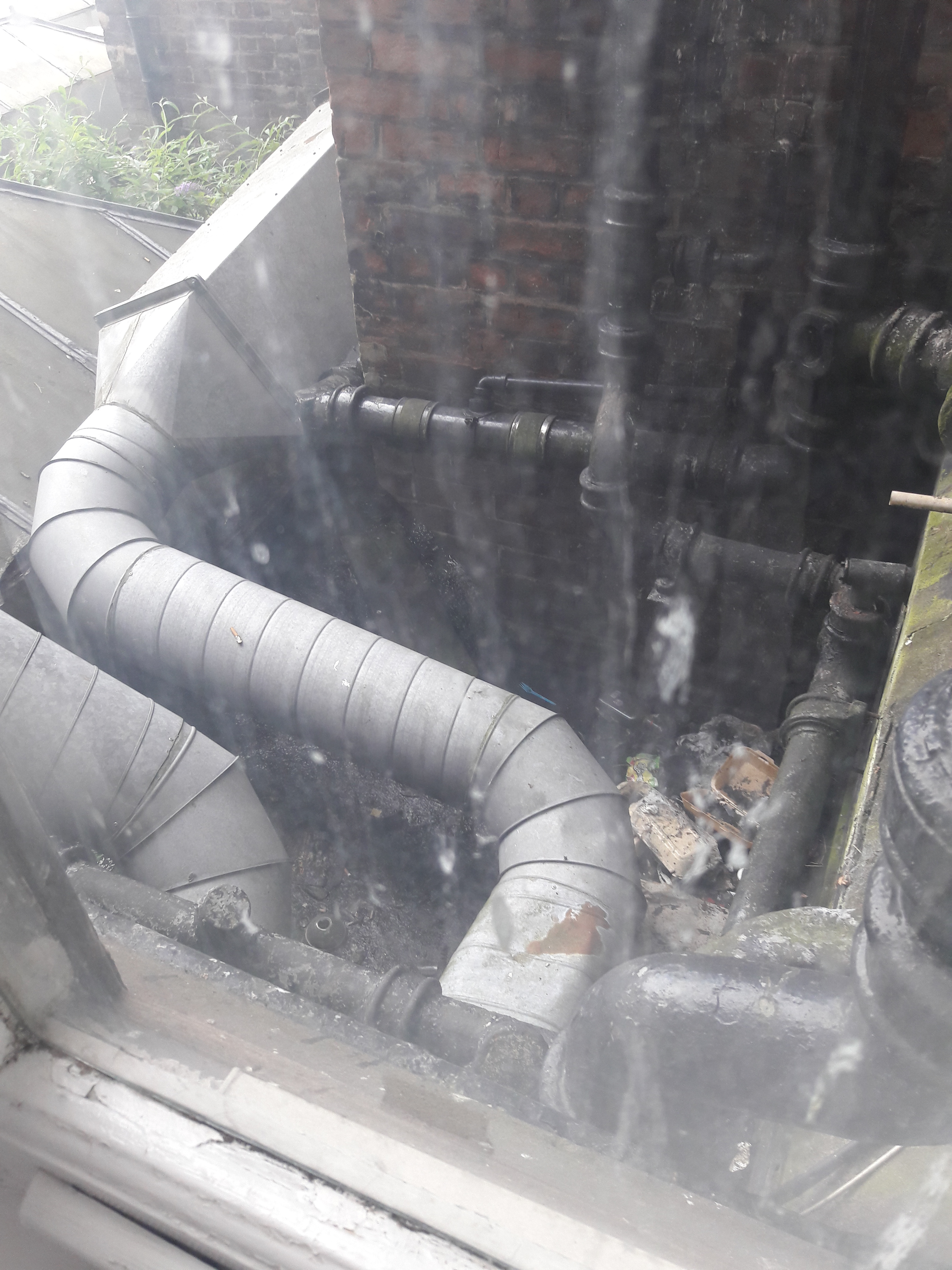 Room with a view
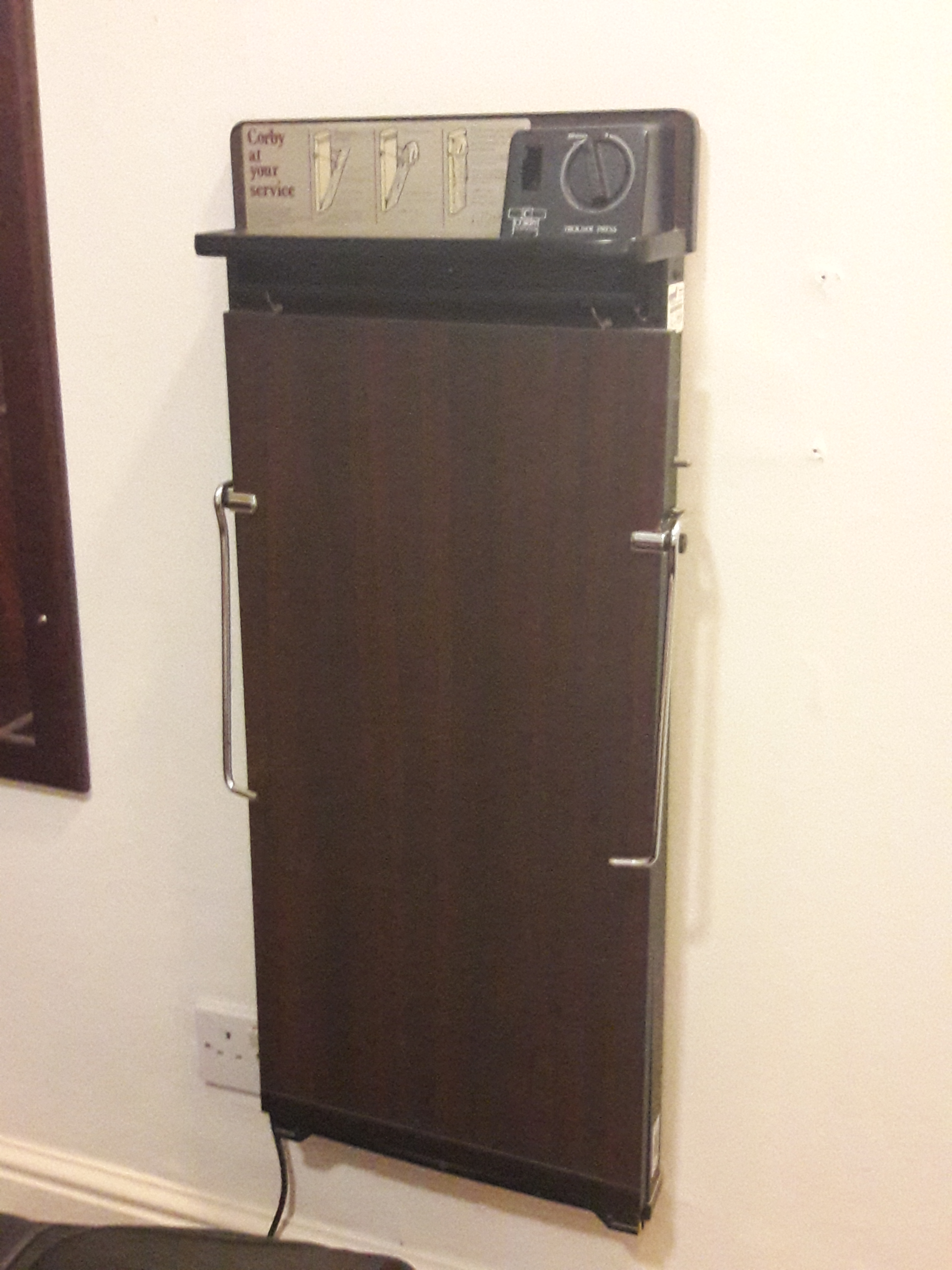 Anyone ever actually made use of these since 1989?
 (Image taken from Miriadna.com)
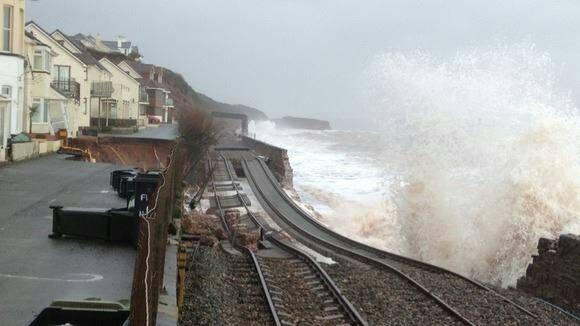 (Picture from official Met Office site)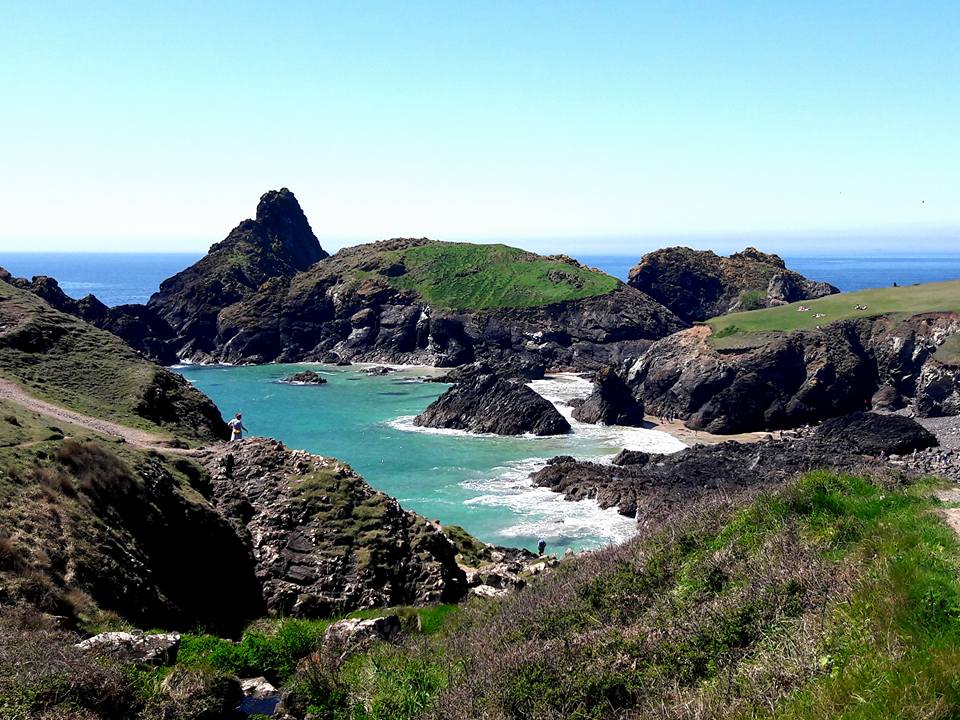


 Friends Reunited – 2015
 sophiekemsley