Frequently in this blog, I’ve written about the dangers of life moving too quickly, and how hectic daily routines can make us lose sight of the things that are truly important. I’ve spoken of the need for us to have some ‘time out’ occasionally – an opportunity to press the ‘pause’ button and just stop for a minute or two.
Today – a Sunday – I have absolutely nothing planned – nowhere to go, nobody to see… and actually, it makes a nice change, and I’m reveling it. Time to read, time to write, and time to listen to music, allowing my senses absorb every single note (which somehow can’t be done as easily when you’re listening to music whilst ‘on the go’, detracted by whatever it is you’re doing). A large cup of coffee is steaming away on my desk, and from downstairs I catch the wafting scents of a roast-dinner that I’ll look forward to devouring in an hour or so’s time.
Moments like this are few and far between, and I know that that’s for the best. When I first came to Canterbury and was unemployed with no money and no friends, every single day was like this. I didn’t really have the means to do anything else, and it became tiresome. I grew increasingly bored and irritable and felt that nothing I was doing was serving any purpose. Thankfully things are very different now, and these moments where you need do nothing at all have evolved into precious opportunities to relax and refuel which simply cannot be wasted or dismissed.
I’ve always believed in this. When I was 15, I used to have a ritual every Sunday evening where I’d light an incense stick and some candles and lie on my bed listening to my sister’s gothic and rock-metal CDs, losing myself in tunes like the following (which I’m re-listening to now for the sake of nostalgia) as a means to re-energise for the week of school ahead…
I referred to these as my ‘Candles’n’Incense evenings’ (which amused a couple of my friends) and it was very much my time, and I’d get most perturbed if I was interrupted… usually by phone-calls from friends on the land-line, wanting to ask me about some homework or generally gossip about classmates and boys. Whilst my tastes have since changed, the sentiment of having some personal time on Sunday has very much remained. It’s almost become a dietary requirement for me, and I try to avoid doing anything on Sunday evenings if I can.
Why is the prospect of having nothing planned so appealing? Sometimes it’s just nice to be in a position where you can really absorb the creative stimuli around you. Today I’ll read ‘Blue Truth – A Spiritual Guide to Life & Death and Love & Sex’ by David Deida, a book which one of my favourite authors – Ryan Murdock – has described as a life-changing book that everybody should read. I’ll peruse Spotify and get nostalgic listening to bands I used to love as a teen – Faith No More, Bis, Teenage Fanclub… I’ll watch a representative from my collection of ’80’s movies whilst relaxing in bed… and then later I’ll take a trip to the Chartham Downs to see if the poppies by Little Iffin Wood have bloomed yet…
….Costless comforts. Exactly what Sundays are for.
Song of the Day:Bis – Popstar Kill
Bis – an indie-pop outfit from Glasgow – are – with their songs about confectionary shops and dinosaurs, one of the most unique bands I’ve ever heard. Most popular during the ’90s, they’ve recently returned from a long hiatus to release a new album. Reminded of their existence, I felt like listening to their older stuff, which I used to love as a 12-year old. This song – laced with infantile attitude and tuneful melodies – was a particular favourite, from an album which would often be spinning around my CD player… I used to want to be lead vocalist Manda Rin… Music just isn’t made like this anymore!
At some point, ensnared in a state of overwhelming perplexity, we’ve all resorted to using Google beyond it’s primary purpose of finding out about things, to finding out howto do things… ‘How to wear a hairband?’, ‘How to roast potatoes so that they are crispy?’, the somewhat more personal: ‘How to tell someone you like them’, or even, ‘How to stop eating biscuits?’ (as a friend who shall remain nameless once got caught typing into her laptop after proudly announcing she had given up the cuppa companions for Lent). Within moments of typing up our query, thanks to the world wide web and all whom who contribute to it, we finally have the answers for which we have been so strenuously looking, and all appears right with the World again.
However, not content enough with the pride it can yield from every Sunday roast it has enhanced across the planet, or the number of Custard Creams it has saved from a vicious death-by-tooth, Google has continued to develop its search engine even further in recent years. The relatively recent addition of the autocomplete feature has sought to save us valuable typing time by predicting our search terms on the basis of those which are input most frequently by users across the globe. Start typing ‘h-o-t…’ – you’re probably looking for Hotmail, Google deduces. ‘a-m-a…’? You’re probably off to bust the town-centre queues by shopping on Amazon. ‘w-e-d’ ? Alright sweetpea, here’s where you can buy your marital frock… Clever stuff, right? (Although it doesn’t always work, of course. You cannot cure your lack of love-life by searching for a m-a-n on Google. It will just take you to Old Trafford.)
This evening I found myself turning to Google once again. After several weeks of feeling exceptionally tired despite maintaining a somewhat healthy diet and regular exercise, I wanted to see if I could source any good tips on how to feel more energetic. I had only typed in ‘how to feel’ when up popped Google’s auto-complete tool with the suggestion of ‘how to feel happy’.
And – somewhat ironically – that made me feel sad.
Out of every emotion or state of being, the one most people seem to struggle to find – according to what’s most commonly typed into Google – is happiness?
I’m not denying that happiness isn’t an easy state to reach. There are enough awful things going on in the world today that you’d probably need to live self-sufficiently in a cave, twenty feet below the ground, alone, wearing oven gloves and a blindfold in order to not see, hear or feel any of those negative things (and who’d want to live like that, anyway?). Life is just not easy, for anyone, and constant happiness is an impossible task. I should also acknowledge that people are hardly likely to try and search for something that they do not want, and that’s probably why something like, ‘how to feel like a depressed gargantuan‘ is not higher up in the pecking order of Google’s auto-completed suggestions. But those things aside, the very fact that so many are resorting to Google to try and find out how to feel an emotion that everybody deserves access to, is nothing short of alarming.
Deep down, I consider myself to be an overall positive person. Occasionally it’s resulted in me being accused of being naive, and out of touch with the ‘grim reality’ of the world. Actually, it’s acknowledgement and awareness of that ‘grim reality’ that somehow seems to fuel my positivity. I’m certainly no eternally grimacing Polly-Anna. I cannot smile during what is clearly despair. I have a fair few anxiety-related issues that I mainly keep to myself. I worry a lot and can sometimes take things too personally. But it’s those not-so-good ways of feeling that make me take stock of and value all the good things in my life even more, no matter how big or small, or make me instigate the changes that I know I need to, and ultimately that cheers me up. And so all in all, I am not a naive rag-doll who cannot understand why the whole world isn’t happier, I am nothing more than a complete hybrid of emotion.
Just like everybody else.
But I still think that it says something of concern when, according to Google, a lot of our folk are trying to work out how, or why, they should be happy. And then it makes me wonder, is this sense of general dissatisfaction a by-product of the very nature of the society in which we live?
Those of us who live in the West are extremely fortunate to do so. Whatever you like or dislike about Britain, you cannot argue with the fact that by being a British citizen, you have access to a lot of things that many people in the World do not – fresh running water, free healthcare, free education, basic living costs, shelter, food. We take those things for granted every single day of our lives, and then we display shock and surprise when humanitarian efforts such as Comic Relief evidence that there is a far less rosey life beyond all that. As a society we gape alongside Z-list celebrities sent out to deepest Ethiopia to fawn over dying children, and then inform everybody that we’ve ‘done our bit’ by pledging £5, before heading to bed with a Rich Tea and glossy magazine when we then seem to forget all about it until the next year.
On top of the basics that we have, we also enjoy a lot of luxuries here in Britain, luxuries that over the years have virtually morphed themselves into ‘basics’ – such as widespread internet access, mobile phones, cars, video-games, holidays. We also enjoy a pretty remarkable set of human rights and freedoms, some of which are barely decades old – indicating that we live in a society that actively recognises and promotes everybody’s right to a decent life. Provided you don’t seek any harm to others, you can pretty much be whoever you want to be, and do whatever you want to do, in Britain. Our women are no longer oppressed by inequities within the law, and our children have more choice than ever before about the kind of paths they wish to pursue in their education and later careers.
We should be the happiest we’ve ever been, but statistics suggest that we’re far from it. More British people than ever before are looking to emigrate. They feel that a better quality of life can be found elsewhere. They’re not fully content with what they have here… and part of me wonders if they’ll ever be content with what they have anywhere, because it seems to me that our society as a whole just does not know when to stop looking for or wanting more.
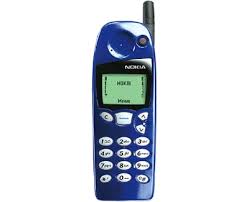
Remember when mobile phones first became popular? An old Nokia ‘brick’, with enough storage for about ten text messages, and an in-built game of ‘Snake’ was all people wanted, and that was enough.
Nowadays, most people couldn’t entertain the thought of possessing a phone with such basic features. They’ve become accustomed to having the internet at their finger-tips on devices that can pretty much do anything besides wipe your bum for you (and even then… I give it time…). Vast technological improvement in the past few years has seen things that were once luxuries transcend into what now appear to be basic needs, and a lot of people – myself included – seem to have forgotten how they managed without.
For sure, things shouldn’t necessarily cease developing just for the sake of humility, but it’s down to individuals themselves to invest their own personal time into reflecting on the difference between what it is they really need in life, and what it is they think they need, because the truth is, it really shouldn’t take much for people to be happy. Varying circumstances aside, it’s certainly not the sort of thing that anybody should ever feel the need to resort to a faceless internet search engine to try and find.
Is unfulfilled desire at the root of a lot (but not all) unhappiness? I’ve certainly come to think so, and instances such as the recent killings in the U.S by a young man frustrated by not having the intimate relationship he wanted with a female seem to only make me believe it even more. And stories like that frustrate me so much because that young man had so much that so many others can only dream of, but he didn’t realise it because he was too fixated on the things he didn’t have. And that’s just typical.
If people got into the mindset of appreciating something they do have each time they think about how much they want something they don’t have, I wonder if Google’s auto-complete tool would source the same responses…
Song of the Day: Grouplove – Raspberry
Grouplove are a contemporary Rock band from the States, and this song is – incidentally – the best song that The Pixies never wrote…
I’m not sure what it was – the way the lilac flowers swayed in the soft Spring breeze as I looked out of the train window, or the remnants of varying emotions within – still lingering from a range of recent events – or perhaps it was just ‘that time of the month’…
But something made me stop today. Something made me pause, and without any clear reason, I found myself feeling overcome with a strange sense of sadness (perhaps perpetuated by the piece of music which was on my MP3 player at the time)
We all know that nothing in life ever stays the same way forever and for the most part, we’re grateful for that. Life could not be classed as life without change or growth… but all of a sudden, today, that acknowledgement of impermanence resonated within me with a sense of fright, as I realised just how fragile any given moment is.
All too often it takes a tragedy to remind us of this. Through soaking eyes we utter those somewhat cliched words, “…this really puts things into perspective…” and vow to henceforth never let any of life’s daily grind detract us from that which is truly important – our family and friends, and our values. We reflect upon this for a little while but despite best intents and purposes the sentiment can so quickly be lost – the telephone rings, we remember there’s somewhere we need to be or something we need to be doing, something irritates us, we see something amusing in the distance, or we go to sleep – there are so many minor occurrences that can so easily detract our minds back to things which in the grand scheme of things, really don’t matter.
…At this point, I recall an excerpt written by one of my favourite travel writers, Canadian Ryan Murdock, in his book ‘Vagabond Dreams’, a stunning book describing a both physical and personal journey through Central America which I wish everybody would read:…
“Nicaragua taught me that there’s a poverty of life in the West, a poverty of the spirit that mimics the drudgery and dull wasting away of monetary poverty. Meaninglessness is our great disease. Life’s spark is smothered by routine, by the grind.”
Herein lies the problem. We simply have too many other things to think about in life – duties to perform… plans to be made… financial sustainance to achieve…. and other random, sporadic little things to think about – that we don’t always feel as though we have enough available time in which we can revel in what Murdock refers to as ‘life’s spark’ – those moments when we can focus upon fun, and love – all variants of it. And central to that is appreciation – the underpinning knowledge that the special moments we share, with the people we care about – may not always be an option to us…
Life goes by so quickly these days. We each live within a constant state of change where the various elements of a ‘typical day’ can change week upon week. Our circumstances change, and people will come and go from our lives all the time. It’s simply not feasible for us to forever live out ‘life’s spark‘ in the same way, yet we so often allow ourselves to be consumed by meaningless things that a year from now we will barely remember. And perhaps that’s why the word ‘fragility’ was the one which so pertinently came to my mind today. These days, at the ages we are, dwarfed by what sometimes seems to be an insurmountable pressure to ‘sort our lives out’- it is more important than ever to make the most of any opportunity we have for love, and fun (aka – the stuff which matters most, in the grand scheme of things).
But how does ‘making the most’ of these moments manifest itself? How do we handle such ‘fragililty’? For something so largely important, it can be done in the smallest of ways… Listening to every word. Savouring every minute. Focusing on the ‘here and now’ and not allowing our minds to wander towards external things that may be bothering us. Tight hugs…
…but above all, giving thanks that we ever had that opportunity in the first place – because it’s all so susceptible to change.
… Upon reflection, perhaps today’s strange surge of sorrow was down to the flowers swaying in the wind – looking at them, overcome by how beautiful they looked growing along the banks, knowing that several weeks ago they were not there, and knowing that in several weeks’ time they will have disappeared again, but being grateful for the pleasant imagery they provided today…
So with a relatively important piece of work to be getting on with on this pleasantly Spring-like Saturday, I did what most people do when they’ve a billion better things to be doing and logged onto Facebook for a bit of voyeuristic procrastination. Whilst scrolling down the Newsfeed, expecting not to see anything of any real importance, I saw that WWF’S Earth Hour – United Kingdom had posted a link to an intriguing sounding video – a timelapse filmed from the International Space Station as it passed over continents and cities at night.
The concept of space and the Universe has always been one to absolutely stagger me. Despite wanting to, I just can’t understand the science or enormity of it all. There are so many things I’d love to know about the solar system, but each time I try to learn I become lost within an intimidating wave of terminologies, equations and measurements that I simply can’t even begin to process. So, for me, space is just that. A limitless and mysterious yet fascinating mass that has long preexisted mankind and will longer still outlive it.
Thankfully, you don’t need to have an intellectual understanding of space to be able to enjoy this video. In fact, limited knowledge of the subject only serves to make this video all the more fascinating. How strange to see our planet from this angle. How strange to see the Western US coast as just a mere black landmass splattered with lights – no sign at all of its cosmopolitan cities and suburbs which brim with movie stars, mansions, beaches, beauty salons and bubble-tea bars. How strange to see Europe without seeing continental breakfasts, Alpine rivers and roving valleys. How strange to see the Northern Lights flutter above the planet like emerald ribbons in the wind… quite a contrast to the view from ground-level – rooted to a hill North of Reykjavik in freezing evening winds, salopettes flapping against shins, faces gazed up waiting for even the briefest of views of those green flashes… How strange just to see the World without seeing that which constantly beavers away to keep it going, and keep those lights lit – its people…
Imagery like this fascinates me because it reminds me of just how big the world truly is. It’s funny to think of all of the things that were going on below the recording equipment that were just too minute, too obscure, to be picked up: people cooking dinner, catching buses, watching television, brushing teeth, embracing, getting married, giving birth, fighting wars, passing away… all things which are significant to us individually, but appear not to be acknowledged in Space…
No wonder its size is so hard to comprehend…
Song of the Day: Tennis – Deep In The Woods
“The smoke in the night the ash on the light I think that it might be the last thing in sight I know now I am right to let you be consumed by the smoke in the night the ash on the light
2013 was one of the first years in which I didn’t really set out any particular aims or targets at the beginning, and given that I’m still sat in my same old chair in my same old room – it shows. 2012 had been a very good year, in a number of different aspects of my life, and so I didn’t really see fit to change anything in the New Year – 2013 – other than to just carry on, and keep smiling. Throughout the course of the year, such targets did begin to emerge more and more, and I did try and work towards them, but here we are now at the end of the year, and I haven’t really achieved any of them. The moving-out-of-home thing hasn’t quite come into fruition yet (which is especially gutting since the amount of money I’ve spent on driving tests – another thing I was hoping to achieve this year – could probably be enough to purchase a small mansion!), and I’m still infuriated by South Eastern Trains on a regular basis. Generally speaking, not a lot has changed, and whilst that’s not necessarily a bad thing, it does leave me feeling a little underwhelmed at the end of the year, and disappointed that I haven’t achieved more, even if I have had a lot of fun.
But then I started to think about all the things beyond the surface. I started to look at things in greater depth, and I realised that whilst I may not have necessarily achieved very much this year in terms of what general society tend to define as ‘symbols of success’ (a relationship, children, a house, promotion at work, car), I’ve still learned a lot of things from life, that have helped me grow as a person, and right now… I consider that to be a success in itself…
Here’s what 2013 taught me…
1) The Value of Mistakes
Nobody likes to make mistakes. We fear the repercussions, and when those eventually manifest they have the ability to completely stifle us. We can feel guilty and stupid and disappointed in ourselves, especially if our mistake has let others down. It’s never a nice experience, but if a mistake we have made truly affects us then we will always do our best to learn from it, and try to ensure that it never happens again. I have slowly become to appreciate my mistakes more and more. I’m not afraid to acknowledge any of those moments when I know I need to get my arse in gear following any errors I’ve made – be it something specific, like forgetting to do something at work – or something a little deeper than that – like when I’ve perhaps jumped to unfair conclusions, or judged somebody too quickly. Guilt can be a rough ride but all mistakes can make you a better person, provided you don’t allow your pride to get in the way. They teach you how you can do things better.
I try and imagine a world in which nobody ever makes mistakes, and all I can imagine is a place where complacency has diminished peoples’ values and appreciation, and where comparative ease has slowly removed the incentive to take risks or try and improve at things. I think I prefer the way we have it here, even if it is a little harder.
2) The Value of ‘Shitty Times’
Aaaaand similarly. Most of us will have experienced shitty times at some point or another, albeit to varying extents or reasons, but we all know what they’re like. Shitty times are those wonderful moments, perhaps days, weeks (or maybe even more!) in which we feel that nothing we can do is right, that we’re never going to achieve anything, that the world is made up of 95% horrible people and that everybody hates us. For us women, we often like to attribute this to our monthly cycle, (a.k.a, ‘The Monthly Nutfuck’) but it’s not always that vague or general a feeling, sadly. Tragedies are more than just a genre of ancient old Greek stories, they actually do happen – and suddenly. Life does not always deal a fair hand. None of us are immune from being hurt or heartbroken. Being kind to others does not always mean they will be kind to you. Shitty times can spawn from all of these damning realities, and some in particular can be exceptionally hard to deal with. There is no quick fix, nor magic potion that can ever make any of these experiences easier to bare, but there is a value within them somewhere. And this is it: Whenever you manage to overcome a shitty time, no matter what kind, you become so much more than the person you were before. You are wiser. You are stronger. You find appreciation in the smallest things… but perhaps even more pertinently, you know you can get through it should it happen again, and that’s a little bit less fear to live with, at least…
Similarly to how I imagine a world in which nobody makes mistakes, I am just as underwhelmed by what comes to mind when I think about a world in which everybody is happy all the time and nothing bad ever happens. I am underwhelmed because I don’t think it could ever exist, even with the aid of all the magic needed to eradicate all the despair in the world. That’s because without shitty times, we don’t really understand happiness. Without shitty times, happiness means nothing.
I can’t pretend that I enjoy shitty times. I dread them with a passion and hate the way they make me feel, but deep down I do see the purpose in having them every once in a while. They can remind us of our focus and values, and sometimes even instigate the changes that deep down we know will make us happier but for whatever reason have been reluctant to go through with.
3. “If you don’t like something, change it; if you can’t change it, change the way you think about it. ”
When something doesn’t quite match your expectations, you can either run yourself – as well as others around you – into the ground with ongoing whinging or negativity, or you can shift your perceptions in order to focus on the positive aspects of it all. If you don’t think there are any positive aspects – search for them. If you still can’t find them – try and create them. If you can’t do that still, then accept that it is not something you’re destined for and do whatever you need to do to escape, but don’t let those around you also be brought down by your negative sentiments. I appreciate that this rather simplistic idea cannot be applied to all circumstances, but it certainly could during the experience that prompted me to take this away as one of the key things I’ve learned in 2013.
Ometepe Island, Nicaragua – October 2013
4. The Value of Just Being Yourself
Okay, I actually realised this several years back, so it’s not a new lesson learned as such, but in 2013 I’ve become an even bigger believer in this. There’s an all too infamous quote by Gandhi; “Happiness is when what you think, what you say, and what you do are in harmony.” I’m sure you’ve all seen it before (probably in the form of some kind of twee internet meme) but in recent years I’ve understood this sentiment to be so true. There is simply little point in pretending to be somebody that you are not, for whatever reason may be behind that.
For many years I tried to deny to myself that I have a bit of an anxiety problem. It’s hardly anything uncommon (basically – I’m just one of those people that has the ability to over-analyse and worry about particular things way too easily, and when I do I tend to go very quiet and hide myself away without explanation, probably appearing as distant or nervous to others). Thankfully, it doesn’t interfere with my life as often anymore, but it’s still a part of me that for many years I was too ashamed to acknowledge – even to myself. It was that failure to acknowledge it that caused it to have more of a noticeable and negative impact on my life. Through feelings of guilt about being affected by something that I considered just ‘a stupid problem’, I tried so hard to pretend to myself that it didn’t exist – but pretending – as I discovered, was just a huge and tiring waste of energy which could instead be used on actually combating the issue. My experiences with anxiety are still not the kind of thing I’ll shout about unless asked, even to my loved ones – some of whom I know regularly read this blog – but I have definitely benefited from acknowledging it within myself. And that’s been the most important thing. Now that I’ve acknowledged it, and started to try and both understand and combat it completely, I’ve stopped giving myself as hard a time about it, because I know I’m aware of it now, as opposed to trying to sweep it away.
It’s so much easier just to be the person you are than the person you think that others think you should be – like feeling comfortable in something larger rather than trying to squeeze into an ill-fitting dress that hasn’t seen the light of day since 2007. (Likewise, as much as I enjoy glamming up, I see little point in doing it just to reign in the opposite sex with a Clinique-inspired mask that doesn’t accurately reflect the buck-toothed scarecrow face behind it)
Much of society opposes the concept of public nudity. I agree that it would probably be a bit inappropriate for everybody to walk around naked, but it does seem a slight shame that our most natural state of being is also one so commonly met with disapproval. In a superficial world like ours, where one’s possessions, wealth, number of social media ‘friends’, visual qualities of partner and whatever other stupid things there are out there, have – so horrifyingly – become the symbols of ‘success’ as perceived by society at it’s shallowest, it seems that many have taken the instruction to “Cover Up!” way too literally. If everybody could just focus on self-acceptance and being content with themselves as they are, there’d probably be far fewer instances of self-esteem issues than actually exists and is responsible for so many incidences of Depression existent in British society today. Be real and be raw and don’t waste any precious time on people who can’t like you for who you really are. The likelihood is they’re covering up too much too.
5. Think Before You Throw…
There aren’t many things in life that can’t be replaced somehow. In many ways this is a good thing, but in another sense, I fear it sometimes leads to needless disposal.
In 2013 I came very close to throwing something special away on the basis of a couple of things that had occurred within a proportionately small period of time and upset me. Knee-jerk reactions paved the way for belligerent opinions and fabricated insistence that I didn’t need this thing in my life anymore; that I was happy enough without it. Life is busy and we don’t always get the time to sit and think properly about our thoughts and actions; and often we make decisions based only upon the whimsical emotions prompted by the irritable fatigue that can come about as result of our hectic daily routines, and prevent us from thinking properly. It was only when I did take that time out, that I realised the magnitude of difference between those belligerent, knee-jerk opinions… and how I truly felt deep-down. I realised that I didn’t want to let go of this special something after all, as it had meant so much for so long, and instead I wanted to try and repair it. By simply waiting a while, and reviewing the situation from more angles, I prevented myself from making a huge mistake.
We are lucky that in this part of the world we have access to so much which is good, and that we have so much choice and freedom; but that shouldn’t allow us to lose grip on the relationships and possessions which truly mean the most to us. We shouldn’t be any more willing to dispense of something on the basis of impulsive reaction and the belief that it can be easily replaced with other wonderful stuff, because all that ultimately does is question the value of everything else that we will ever hold dear. I’m not saying that we should never release ourselves from particular things, but if we do then it should be on the basis of a timely and fair assessment, not just a whimsical reaction.
And so there we have it, five of the main lessons that were either learnt or reiterated in 2013, and will be used to combat 2014. Hopefully this year I’ll achieve a bit more than I did last year, and maybe those five lessons will be the thing that help me do it…
Song of the Day:Swing Republic – On The Downbeat
A final epiphany of 2013 was the discovery of a musical genre of which I had previously never heard: ‘electro-swing’ – which is basically a fusion of early to mid 20th century swing with 21st century beats. This is a great style of music to listen to during the daily commute!
There are two personality traits that absolutely do my nut in:
– People who try taking the higher moral ground by claiming that they never judge others. At all. Ever. No sirree.
– People who are judgmental to the extent that they consider their beliefs and perceptions to be fact, regularly dictate these ‘facts’ to others, and are not prepared to consider a different viewpoint. At all. Ever. No sirree.
Maybe you’ve met some of the first kind, or second kind, or maybe you’ve even met people who display signs of both of those traits. It wouldn’t surprise me, because the practise of being judgmental is something which our modern-day society has a lot to say about.
As most already know, the UK has not always been as tolerant of diversity as it is today. Despite the vast number of improvements over the years, there are still many gaps in need of the creation of a big, cast iron bridge between them before we can really think about classing ourselves as an egalitarian society. However – we are getting there, and constantly making progress. A combination which includes – but is not limited to – passionate human rights organisations, developments in the law, and inspirational individuals have all contributed to a society that is much more welcoming of different types of people than it was say, fifty years ago. Rightly so, and long may that continue.
However, there’s a particular word, defining a particular characteristic, that has seemed to become a little misunderstood and stigmatised throughout this process. Over the years, it’s gradually turned into become of those ‘buzzwords’ that any person or organisation will claim not to be, in measure with the new movement, but which is actually a fundamental and automatic part of human nature – the trait of being judgmental.
At this point, you may be finding yourself adamantly telling yourself that you are not judgmental, but if you are, then the likelihood is that you too have been swept up into this idea that to judge others is a big no-no that is not and cannot be done ever ever ever. But when you sit and really think about it, each of us are judging others all the time. We judge anything, anybody, anytime. In the same sense that we judge the road as being too busy to cross, we find ourselves judging other people based on our interactions with them. We may judge that people are unfriendly, or beautiful, or funny, or malicious, or kind-hearted, or lazy, or *insert any other adjective here*. We don’t always acknowledge it as such, but anytime we do this – we are making a judgment, and being judgmental. It’s automatic, and it’s based on experience, but it’s still judgment – a belief based on a personal interaction with a particular person or thing. In my mind, it is verging on the impossible to be non-judgmental.
I’ve considered this idea a lot lately, and it’s been only by doing so that I’ve started to be receptive to just how often I find myself making some form of judgment about others. Like this morning on my way to work, I passed a lady who had ginger hair and red trousers. My immediate thought was that the colours clashed and it wasn’t the best of choices, and that she was foolish for not realising this. That was a judgment. A trivial one perhaps, but a judgment nonetheless. I’ve been served by cashiers who have given me the totally incorrect change. I’ve considered their basic mathematical ability and rendered them ‘stupid’ in my mind. That was a judgment.
I’ve sat next to people on the train who emanate the scents of festering filth and a voice within has narrated to myself that they do not wash. That was a judgment.
I’ve walked past Wetherspoons in Canterbury at 9:30am on a weekday morning, observed the bunch of folks consuming pints of Abbots Ale on the pavement, and questioned the integrity of their lifestyle. That was a judgment.
And when I see hooded youths walking towards me on the pavement as I walk within dark skies, I feel afraid and intimidated. That too, is a judgment.
And that’s just a few examples. On this basis, I am a very judgmental person indeed.
The prevalent theme in each of these – and other – situations in which I’ve formed a judgment, is that the judgment has often been automatic and difficult to suppress. A hunch. A notion. Whatever you want to call it, it’s there, and I sometimes ask myself where I’d be without it. Jumping into cars with strangers? Believing every single word anybody ever tells me? Thinking that a breakfast-time beer at the pub is a healthy way to start each day? Judgment can serve value, it can be a safety mechanism. If we were never judgmental, we may as well lie back and stitch, ‘Home Sweet Home’ across our chests and prepare for the rest of civilisation to stomp all over our sorry selves as we sit wondering what we really think about… well, anything at all.
But if being judgmental is an automatic response more commonly displayed than we would each like to think, what makes it such an apparent sin? How and why is the concept so widely and frequently maligned by diversity activists alike?
For me, it’s a very simple equation:
Judgment + Close-Mindedness = Bad Judgment + Open-Mindedness = OK
And that is where the difference lies. That is where the diversion occurs between people who remain judgmental in an automatic sense, and people who are judgmental in the non-forgiving, ignorant sense that has been the key catalyst in this whole ‘war on judgment’ that modern day equal rights activism has fought so hard in. This is the reason why so many are so scared to voice or even acknowledge their own opinions and judgments. They don’t want to be misinterpreted as sharing a behavioural trait in common with the kinds of people who are too blinkered to ever consider that their opinion, and their judgments, aren’t necessarily the same thing as ‘facts’.
Other peoples’ judgments and opinions on things never really bother me – on most occasions, they make for interesting discussions and the opportunity to see things from a different perspective. But when those judgments are over-flaunted, or combined with a nauseating bucket-load of close-mindedness, that’s when the art of being judgmental really, really, winds me up… like an old-fashioned clockwork doll, affixed with a natural expression of 19th century denunciation.
In a world so wealthy with diversity of thought, surprise and contradiction, it staggers me how confident some people can be that what they think about things, people, the universe, is the truth, and how much they think everybody needs to hear it! Not only do I find it irritating, but it completely undermines the ability of anybody else around them to make up their own minds. The internet is a great tool for these kind of people. They leave controversial comments on news stories, or create websites advocating their controversial beliefs, or post a bajillion Tweets per day just to let people know what they think, as if it really matters. I will always support people expressing their thoughts and feelings, but I have very low tolerance for those who constantly try to portray these thoughts and judgments as facts, or, at the very least, try and convert others into sharing the sentiment.
We all have our own opinions, and we all have particular reasons behind those opinions. So why do some people think that theirs are any more founded than anybody elses? And why are those same people often the ones who so seldom acknowledge the other side of any debate they are ever involved in? It’s that which embellishes stigma to the natural and automatic process of making judgments and forming opinions. It’s that which makes ‘judgmental people’ seem such a pain in the arse to the rest of us, even when the practise of making judgment itself is something which everybody does.
Do you know what? I quite like knowing that the judgments I make aren’t necessarily going to turn out as a reflection of the truth, if there indeed is a ‘truth’ (and in many instances, I don’t think there is. Most things will always be just a matter of opinion). I’ve been proven wrong about things hundreds of times about hundreds of things, and whilst they weren’t always discoveries for the better, it’s all added colour to the rich fabric of life and taught me the importance of keeping an open-mind about things, all the time. Because nothing ever stays the same, nor would we ever want it to, and just because we feel a particular way about a particular thing now, we may feel differently tomorrow. The important thing is that we allow for that to happen, and don’t let the judgments we make turn into a curse that narrows our horizons too much.
“Those who cannot change their minds cannot change anything.” – George Bernard Shaw
Song of the Day: Tunng – Hustle
A nice little ditty from an English band who’s musical style is often classed as ‘Folktronica’ – definitely worth discovering!
Not many kinds of building will evoke emotions quite like an airport.
Primarily, airports, to me, equate to long-distance travel, and that is always a good thing, right?
Of course. You cannot travel to the other side of the world without visiting an airport first, but instead of always wanting to celebrate their existence there’s something about them that seems so wrenching to me when they come to mind.
I’ve noticed that my emotions never feel truly balanced on each and any occasion I’m in an airport, and I think it’s that – moreso than the widely maligned concept of queues and customs – that makes my stomach feel so heavy when I think about them. There’s always a hello or a goodbye involved. There’s always distance involved.
I do think there is a massive difference in one’s perception of the airport depending on whether they are travelling alone or with others. When you’re travelling alone, you have no other option but to spectate and truly absorb what’s going on around you, whereas amongst company the trajectory of thought is decided for you by your companions – conversations about what so and so said or whether or not we’ve packed enough soap. The naked intensity of the airport is tranquilised by the presence of familiar faces and discussions reflecting day-to-day life…but you don’t have that if you’re alone.
The following observations stem from my experiences of travelling solo.
We start with airport number 1. Our origin, gateway to a dream. Upon entrance our minds are full of the half a dozen things we are sure we must have forgotten to pack. We work out whereabouts we’re meant to stand and then we queue. We say sayonara to our luggage and use our newly free hands to go and grab a coffee. We wait. We watch. We look at all of the other people in the airport and wonder where they’re going and for what reason. The airport is a microcosm of diversity and we are surrounded by skins of all shades, hear voices of all accents and see whole varieties of dress. We are mesmerised by it. We remember how big the world is and smile to ourselves.
The excitement of impending departure causes us to be restless, and we pin our eyes to the Departure boards dreading the sudden emergence of bright red text next to the name of our destination which will signify that there is a problem with our flight.
Things become more real once we are motioned to the gate. We familiarise with the departure lounge and finally allow the feeling of excitement to pulsate through every single cell in our body. We think about all of the memorable things we’re going to be doing in the days ahead. New places to discover. New people to meet. New feelings to feel.
The second airport. “Finally!!” We arrive. We are jet-lagged. Turbulence has left us unable to hear a thing and the bright lights which we saw mapping out the city below us have left us feeling romanticised and our hearts beating faster. This is it. We are here. Exiting the plane, sounds become muffled. Everything seems so much more luminous. We are tired, but we are excited. Our mouths are dry and we look haggard but the thrill of being somewhere new is shuffling us towards border control.
Hello there, stern-faced man at the barriers. The first person I will speak to in this new country. Here is my passport, there is my nut on the page so that you can verify it’s me – adhering to regulations by looking completely blank and expressionless. No hair over the face. No headwear. No glasses. You look at me intensely to check it’s really me, and then you motion me onward, over to baggage reclaim, where I wait. For an eternity. Dreading that mine will be the last case to come out, or that it won’t come out at all.
Just like the panic in Jakarta July 2012, when that hand-drawn sign saying ‘End’ appeared on the conveyer belt but my suitcase was nowhere to be seen. There was panicked jumping onto the belt to expediate my journey to the other side of the room where I thought I could see my bag, security chastising me for this, but it didn’t matter because I was happy to have located my suitcase, unrecognisable from losing it’s multi-coloured strap I put there for identity purposes. Thank Heavens, they’ll get their presents, and I have enough underwear to last the trip.
And then: We leave. Out into the open air. The foreign air. The foreign smells. The foreign noises.
That wonderful feeling of not knowing where you are… and it is a wonderful feeling despite not sounding so, because it ensures that everything that is about to happen to us will be a complete surprise. We bathe in the blood-rush and this new wave of excitement will be both the fuel and the guide that our jet-lagged bodies need to reach the hotel, The adventure begins.
These first two airports of the journey will represent the best memories and emotions of the lot.
But then there’s the return, a journey we will eventually have to make, when the airport takes on a completely new context, and emanates a completely different vibe. Airport number three is the worst one. We turn up tired and the building is no longer a gateway to new dreams and memories, but an arduous formality that stinks of cleaning fluids and concentrated clusters of fast-food outlets. But we don’t really notice any of that because our thoughts and emotions have been sidetracked by a feeling of hollowness. A feeling as though we are missing something. A feeling as though we have left something remarkable behind. It could be a person. It could be a place. It could be an over-friendly street-cat that you passed each morning on your way to the market, or it could be the wistful way that the man selling roti by the side of the road looked at you in hope of your custom as he sat alongside a dozen others selling the same thing. Whatever it is, you can almost find yourself searching for it in your handbag, because it feels like it should be with you.
Airport number three brings out the worst in us. It was a hard goodbye to people who are no longer by our sides. This is the worst thing about travelling alone. At least when you’re with
other people, you can commiserate one another and reminisce the trip. When you’re alone and you’ve passed through those doors, that’s it. You have a long-haul journey ahead of you
in which you will speak to nobody… bar maybe the flight attendant when you confirm you want the chicken option, or the person next to you when you need to pass them in order to get to the toilet. That’s it.
I have to say… sometimes the goodbyes have been so hard to do that it’s made a small part of me wonder if things would’ve been easier had I not gone at all. Airports can make that moment so much worse. The harsh bright lights shining over your sole suitcase. The doors, heavy and damning. New friends waving… and then disappearing, gone, from view. Sitting having a coffee alone trying to use up the last of your foreign notes and the tears are welling up, but you’re more exposed when you’re crying alone. You cannot bury your head into the shoulder of a friend. Strangers stare at you with that expression of awkward sympathy.
When the plane takes off you look at the labyrinth-of-a-city below and wonder if the things you will always remember from that place will remember you too, or whether or not you’ll
be forgotten just as soon as the next visitor touches down. You wonder if you’ll ever set foot on those streets again and possibly find yourself promising to yourself that you will. A coping mechanism that will make this departure a little easier to bear. You get your camera out from your handbag and browse through all the photos you took just to keep the flame of this trip burning for that little bit longer.
After what seems like an eternity of floating around in the troposphere, we eventually reach airport number four. How you feel about that one depends on how long you’ve been away. If it’s been a considerable amount of time, airport number four is the emblem of a homecoming enriched with pride and excitement. Visions attached to the warming thoughts of roast dinners, hot water, English pubs and timber-framed buildings with uneven floorboards. The smell of cloves and potpourri. Family and friends.
However, if your absence has been much shorter term, we tend to attach thoughts of all the negative parts about the homeland. Rain. Dark Monday evenings in Winter. A conservative society in which saying hello to stranger as you pass them on the street is considered abnormal or overbearing. Documentaries about our binge-drinking culture. Formalities.
We still love home, of course, but it lacks that element of surprise. We know it too well. Too often it slips into the rhythm of repetitive routine, because we allow it to.
And the fourth airport is the damning rubber stamp to this realisation.
Roll back the clock two years and I remember an incredibly depressing point of my life in which – whilst all of the important things (family, friends, health) were thankfully intact, I was struggling to cope with being in a new town where I had no job, no friends and no money to do anything with. Much of the Summer was spent at home, trawling through job websites trying to find something, anything to apply to. Lack of employment meant I didn’t have the means to go back home to see my friends often, meaning that I seldom did anything social and over the Summer pretty much forgot how to orally communicate with people unless I’d known them for considerable time, due to the lack of opportunity to interact with people in person.
In that kind of situation, you are very limited with the things you can do to pass the time. For me, it seemed as though every day would revolve around waking up at noon, eating some breakfast/lunch, going for a coffee in town – “table for one, please”, maybe reading a book, having dinner, listening to music and then watching The Simpsons in bed with an ice-cream… I generally worry about things a lot more than I should, but seldom do I feel dispirited to the extent of tears, yet back then crying was something I did every day. I always knew my problems weren’t the worst in the world and that one day far worse things will happen to me, but it was hard to get any joy from that all the whilst I felt as though I had no idea when things would change. Canterbury is one of the most beautiful places in the UK yet for a while I really struggled to like it; at least back in Watford – the ugly duckling of English towns – I could find work, and had friends.
Yet there is one thing about that hard, sweltering Summer of 2011 which I will always be grateful for. Indeed, as with any difficulty or problem that seems to stick around for much longer than you’d like, you eventually have no option but to try and find a solution – or if you can’t ‘find’, you ‘make’. Not every problem will resolve itself in time; you have to take action. My solution of choice was focused upon trying to understand myself a bit better; to be at peace with myself and be on my own team rather than repeatedly taunting myself with negative thoughts about how crap a person I must be for being unable to sustain a conversation with somebody I don’t know very well, or for failing to land that part-time job as a window-cleaner which had seemed like such a beacon of hope one desperate, grotty Friday morning at the Job Centre, or ‘Nob Centre’ as I preferred to refer to it.
Towards the end of this unhappy phase, after a small little journey of self-discovery, I had managed to re-discover a sense of positivity about everything and find pleasance in even the smallest or simplest of things. The facts were that the people I cared about the most were all still alive, I had a roof over my head, there were some great people in my life albeit not around here, I’d learned that Chom Chom in town does the most amazing panang curry, and that the sun-setting over the North Downs Way is one of the most beautiful environments in which you can cycle: a thrill that is not only free, but natural. I still had no job, and no friends in Canterbury, but finally I was looking at the larger picture as opposed to the smaller, day-to-day one. It’s funny how you can attribute such varying levels of value to something depending on your personal circumstances at the time. Once I felt as though I had embraced the initial difficulties, I began to find that the more time I had to myself, and the harder the difficulties I felt like I was going through, the more I was beginning to appreciate even the smallest of things around me.
Which is what leads me to the main point of this post, which is essentially to emphasize just how quickly we can begin to take things for granted the second we get tied up in the regular, day-to-day, rat-race life that is so prominent here within our society.
Two years on, my life is very different. Contrary to the Summer of 2011, time to myself now feels like something of a rarity. Indeed, the time which I do spend alone is normally spent thinking about the concerns going on immediately around me – this piece of work, that piece of work, arranging that outing, why did the man on the train look at me strange, setting my alarm clock for tomorrow, wondering what that message really meant, preparing my bag, what train do I need to catch to get to such-and-such place on time, I think I’ve pissed so-and-so off, I need to book a hair appointment, the money hasn’t reached my account yet, how much longer do I leave the potatoes in for, I can’t find my purse, I don’t enough have enough pairs of clean tights to last the week, I’ve run out of butter…
If we’re not careful, then the busier life becomes, the more we take for granted. The bigger picture can quickly become warped into a sense of tunnel vision whereby we focus only on the most immediate things around us, simply because they appear to become the most urgent of our priorities. We have more things to do and as our spare time consequently shrinks around us there is less opportunity to think about anything else, and it becomes much harder to find that fifteen or so minutes a day where you can sit back and take some deep breaths whilst breathing in the relaxing vapours of a joss stick named after some kind of magical entity from a faraway country whilst reflecting on the truly important stuff. The daily grind swallows us whole and we have less time for the basics. It becomes a big-wow moment if we can spend a few hours a week amongst nature, and we have to schedule in appointments with our friends months in advance. Before we know it, it’s Christmas again and the start of another New Year in which we will make resolutions only to find that a couple of weeks later, it’s time to make them again.
It can become so easy to feel like a passenger in your own body; going through the motions without really thinking about why you’re doing what you’re doing. Doing life rather than feeling it. Why? Simply because you have a billion other things to think about, too.
All this does is serve as a reminder as to why it’s so important to have that time out to ourselves occasionally, a time to re-connect with ourselves and our values and make sure that they’re not being lost within that grand melee of day to day activities that can so often fool us into thinking that there is ever anything more important than those root things without which we would truly struggle – our nearest and dearest, our key values, our dreams and desires and our passions.
Whilst I wouldn’t wish to experience the Summer of 2011 ever again, I am grateful in a sense for the opportunity to have had that ‘time-out’ to work things out and understand myself a bit better and realise what’s truly important in life. If you can only whip that bigger picture out at intermittent points throughout the day, week or month, you’re still keeping check on what matters the most. Just make sure you give yourself the time to do so…
Song of the Day: The Grammar Club – Underbeard
This is a novelty U.S band singing a novelty song about unwelcome facial hair. It has been stuck in my head for weeks. Hopefully now it will be stuck in yours:
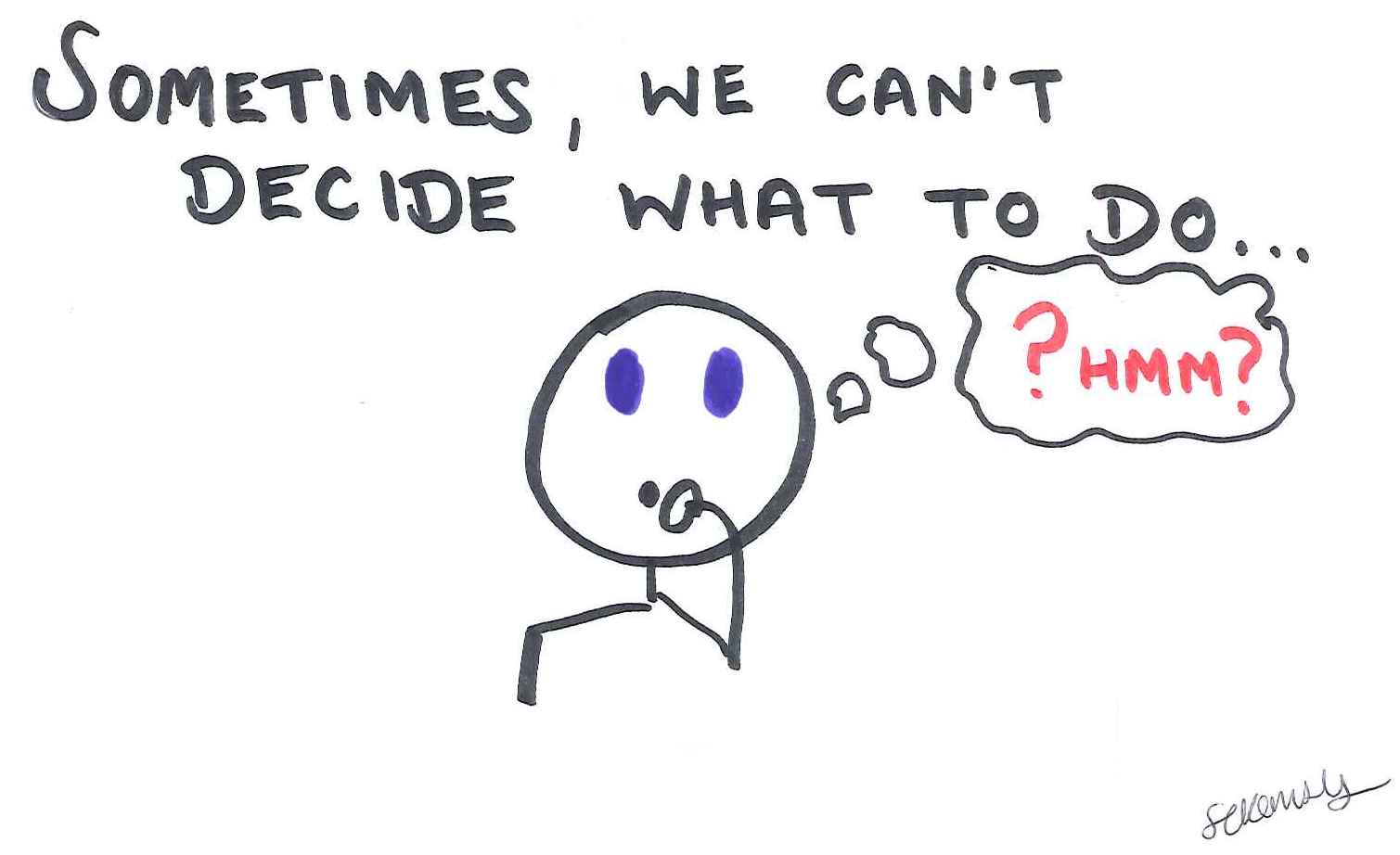
(When I decided to ‘draw’ a post, I forgot to factor in how terrible I am at Art, but at least it means I don’t have to worry about people stealing pictures from my site)
Knowing what to do and making decisions is often a far from simple process for anybody, particularly if there are important things at stake.
I hate having to choose between things (and I’m not just talking about whether to go for number 38 – Sweet and Sour pork, or number 42 – Crispy Chilli Beef – although that dilemma is dismaying enough). It’s especially daunting when the available options vary significantly in their potential outcomes or implications, and sometimes it’s easier just to turn our backs on the decision altogether, and continue on our merry way as we were before, rather than throw caution to the wind, go with our gut and get on with it.
Other times, it’s not even just the fear that prevents us from making a decision, but a genuine yearning for each of the choices – to go to the beach and swim or go to the park and picnic? To live in the town where there’s a lot going on, or to live in the countryside where the surroundings are so green and beautiful? To travel the world or to settle down sooner with a house and family? To become a teacher or to become an astronaut? To wear pyjamas or to wear a nightgown…. etc, etc.
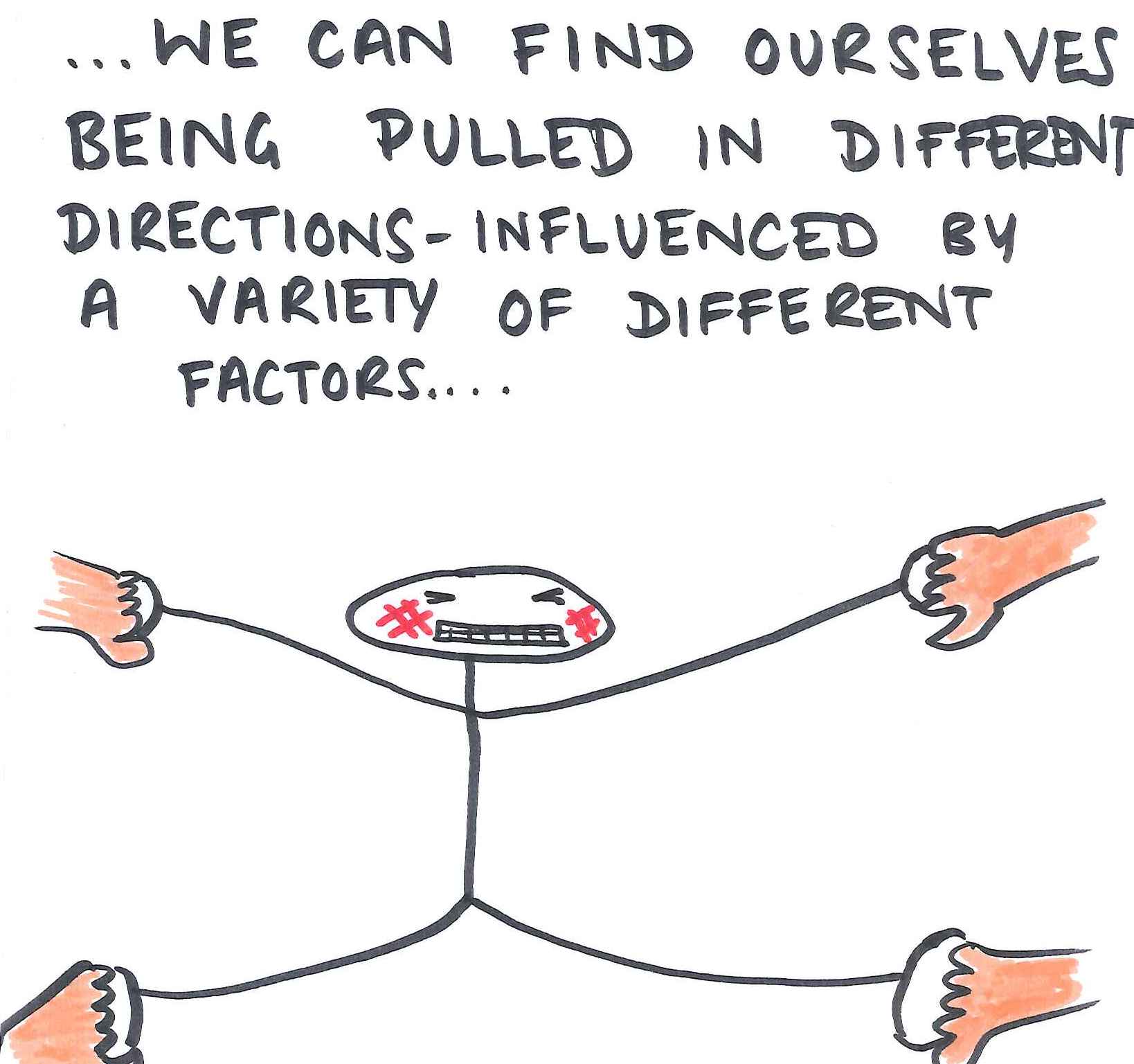
The problem is that all the whilst you’re trying to choose between these thingsand contemplating about how good each one could beyou’re not actually doing any of them. You are being pulled in different directions and then like the stick-men in the rowing boat above, you remain motionless as a result – if the options you wish to pursue are polar-opposites it will be harder to make any visible progress with any of them.
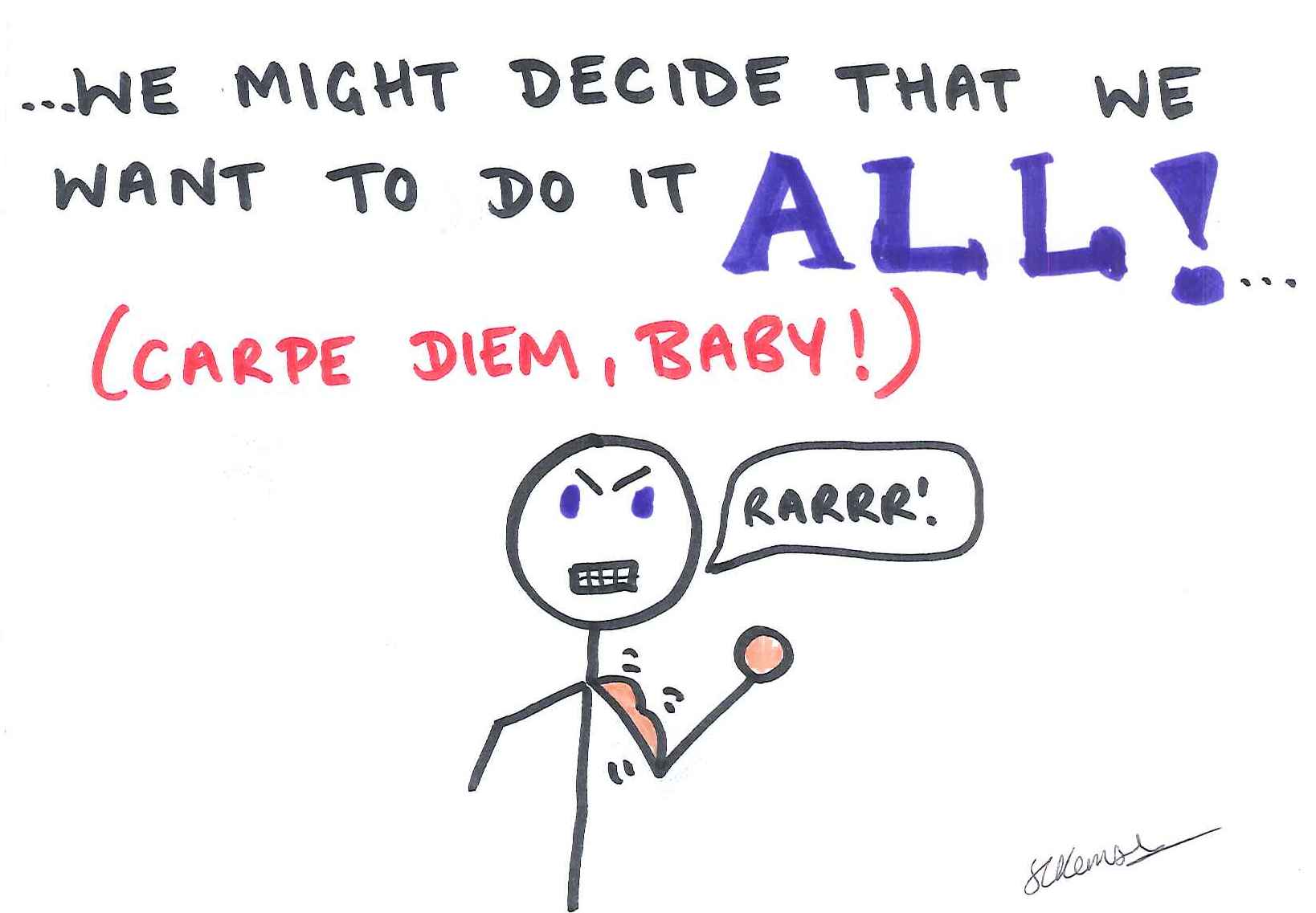
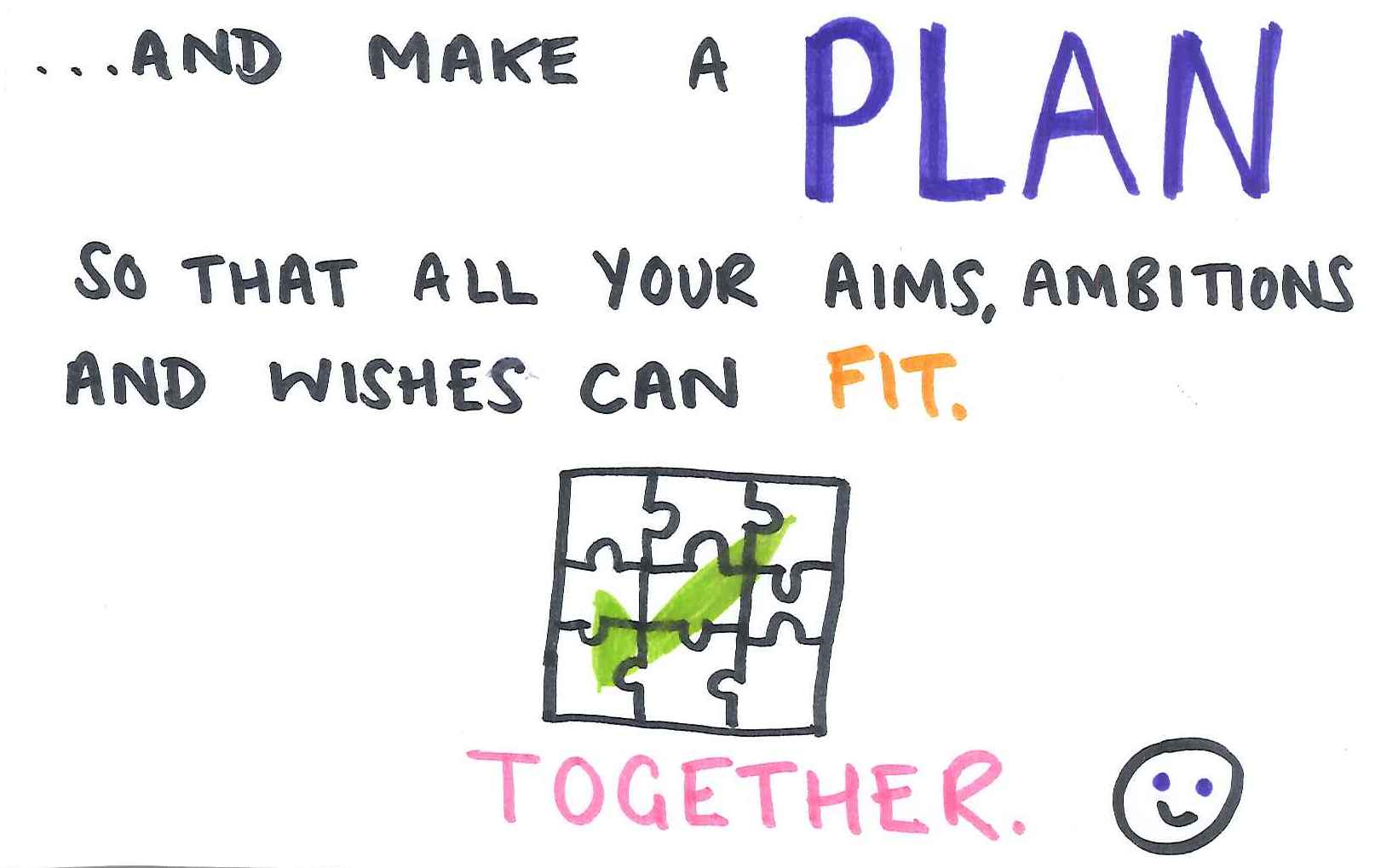
Unless you make a plan. One that includes everything you want it to include, in a way which can work with a bit of forward-thinking and perhaps a bit of compromise too. It’s not impossible to pursue each option provided you manage to fit them around one another and if you think long and hard enough about it all you are bound to find a way in which you can do that. Up until around two years ago, I couldn’t for the life of me choose between Career or Travel. I didn’t want to commit to a career because I knew it would mean I couldn’t just swan off to Asia for three months again, and I didn’t want to commit to Travel because I knew it would delay me from getting my career on track. I wanted both but the problem was that whilst I wasn’t earning from a career, I couldn’t exactly afford to travel either. In essence I was doing sod-all; treading water in a small oasis in the middle of a desert. I was unhappy and felt pointless because I wasn’t doing either of the things I really wanted to and, on top of all that, I was wasting valuable time. I realised I needed to make a proper plan, so took a notepad into a coffee shop and started thinking. It was only then that I realised I could be doing both: pursuing a career and then using the salary to travel during the holidays.* It sounds so obvious now but for many months I felt I had to choose between the two, and it’s in that area of No Man’s Land in which you are most in danger of feeling pressured to pick one option over the other and completely forgetting all about the one you don’t pursue, when it could be something that really means a lot to you.
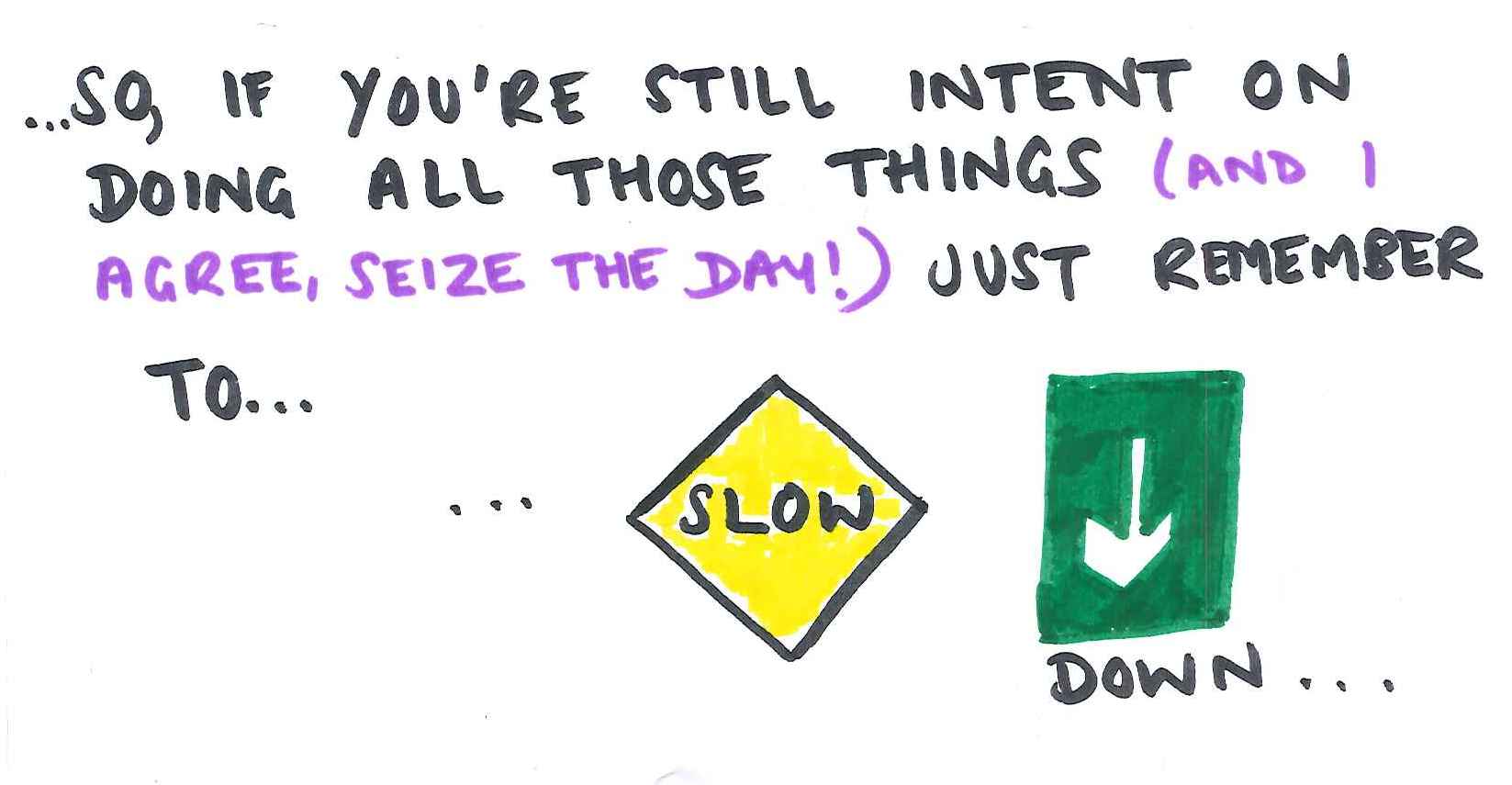
So, if you are really struggling to choose between things, particularly when it comes to working out what you want to do with your life, just remember to slow down and take the time to try and make each of the pieces of the puzzle fit together somehow. Take each of the things that are important to you and allocate the times when you will focus on them so that they can all feature in your grand plan. Wear your pyjamas in Winter and your nightgown in Summer; be an astronaut whilst you’re young and fit and a teacher when you’re older, wiser and able to tell your pupils amusing anecdotes about Space; go the beach now whilst the sun is shining and save the park for later on, when it’s cooler and you don’t plan on swimming.
There’s always a way to make things work, provided you take the time to find it. You can do everything, provided you have patience and a plan.
* – This particular decision is a rarity, I’m still, for the most part, crap at making them – but now I at least realise it doesn’t always have to be about one or the other.
Song of the Day:Dinosaur Feathers – Family Waves
I just can’t seem to get bored of listening to this song by New York indie-pop act Dinosaur Feathers. These guys are criminally under-rated, but music sounds better when it’s like that.




 sophiekemsley