A SOLO STAY IN THE WOODS

“You’re never really alone in the woods…”

These words were said during a recent talk I attended by a wonderful local author, Simon Pollard. The sentence does sound a bit like the premise to a low budget slash-horror movie. Blair Witch springs to mind.

“…how can you be, when you’re surrounded by so many different living species, including the trees.”

I went on to learn from him that trees have heartbeats, albeit very slow ones. I was amazed by that (though probably wouldn’t want to admit to my tree surgeon brother that I hadn’t been aware of it before).

I’ve always adored and appreciated nature, even though I often feel that I know so little about it. Sometimes I feel that that makes me a bit of a fraudulent fan, but you don’t need to be able to identify every tree or be literate in compostable irrigation to truly enjoy it.

All you really need to do, is observe it, in every sense. To look at it. Hear it. Feel it. Inhale it. And yeah, you can taste it too… but you kinda need to know what you’re doing if you want to go down that route. I certainly don’t, but a foraging course with somebody who does is definitely on the bucket list.

You also need to treat it with the same respect you’d give any other living being. Don’t do any harm to it, and let it simply be itself.

I had a week off work and knew I needed a change of scene rather than be in the same flat I work from every day, but I didn’t really fancy going too far away. I found a gorgeous bell tent on Air BnB in a village 20 minutes from home and decided to head there for a few days to focus on my writing and do some new blog posts, like this one.

The description of the site included a lot of words like “remote” and “secluded”. To some people these are scary words, and in normal life, they are to me as well, but for this purpose, they were perfect.

To get there I needed to drive along a number of tiny country lanes that I’d never been down before despite having lived so close to them for years. It was late afternoon on the hottest day in June, and the sun was beating down a golden glow over the Syndale Valley. I could only catch quick glimpses as I was too paranoid about having a head-on collision with a tractor, but whenever I did, I felt a similar glow within.

I was greeted by a very sunny, cheerful lady – the BnB owner – and was then left to my own devices in what was definitely a remote, secluded location in the woods. But it didn’t feel like it. Anything but, actually.

There were birds. Lots and lots of them. I can’t tell you what they were because I’m no ornithologist, but maybe somebody who is can identify them for me from the below phonetics:

“Twiddlywoowootwit” (or maybe they were just insulting me, I guess I am a bit of a twit at times).

“Twt. Twt. Twt. Twt. Twt” (okay. There’s no need to labour the point!)

“mmmHMMHMM,hmmhmm” (fairly sure that one’s a wood pigeon. Think I know that one. Either that or it’s just a bird agreeing with all the other ones that spoke before it. B***h).

Having been sufficiently besmirched by my bird friends I wandered down to the meadow like the cheerful lady had recommended, and came across a gate which opens up to a beautiful looking valley. I wasn’t driving and there were no tractors to worry about at this point, so I could really afford to take it all in.

What a peaceful, glorious, hidden gem in the heart of Kent. A giant golden ingot in the middle of nowhere.

A few miles away from here, people are currently jammed on the ring road in Maidstone. A few miles in the other direction, they’re at the Costa drive-through in Sittingbourne, taking in breathtaking views of the Eurolink industrial estate . In Ashford, they’re steadfastly opening the windows on the High Speed trains in desperation for air.

And I guess I can’t leave out my hometown, Faversham, as the fourth corner in the urban rectangle that surrounds this field. In Faversham, they’re shoo’ing off the seagulls from swooping down to steal rashers of bacon off any more plates (as I’d witnessed earlier that day. And yes I laughed, because it didn’t happen to me, and I’m mean).

Back to the valley, and I just can’t fathom how a patch of land as magical as this exists and can feel so far away from the above, despite being so close.

I think about my love for Kent, and how it grows every day… or at least when I’m out discovering new parts of it. Watford was a great place to grow up, but its presence on my birth certificate is a bit like a dodgy tattoo that you try and cover with your fingers when anyone asks to see it. Kent feels more like home to me.

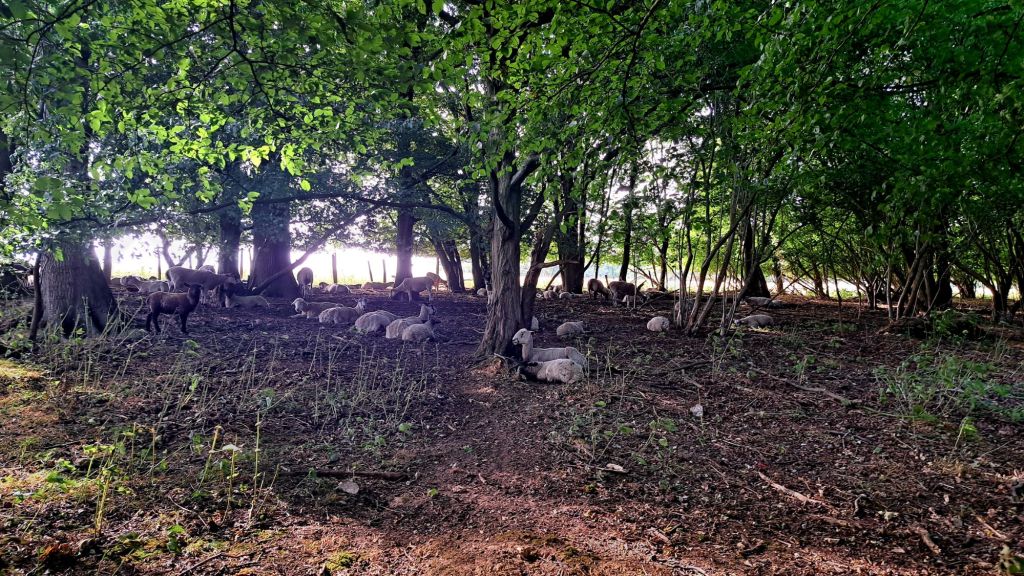
I walk into some dense woodland where I see a group of silhouettes in the distance. Sheep and goats, all gathered underneath the trees to escape the heat. They look at me suspiciously as I approach, and then start noisily BAA-ing to one another.

They’re probably insulting me too.

I walk in the other direction and see one standing completely alone.

“Were they rude to you, as well?” I’m tempted to ask, until he starts baa-ing at me too. I point in the direction of his friends in case he’s a bit lost but he’s reluctant to move.

Probably wants some space from them all.

I enjoy my explore, even if I have now been insulted by two different species and shredded my legs on a number of stinging nettles. It’s peaceful, and the surroundings are authentic. Authenticity is one of my favourite qualities, in anything – people, music, food – and it’s especially present in nature.

Magic happens when you just let something be its true self. To grow in the way it’s meant to. Stifle that for any reason, and you’re just left with something very underwhelming.

These trees have grown in the way they’re meant to, knobbly trunks and all. Those thistles didn’t grow with the help of a watering can, but with rain and sunlight. They haven’t been trimmed back. In nature, everything is as it intended to be.

I spend the rest of the evening writing away apart from having a small break to take an outdoor bath, an experience I recommend everyone do. I see a few planes overhead. One of them is flying from London to Tokyo, and I imagine all the passengers up there, 300 snippets of chitter chatter, and all the cutlery clitter-clatter.

But it doesn’t drown out the volume of the birds, as they flap against the bell tent and continue to insult me, a temporary guest in their home. I see a mouse run out from underneath the washroom, take one look at me, and scuttle away. Bit like some of those Tinder dates.

My heart smiles.

No, you’re never really alone in the woods. Try it.

LESSONS FROM A DODGY ELECTRICIAN

My electrics blew out the other week. Completely.

The timing couldn’t have been worse, it was a busy Monday morning between important meetings and not only could I not get back online to attend said meetings, but nor could I boil the kettle to make myself a coffee with which to mentally deal with this drama.

Preliminary scoping of the problem suggested that only an emergency electrician could help me out here, so I got onto Google, did a few searches, deployed what I thought was a decent enough amount of due diligence and contacted the first one on my admittedly rushed list of contender soon-to-be superheroes.

He arrived 45 minutes later than promised and diagnosed the problem within seconds of pointing a technical looking thingy at my fuse box:

“Well, I’ve taken a look, and it looks quite a simple fix…”

My heart rose.

“…But it’ll basically cost you your left lung and a million pounds. So if you’re happy to just agree to all that right now and send over a 20% deposit along with all your remaining bags of Wotsits, I can get you back online within minutes, Ms Damselindistress”.

My heart sank.

I needed time to think.

So I thought about it.

And I thought that if that’s what it needed, if that was the only thing that would help me to carry on doing my essential tasks, then that’s what I’d just have to do, and worry about the cost later. I started to think about all the things I could sell to help fund this.

But then I observed a funny feeling inside, and considered the idea that this was all a bit quick and that this man might be a bit of a con artist.

And that he needed to leave immediately.

I channelled my inner Peggy Mitchell from Eastenders:

“GET OUT MA FLAT!”

Now clearly, it didn’t happen that way (although in hindsight I wish it had, as that would have been far more entertaining). In reality, it consisted of a sheepish call to my Dad for a second opinion and then politely, but also very socially awkwardly, asking the man to leave so that I could “process this”, and apologising for calling him out to effectively do nothing. So British of me.

“That’s fair enough, Mrs Kemzel. But everyone else is going to tell you the same thing. And they will charge you much more than we do.”

He left and – long story short – a more reputable electrician came a few days later and pretty much resolved the matter within minutes for a fraction of the initial quote. One 32nd of it, to be exact (I calculated it!). I then realised for certain, that I had been duped by the original guy. He had realised my knowledge of electrics barely extended beyond “switch it off and on again”, and tried to take advantage of that, to my – literal – expense. He created a problem that didn’t exist and threw jargon at me that he knew I wouldn’t understand enough to question, and I almost fell for it.

So what’s the point of this admittedly pretty boring story? Well, for one thing, it’s a lesson in realising that just because somebody might appear to be wearing the right badges and holding the right equipment, it doesn’t always make them trustworthy, or even right. It’s both hard and depressing to accept that there might be people out there with intentions that profit from the naivety of others, but it happens more often than we realise, and can have devastating, life-long impacts on vulnerable people.

I also thought more about our reliance on electricity and digital connection. There was a point during this encounter when I had my banking app open ready to depart with a considerable sum of money, not because I wanted to, but because I felt I needed to. And that’s a feeling that pretty much summarises most of our financial outgoings – bills, MOTs, boiler services, groceries (and I’m not talking about the fun stuff there, but the blendinthebackground omnipresents like celery and stock cubes) – all really boring stuff that doesn’t exactly excite us but is stuff we feel we need to pay out for because if we didn’t life would be a lot harder and we wouldn’t function.

Most of us sacrifice a lot of the stuff we want in order to pay for what we need. It’s a very lucky minority who don’t need to do that.

But I’d also argue that sometimes, we do actually need some of the things we want. We might be able to function without treating ourselves, but this life is too short and challenging to persistently do that without reprieve.

Being content and enjoying the limited time we have is also a need. Probably – definitely – the most important one of all, but when it comes to using money to buy things that can help us do this, it’s often the one we prioritise least, because we don’t get sent intimidating letters and our homes won’t fall down if we don’t do it.

I’m obviously not recommending that we all start spending our money irresponsibly, as that just makes things trickier in the long run, but I do think that sometimes we need to be as quick to consider handing over our cash for things that simply bring joy as we do for the more boring things that just support basic functionality.

Both because we want to, and because actually, sometimes we need to.

And if you still can’t convince yourself that it’s perfectly okay to treat yourself once in a while despite these tough economic times, then just pretend there’s a dodgy electrician in your home telling you that you should, and that if you don’t do it, your heart won’t function.

Photo by Malte Luk on Pexels.com

WANDERING. WONDERING. WHEREVER.

I could try, but I’m not sure I’d ever be able to put it more clearly and succinctly than Jessica Vincent in the opener to ‘The Best British Travel Writing of the 21st Century’:

“The essence of travel isn’t to move, it‘s to feel”

In my younger years, I had a very – in hindsight – generic and somewhat quite privileged view of travel. Get away from Watford! Go as far as you can go! See as much as you can see! Base the bucket list on a collection of landmarks so often read about – Niagara Falls, Angkor Wat et al – all out there to tick off like some kind of checklist from the Dorling Kindersley atlas that had fascinated me as a young child.

Yet, looking back, it was never the famous landmarks or the ‘ticking things off’ that made the biggest impressions during the more intrepid trips of my younger years. More often than not, they were impersonal experiences featuring crowds, tacky souvenirs, and overpriced ice-creams. It took me a long time to understand why these outings – though lovely and memorable in their own way – had seemed a bit underwhelming. I realised that the curated nature of these experiences – all designed to draw in and satisfy baying tourists – had led to an absence of feeling. I saw, but I didn’t really feel, to be honest, as it seemed like all the true facets of the culture I was visiting had been cloaked by consumerism. And for something to make a lasting impression, whatever it is, you need it to be authentic. That’s why nature never fails:

Over time, I’ve realised that distance – and even place – won’t necessarily determine how much of an impact a trip will have.  The only reason we think they do is because invariably when we head further away than what we’re used to, we are more likely to see many landscapes and cultures for the first time, and this evokes the same level of intrigue as when we ever experienced anything else for the first time, home or away. Consider how excitable infants get over the smallest and most mundane things when they first see them – a curtain to hide behind, the way toilet paper unwinds if you roll it along a floor, a lifelike image moving on a flat screen. We get older and these things become less exciting, and it becomes harder to find anything new in the day to day, so instead we might turn to maps and identify all the places we haven’t seen yet.

And to some degree that works, but when it comes to it, it’s never really the places that matter but the special moments they’ve conjured, as those are when you really feel things. Away from home, these moments may look like inspiring conversations with people you’ll probably never see again, the scents of local spices, getting lost at night and managing to navigate your way back to an air bnb with an awkward lock, or the heartbreaking sight of a young mother placing her wailing toddler into the doorway of a bus that sits stationery in the traffic which chokes an Asian capital. She rhythmically shakes a plastic bottle filled with uncooked rice to make her little girl ‘dance’ – although it’s really a tearful stomp – in exchange for cash from commuters who pretend not to notice that either of them are crying.

These moments affect us because they stretch our senses to places they’ve never been, and see things in a way we’ve never seen. These moments are – as Vincent describes – ‘the essence of travel’, when it’s not just our feet that our moving but most crucially our minds, too.

And when you put it this way, it’s not wrong to think that ‘traveling’ should be about going somewhere far away, but it’s also not wrong to think that you can experience it much closer to home, too. Even from your lounge. An open mind and a few dashes of curiosity is all it takes. A willingness to let those same senses be stretched, even if it’s uncomfortable at times.

To open the eyes to their fullest. To welcome in sights and sounds that may forever change the way you think. To never say never, and to keep wanting to see more in order to open up these opportunities.

Because, like Vincent says, if travel isn’t about movement but about feeling, then let’s go and feel it all, now, wherever we are.

Song of the Day: Hey Marseilles – Rio

I think this is a really beautiful song and probably one of my all time favourites. I first came across it many years ago and loved what I interpreted it to mean. Older now, I interpret the meaning in a different way – which closely aligns with the content of this month’s post – and love it even more.

WHO’S A FAN-UARY?

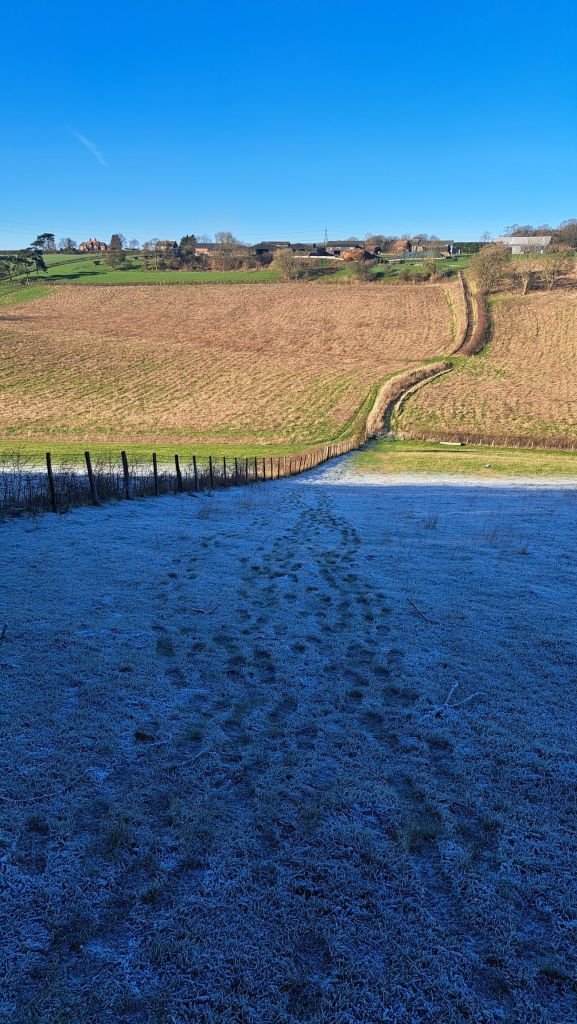
This is such a January image. And not just because it was taken in… January.

People seem to hate on this month a lot – a bit like how they hate on Wetherspoons and pigeons (see previous posts) – prematurely and unreasonably sometimes.

And yes, there’s a few things we can rightfully accuse January of doing wrong. Making us feel poor – yes. Being freezing – yes. Having to listen to people who chose to do Dry January moan about it for a month – yeees!

But put these things to one side and I think there’s a lot of nice things about January too.

Winter sun – like what appears at the top of the photo above – might just be my favourite of those things, because I think – like a lot of things – it shines brighter when it’s unexpected. During Summer we’ll moan if it’s too hot – or not warm enough – whereas in January we’re just grateful to see it at all. A welcome break from the grey, and a sign of longer days to come.

And then there’s the frost. Sure, it might be cold to the touch – a bit slippery even – but I love how it makes the fields sparkle in the mornings as they reflect the light from the sky. Maybe we didn’t get the white Christmas we wanted, but maybe we’ll get the white January we need instead. It might not be snow, but they look pretty similar. This iced hill in Kent was the nearest I’d get to mountains this winter, but it helped!

It also feels like a month where you can feel permitted to nest more. To focus on trying to keep warm and save money. To read inspiring books and make soup. Lots of soup. (How do you know you’re pushing 40? Well, you and your friends get massively excited about making different soup combinations, and a growing proportion of your phone gallery looks like bowls of steaming goodness served with bread.)

January is a month of two sides, and one of those is so wonderful it makes the other one worth enduring.

I’m a fan-uary. Are you?

WHY I’D RATHER BE IN WETHERSPOONS

If I could go back in time and tell myself that there’d come a day when one of my favourite ways to spend a Saturday morning is in Wetherspoons, there’d be two kinds of response, dependent on how far back we’d gone:

18-23 year old me: “Ahh wicked, pitcher of Blue Lagoon and some Apple Sourz to welcome the weekend innit!”

23- sometime in the mid-30’s year old me: “Well, that’s just depressing. What a waste of a Saturday.”

I’d assume I had turned into one of those people I pass spilling out of the local establishments having a pint at 9.30am and regretting my life choices. Yes, that would feel depressing if it were so. That’s still not a point I’d ever like to reach.

But that’s not the reality.

I very rarely drink alcohol in Wetherspoons, but I’m here a lot. Usually with a £1.56 refillable coffee and a notebook, and on the really special occasions if I want to treat myself: a bowl of nachos, made to a recipe that hasn’t changed in at least 20 years.

A thoughtful gift from a friend

To me, Wetherspoons is about so much more than the historic connotations with cheap drinks and sticky tables. It’s a cornerstone of the community, a national institution, a place where people from all walks of life can feel that a decent meal out is a bit more within reach than a lot of other places.

Wetherspoons is a place for everyone… except the more snooty among society perhaps. And who wants to be around people like that anyway?

It’s a place that leaves you to it. A place that doesn’t pressure you to leave as soon as you’ve finished your drink so that a new customer can occupy your seat. A place where even the backs of toilet doors will encourage you to stay for as long as you like – undisturbed – if it helps you to feel safe. And often, when I look around, I sense that a lot of the clientele come here for that quality. Like the octogenarian – we’ll just refer to him as ‘G’ – who frequents my local branch for lunch every couple of days and explains how for him, it’s a place where he can come and feel in good company compared to the loneliness he feels at home.

“It helps me feel connected here” G once shared with me, “I love to see familiar faces… there are so many people my age who come here and have so many great stories to tell about their lives. You’d never know just from looking at them just how many remarkable things they’ve done. I’ve found out all about them just by chatting here.”

G tells me his own life stories as we sit and chat. We’ve spoken a few times because our favourite tables are next to each other (by the windows, to enable the act of people watching outside). Although 80% of the dialogue is from G’s side of the script, I find him a joy to listen to, and he always thanks me for the chat as he leaves, even though I’m not really sure I’ve said that much.

A recent study found that around 30% of UK residents experience regular feelings of loneliness. Whilst Wetherspoons may not be the solution for all, it’s important to acknowledge this value when critiquing the place. As somebody who lives alone in a quiet estate and predominantly works from home, I find that an evening coffee trip (decaf by that time) to ‘Spoons is an important injection of life, people and reality after a virtual day, and can understand why many feel similar.

The chain has a lot of critics, for various reasons. One of the more common concerns is that through its cheaper prices, it takes valuable custom away from the traditional, independent British pub. This is a particularly valid concern at a time when the hospitality industry is under enormous pressure – not least from recent rises in alcohol duty – and many of our beloved ‘locals’ are pulling their final pints left, right and centre. 

However, what many often forget is that the two places are very different. The top two selling drinks at Wetherspoons aren’t even alcoholic. They’re Pepsi Max and coffee/tea. More to the point, it’s entirely possible to both support your local pub with your custom, and appreciate your local Wetherspoons. I’d usually pick my cosy local if it was something alcoholic I was after or if I was meeting a friend, but I’m not sure my local would necessarily appreciate a whole table being taken up for a couple of hours by someone who’s just after a coffee, and that’s fair enough. You can make the most of both, it doesn’t have to be a case of either or.

The food is another characteristic that often attracts criticism, whether it’s the fact that the chip count can vary (as attested by the 250k strong membership of a particular Facebook group where members share / compare / condemn counts) or that it all tastes like it’s been “made in a microwave.”

Well, so what? I mean really, so what! Quite frankly, if it’s produced in a hygienic environment, is hot, tasty and edible, then I couldn’t care less if it was prepared by a teenager monitoring a microwave or Nigella Lawson poring over her aga oven. At least you always know, no matter what branch you’re in, what you’re going to get. Wetherspoons is a complete opposite of Forrest Gump’s infamous box of chocolates, (unless you’re focusing on the chip count). There may be better quality meals available elsewhere, but the reality is that they’re a lot more expensive, and most people can’t afford this as regularly. Sometimes you just want to have a break from cooking without breaking the bank. Sometimes you just want cheap stodge.

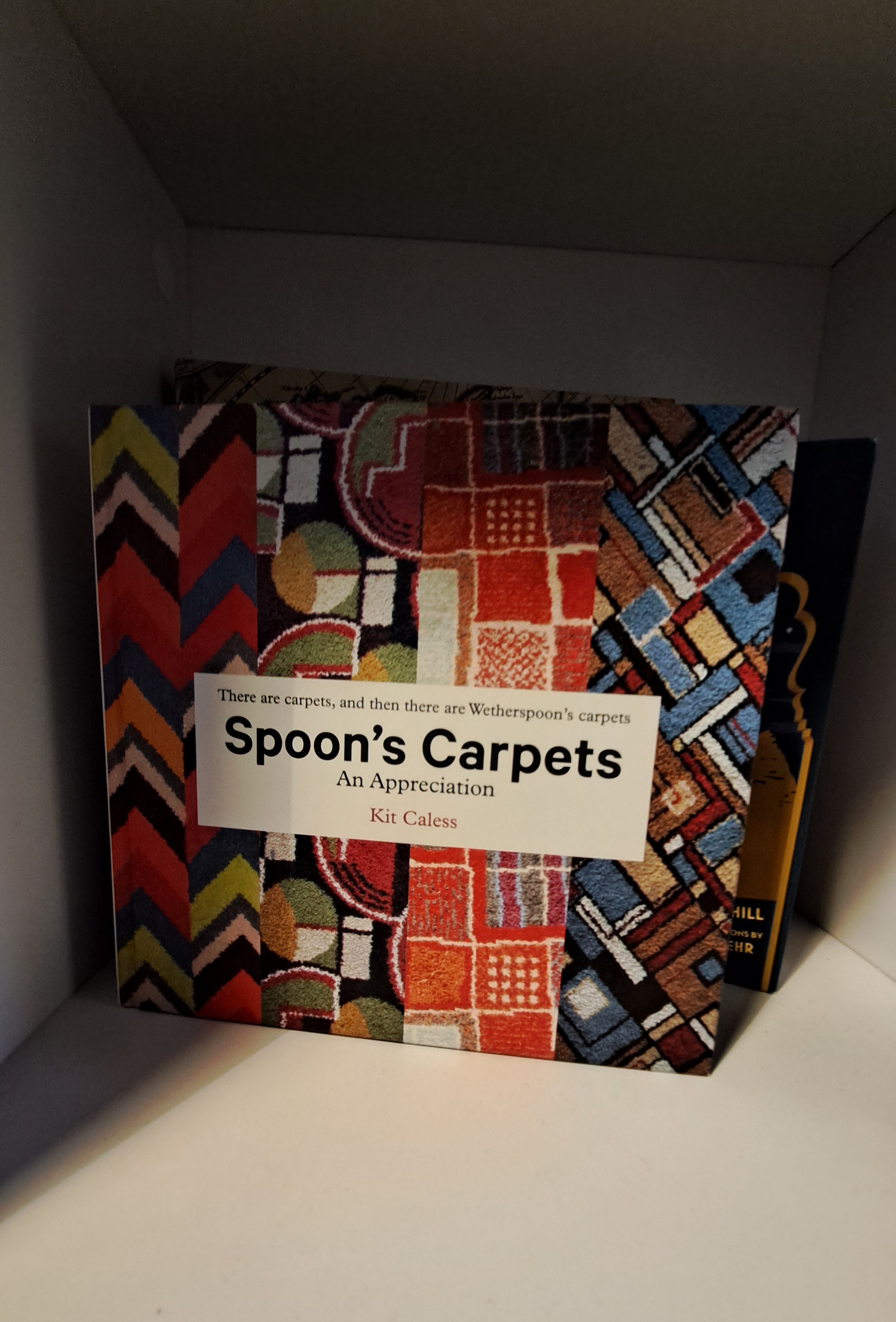
And where do we start with the iconic buildings themselves, and their carpets? It’s a little known – but absolutely incredible no less – fact that each of the 850 Wetherspoons establishments in the UK has its own unique carpet, designed around something to do with local culture, history or heritage. Take a look the next time you go into your local ‘Spoons. I am in awe of the likes of Kit Caless, who visited hundreds, set up a website and even released a book to document them. A book I proudly own and which has taught me a lot about notable figures and history from other areas:

The book really exists, and it’s amazing

As for the buildings, you’ll often find that those now hosting the chain once served a purpose as something entirely different, and the history is usually palpable upon entry. One of my favourite Wetherspoons buildings is The Palladium in Llandudno, Wales, not least because it means I must be near Snowdonia, but just because of the general feel of the building. Before it became what it is today, it was a 1920s theatre, and as you gaze at the various boxes and balconies around you, you can almost hear the echoes of decades of historic performance. You order your scampi, chips and mushy peas thinking about how the people a few decades in front of you in the queue were ordering their ‘ices’ at the interval, and not only does it feel exciting, but it also feels like a sentimental connection to the local past.

The Opera House in Tunbridge Wells has a similar history, and the reverberations of a former art deco cinema are felt immediately as you enter The Peter Cushing in Whitstable (a branch which recently won platinum prize in the UK’s Loo of the Year awards, in what I’m certain was a ‘sparkling’ ceremony). I’m not entirely sure what my local branch, The Leading Light in Faversham, used to be, but I believe it was a carpet store, which is a little less exciting than those above perhaps, but also quite fitting when you consider the pursuits and passions of Kit Caless and Co.

Should this have piqued your interest in your own local branches, then it’s worth checking out the Wetherspoons website, which contains a lot of contextual information about each branch, including explanations for the name.

Additionally, it’s a firm belief of mine that there’s a Wetherspoons for every occasion, but to take inspiration from the menu and add some variety to this post I’ll represent this as an amateur poem as opposed to a paragraph – a small plate compared to a main – if you will:

Turning 18 with a pitcher of Purple Rain.
A bowl of nachos before catching the train.
A pre-holiday pint before boarding the plane.
A cheap breakfast whilst taking shelter from the rain.
Buying a cup of coffee, and filling it again and again…

There’s just one more characteristic about Wetherspoons I wish to praise, out of a raft of many more which I could possibly feature, and for this I’ll tell a true story:

It’s February 2020. Storm Ciara has swept up the UK and caused carnage everywhere, not least cancelling all the trains to London from Lancaster, where a friend and I have been visiting our former University haunts. We’re cold and miserable about it and have had to book an extra night’s accommodation and buy emergency underwear in Primark, as well as inform our respective works that we won’t be able to come in on Monday. Once we have accepted this fate we head to The Sir Richard Owen, which just so happens to be next to our hotel. In the spirit of student memories we order a Smirnoff Ice each and my friend tells me about a trend whereby people post their Wetherspoons table numbers on Twitter and people order food for them via the app. I struggle to believe this is true, and so she offers to try it.

Within minutes of her posting on Twitter, a side of baked beans arrives unaccompanied by anything else, sent by a mystery donor. We laugh. A lot. And then try and work out the best way to distribute them. British tapas.

It’s utterly bizarre, utterly hilarious and also utterly Wetherspoons. Which is a way in which I’d also describe the pandemonium of Summer 2024 when a bird flew into the Faversham branch and mesmerised an audience of a couple of hundred customers, who all got on board with the rescue attempt of encouraging it to fly safely back out, which it eventually did.

And really, there’s so much more I could possibly say, but I’m making myself hungry, so instead I’ll shawarmachickenwrap up this post to include a soft drink. £5.70 each. Ordered via the app.

Never, ever change, ‘Spoons.

A SMIDGEN OF APPRECIATION

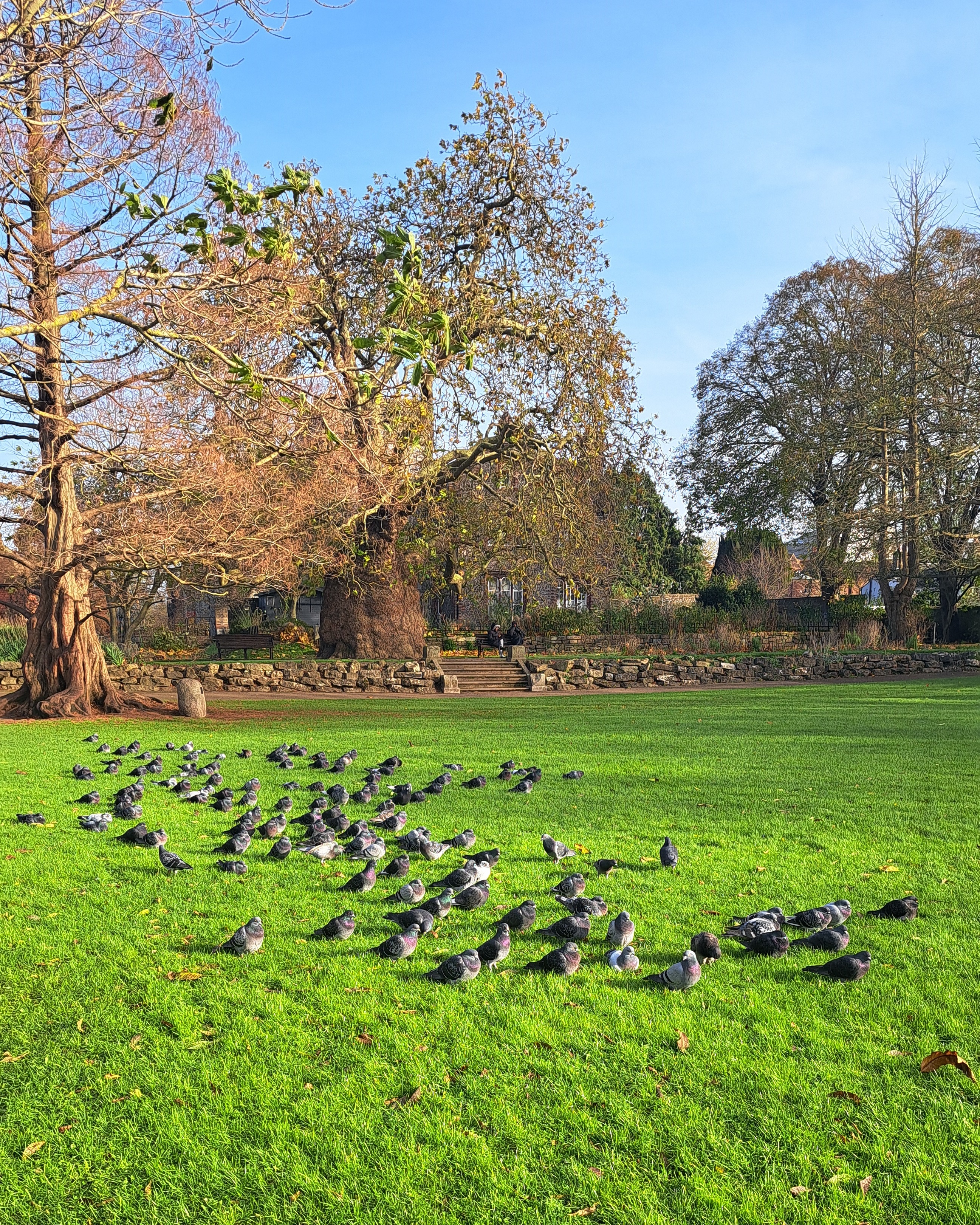
Last week, as 40 mph winds swept up the country and kept swathes of people indoors, I passed a massive flock of pigeons just sat chilling in the park, chattering away to one another whilst some of them waddled around. They seemed to be appreciating the lower numbers of humans hanging about, and had pretty much commandeered the whole place to themselves. In the context of wider chaos caused by the weather, it made me smile.

I often feel a bit sorry for pigeons. I think they get quite a hard time, through no fault of their own. That’s not to say I’m about to go picking one up for a cuddle anytime soon, but I’m more than happy to co-exist on this land with them, and don’t find them as irritating as a lot of other people do. They’re just living beings at the end of the day, and aren’t we all capable of being a bit of a nuisance at times?

Last Summer I came across a pigeon that had been badly injured and was limping around in circles on a footpath, looking really pained. It was impossible to just walk by, and I spent thirty minutes phoning around local organisations for advice, trying to reassure old pidge that help would be coming and he’d be flapping those wings again soon. Nobody was really interested, and though I can absolutely understand the concerns around the potential to carry disease, it did break my heart a little that I ended up having to walk away from something experiencing clear distress. I’ll never know what happened to my little pigeon pal, but I can pretty much guess.

So call me silly, call me soppy, call me a 39 year old woman who likes cats (which I appreciate is slightly ironic), but now, every time I see pigeons who are bumbling about aimlessly – but healthily – my heart smiles a bit. Just let them be.

Plus, with all those jazzy greens and pinks on their necks, I think they have a pretty funky fashion sense too.

TEA (OR IS IT DINNER?) WITH MARCEL IN NORTH WEST ENGLAND

The clocks went back an hour last night and the consequent earlier onset of daily darkness will be the main topic of conversation between British people for the entirety of this week. It always has been, and always will be.

It’s been less than twenty four hours and we’re already feeling it. LED strip lights rising from the ground and suddenly appearing everywhere we turn. A black velvet curtain drawing the days to an early close. Menacing orange and black paraphernalia everywhere, and the inexplicable smells on the streets of metal and smoke.

For me, this time of year often makes me think back to my time as a student at Lancaster University in north west England. I’d heard the expression, ‘It’s grim up North’ numerous times prior to making the move and was determined to see for myself if this were true or not. It definitely wasn’t. Yet whenever I think about the place, it’s usually in the context of a Winter evening, much like this one.

It’s November 2005 and I’m sat on the top floor of a double decker Stagecoach bus that smells of Wrigley’s Orbit, wee, and diesel oil. The wheels on the bus are going round and round, and the lights on the bus are making my hungover head pound and pound as they illuminate the harsh orange zig-zag seat patterns. A Sainsburys bag, fill to the brim with representatives of the Basics range (soups, garlic breads and pastas aimed to last the week), is hooked on to my wrist threatening to cut off circulation to my hand as I cling on to both the bag and the seat for dear life.

Inertia flings me towards accidentally nutting the bell each time the bus brakes. I find comfort in seeing the neon red letters that spell out BARGAIN BOOZE, because it means we’re finally at the bottom of the hill from hell in the Bowerham part of town, and the ride home should become more smooth from here. I may even be able to safely place my shopping bag on the floor before it rips from the weight of all the soup cans and sends them rolling down the aisle like the barrels hurled by Donkey Kong in the retro arcade game (yes, that did actually happen once).

I finally reach campus and step off the bus to walk to my halls of residence, but first I have to have a fag, after all that hard work clinging on to heavy shopping bags and trying to keep upright. As I puff away my student loan (the current me still hasn’t forgiven the younger one for this) I look up at half a dozen kitchen windows and see several episodes of a student drama tv series all screening at once. A couple of lads in striped polo shirts with emo hairstyles are chucking the entire contents of their food cupboards into what appears to be some sort of stir fry. The girls upstairs are dancing around in brightly coloured rara skirts and drinking out of fluorescent beakers. One of them is swapping the CD around in the stereo that sits on the windowsill. There’s another kitchen where the window is covered in a collection of handmade paper snowflakes that gets bigger with each passing day, and a couple of others where the lights are out. All the occupants are either out on the town ploughing through vodka Redbulls, or in their rooms graffiti’ing the reincarnations of forests with neon Stabilo highlighter pens.

I head up the internal stairwell towards my flat, being careful not to step in the congealed puddle of Dolmio sauce that’s been there all week following a drunken dare gone wrong. The unmistakable scents of the tomatoey residue and washing powder fill the air. As I push through the heavy fireproof doors to my flat I’m overwhelmed by even more senses. The smell of Heinz spaghetti and garlic bread being cooked away in the kitchen. The audience of Deal or No Deal gasping as the infamous 1p box is exposed on a flatmate’s tv. Another flatmate on the phone to her mum, assuring her that she’s eating well. The wisps of somebody else’s cigarette floating out from underneath their bedroom door. Somebody listening to Binary Love by The Rakes. The smell of burning garlic bread.

Shit. The smell of burning garlic bread.

The shriek of the fire alarm which ensues. The cackle of students, most of whom are half cut, trying to evacuate the building as the porters arrive to shout instruction in loud, northern tones. We shiver in the cold air of a northern Winter, watching each others’ exhales under the streetlights, whilst waiting for various risk assessments to be complete. Eventually, we’re able to file back in.

“So, what shall we have for dinner?”
“Garlic bread?”
“Fook off!”

**********

‘The Proust Effect’ is the name of the phenomenon whereby certain senses can evoke sudden nostalgia. The novelist Marcel Proust coined the expression after feeling transported to his childhood following consumption of a particular tea-soaked cake in his later years. It’s a legitimate effect backed by science – all to do with how we process memories – and something I find particularly staggering is how it can appear out of nowhere, all encompassing. Stepping back to a former life. Have you experienced The Proust Effect recently?

This post is dedicated to R.G. 19 years after our shopping rolled out all over the bus as we returned to campus. How we laughed that day x

Song of the Day: The Rakes – Binary Love

SAY-SUN-ARA, SUMMER?

This Summer seemed to go as quickly as it came, but there are still hints of it here and there (if you search hard enough!).

The other week I particularly admired the resolute energy of this ageing sunflower in a nearby field. It was clearly a bit beyond its best, a bedraggled, hump-backed figure swaying in a lilting September evening breeze, ochre petals that were once lemon yellow wilting and reluctantly falling to join all the decaying neighbours on the ground.

Gastropod inflicted holes. General bit of a mess. I think we’ve all pretty much felt like how this sunflower looks at some point, I felt myself developing a hangover just by looking at it.

But what I liked about it is that it stood tall anyway, desperately seeking out what final remnants of sunshine it could to prolong the time it had left to dance. And dance it would, even though everybody else had already headed home. Even if once steady sways were now somewhat more wobbly.

And maybe – at this time of year especially, as clouds increasingly come to nudge blue skies away – we could all do with being a bit more sunflower. This particular one, ideally.

Looking up, dancing on.

S-PEAKING WITH A MOUNTAIN

There is a particularly famous Chinese proverb which we are probably all familiar with:

“A journey of a thousand miles begins with a single step.”

We can probably all see it right now, written in a swooshy font, pasted over a picture of a mountain range or the sole of a battered old hiking boot stepping off into a sunset, and posted somewhere within our social media newsfeeds. It’s arguably so over saturated a quote, that the impact has probably been diluted over the years. Yet, as I stood at the foot of Moel Siabod – the tenth highest mountain in Snowdonia – looking up in slight dismay at the height of the summit I was aiming for, that very same proverb was one of the first things to spring to mind, and it set me on my way. Albeit quite gingerly at first.

I was walking the mountain alone, a context which I knew wasn’t ideal but which was also a driver behind the determination to do it. I had been debating with myself for a while and the internal dialogue had gone something like this:

“Could I do it?”
“…Maybe it’s safer not to. Go for a coffee and do some writing, instead!”
“Okay then, I’ll do the mountain.”

(Writing and coffee almost always win, usually)

I wasn’t completely naive to the challenge and risk of doing a mountain hike alone, and carried out a fair amount of research beforehand, equipping myself with all the right safety gear for if I were to get stuck: first aid kit, plenty of extra food, an emergency whistle, bright attire to be visible to rescue services, a power pack to charge my phone, and a headtorch for if I were to get stranded into nightfall. All the gear, and definitely some idea, although it’s also fair to admit that despite this I’d still underestimated quite how challenging the walk would be. Having done Snowdon several times I thought I’d have no trouble with a smaller mountain, and that was rookie mistake number one. The height is one thing, the accessibility is something completely different. In selecting to ascend Moel Siabod via the eastern Daear Du ridge I’d chosen a route which would involve a lot more physical challenge than I was expecting. This walk required hands as well as feet, but I wouldn’t realise that until way too late. Nor did I realise that I would be the only person climbing this particular mountain that morning. The security of there being other people around had been something I’d naively banked upon, but it was an off-season weekday and I may as well have had the whole thing to myself.

I left my car in Pont Cyfyng and crossed the river, past Rhos Farm, to begin my ascent to a peak I’d been told gave way to some of the finest views of Snowdonia. I’d naturally gravitated towards choosing Moel Siabod for my solo hike. It was close to where I’d been staying in Betws-y-Coed and the route back afterwards would take me past Ty Hyll – the famous ‘Ugly House’ – which a friend had told me was great for cake. Not only that, but it was also close to Dyffryn Farm, the subject of ‘I Bought a Mountain’ and home of the incredibly inspiring Esme Kirby who I had been writing about only a couple of months earlier. Moel Siabod. Alone. It just had to be.

The first couple of hours went by without too much drama, following a steep, boggy and almost waterfall-like in parts path that ran along the left hand side of the mountain. It was strenuous at times and incredibly wet, but I could see where I needed to go at least and that was half the battle won. I kept thinking about the peanut butter and marmite bagel I had in my bag and how despite my lingering hunger I’d save it for the summit, when it would taste even better than it would on terra firma. Food – fuel in more ways than one – the prospect of it keeping me going.


I reached the Daear Du ridge in tired but high spirits. Between lashings of heavy rain and snow there had been gorgeous outbreaks of sunshine that had illuminated the landscape and were able to transform the neighbouring Llyn y Foel lake from a pit of ominous bubbling treacle to a shimmering cobalt masterpiece. Now that I was at the ridge the summit was surely within sight, and that bagel would shortly be out of its foil and exposing itself to the elements… and my mouth.

Except it wasn’t that straightforward, as I had absolutely no idea how to progress along the ridge. A clear pathway was no longer visible; replaced instead with a bunch of rocks and boulders of numerous different shapes of sizes that made it harder to see the way beyond. All I could do to navigate my way was to try and move myself ever-further in the direction of the summit, and hopefully that would work. I pulled myself up the first boulder and just knew it was going to be a long couple of hours to the summit. I knew I was in roughly the right place, but had no idea if the particular boulders I chose to climb were right. It’s fair to say I went down a few proverbial rabbit holes: routes that turned out not to be routes, dead ends, insurmountable rocks, and numerous U-turns. And these seemed to go on for ages. In blizzards of snow which only obscured my vision and froze my fingers further. I was getting tired, frustrated and hungrier.

There were several points at which I sat down and sighed, and deliberated eating my bagel early. It was during these moments that I started to think that maybe I had made a massive mistake in trying to do this alone. At times I felt completely stuck and was convinced that this wasn’t going to end well; either a sheepish (no pun intended) call to Mountain Rescue or worse, my carrion-pecked corpse being discovered weeks or months later, a half eaten bagel disintegrated into the dirt beside me. I considered recording a note on my phone for my family, to explain what had happened and how I was sorry for being so stupid to have come on this walk alone. It sounds far-fetched now; yet at the time it felt so very real. My story had a (spoiler alert) happy ending but a lot of others don’t, and for all the wonders of climbing mountains, it’s important to consider at all times just how dangerous they can be too. Rescues are carried out across Snowdonia virtually every day, and tragically, not all of them are successful.

I had three options. Either I try and go back on myself and head home, call Mountain Rescue for assistance off the ridge, or I just carry on. I knew what I wanted to do, but had to consider whether it was the safest or most responsible thing. Almost immediately, I judged that it was the best option. To go back on myself would involve a risky and steep descent back to the main path and at least two hours walking back, not to mention a feeling of disappointment and failure. To call Mountain Rescue felt a bit unnecessary just yet, and could divert them from greater emergencies elsewhere. I had to just do this. I just had to do this.

At the same time I heard the voice of society within:
“You shouldn’t have done this on your own” it said, “especially not as a woman. What were you thinking?!”
It was hard not to see the point of the imaginary voice in my head. What had I been thinking? If I’d had somebody with me, we would have been able to problem-solve together. Maybe they’d have been able to see the path I’d clearly failed to see. Maybe a big, strong man would have been able to plough on ahead to work out the route and come back to give me a lift-up and encouragement when I needed it.

Or maybe those internal voices are just a manifestation of messages that have been pushed upon soloists – especially female ones – by society for decades. And maybe I needed to shove a dummy in its mouth. In my own head, at least.

I promptly sought out the biggest rock around me and dragged myself up onto it. Then the next one. And the next. I was tired, a bit delirious, and still not sure I was going the right way, but knew that to keep on going was my only choice. Bagel or no bagel, I had to keep moving. The summit may have felt like a thousand miles away, but with every single step west, I was getting closer to it. There would – nor could – be any turning back.

Heavy winds and further snow blizzards set in. They weren’t ideal but the feet and hands I’d previously doubted weren’t failing me, mainly thanks to decent boots and gloves. I was finally progressing along the ridge that I’d thought was going to be my nemesis. Step by step. Rock by rock. One step at a time – that’s all it needed to be. In weather I couldn’t control but just needed to endure.

And then there it was. The trig point marking the summit of Moel Siabod. The finest trig point I’ve ever seen, even if I was too frozen to appreciate it fully. I had made it – I think. My head was completely spun and didn’t feel too sure of anything anymore. Until I turned round and saw the most beautiful rainbow above a snow-capped mountain range:

This may sound a self-congratulatory post, it’s not meant to be. Thousands of people climb mountains every day. Instead, it’s about some of the concepts that arose from the trek and how they can apply to many things in life, something a friend recently described beautifully as ‘symmetries of nature’.

A mountain can seem huge and daunting but when broken down into single steps, not so much.
Equally, we can’t control the weather; but we can control whether we choose to carry on throughout. A glove here; a waterproof jacket there – there are things we can do to adapt – and the heaviest of rain and greyest of skies will often lead only to the most beautiful rainbows. One of the most aesthetically pleasing presentations of the weather is only able to occur because of another that is so often maligned – how wonderful is that? A tough climb makes for an even sweeter summit.

To descend from the mountain I followed a much simpler path on the western side that led down to the village of Capel Curig, affording wonderful views of Llynau Mymbyr and Dyffryn Farm looking down on it. By this point, the cake was almost in sight, and I was feeling that I had really earned it. I was proud to have reached the summit and arguably even more so for having done it alone. Had it really been unwise to do so? I’m not so sure it was. They say there’s safety in numbers but sometimes I think that’s a bit of an illusion; maybe company would have been a distraction, maybe we’d have been so ensconced in gossip that we misplaced a foot and took a nasty tumble, maybe we would have relied on each other too much and underestimated the scale of the challenge, leaving behind the safety gear. Maybe one of us would have slipped whilst trying to give the other a leg-up. Maybe that’s a lot of maybes.

Maybe it’s not always black and white.

I’ll think about Moel Siabod forever.